Cloud infrastructure is the complete set of hardware and software components, including servers, storage, networking, and virtualization. That powers cloud computing services over the internet. It gives businesses on-demand access to computing resources without owning or managing physical hardware. The cloud infrastructure definition covers everything from the physical data center equipment to the virtual layer that delivers scalable IT services to end users worldwide.
Cloud infrastructure has gained significant momentum since the past few years and has become a technology disruptor, which will continue to grow further. Gartner predicts that cloud computing will be the most preferred component for competitiveness by the year 2028.
What is Cloud Infrastructure Definition?
Cloud Infrastructure is a process that involves designing and managing an organization’s servers, storage, networks, and systems. This is done by writing codes or scripts as a set of instructions in a specific structure to define and configure the resources rather than relying on manual procedures. Tools such as Terraform, AWS CloudFormation, or Pulumi can be used to achieve this function. In this case, the term Infrastructure as Code is applied in this field to describe this approach used in deploying cloud services programmatically.
What is Cloud Infrastructure in Cloud Computing?
Cloud infrastructure is the collection of software and hardware resources that constitute the foundation for delivering cloud computing services. It allows organizations to access computing power, networking and virtualization capabilities over the internet, usually on pay-as-you-go or subscription basis.
As virtual resources are accessed through cloud applications, the internet or wide-area, cloud services have become important to most organization’s long term growth strategies.
How Does Cloud Infrastructure Work?
Cloud infrastructure operates through an integrated system of software, networking tools, and hardware that manage the resources demands. While each customer’s setup is different based on the provider and organizational needs, the typical process works like this:
- A customer requests a resource like a virtual machine, the cloud provider provides it from its available capacity, and the customer gets access to the resource through the internet in just a few minutes.
- Within the cloud data centre, the provider configures and maintains important hardware like servers, power units, systems and routers. This means customer organizations only need to maintain their internet connections, budgets and access controls.
- To isolate customer resources securely, the hypervisor creates virtual machines and other virtual assets that operate independently. These resources which include compute power, storage and network capabilities are pooled together in a virtual layer. Management software oversees the environment that automatically balances workloads to ensure efficiency and prevent single accounts from affecting others.
What are the Key Components of Cloud Infrastructure?
It is common knowledge that the use of cloud infrastructure is the basis for providing scalable IT resources over the network. The cloud infrastructure may include various components, each of which plays a specific role in providing cloud services.
Server
Firstly, servers are Central Processing Units (CPUs) that process information and perform computations in the cloud infrastructures. The cloud server is a virtualized machine that allows one to create virtual servers and thus scale the computing capabilities. Herewith, the server’s CPU, memory, and other resources can be controlled and optimized to ensure that end-users are provided with the necessary resources.
Storage
Secondly, storage is considered the place where information is stored in cloud infrastructures. It is worth mentioning that storage can be databases, files, or other data structures, depending on the specific cloud infrastructure. It is primarily used to hold any data in various digital formats. At the same time, cloud storage is highly scalable, durable, reliable, and easily accessible as opposed to conventional forms of storage.
Software
Thirdly, the software is a collective term for various programs and systems that are run by cloud infrastructure to control and manage its work. It includes programs that allow one to provide multifunctional cloud services and ensure the operational work of cloud storage. In addition, the software component provides the user interface through which end-users interact with the cloud infrastructure. Moreover, the software component includes various systems and programs that ensure the security and protection of data within the framework of the cloud infrastructure.
Networking
Finally, the networking component includes various physical devices and software programs that ensure connectivity within the framework of the cloud infrastructure. It includes such products as switches, load balancers, firewalls, Virtual Private Networks (VPNs), Content Delivery Networks (CDNs), and others. The software component also includes programs that manage and optimize data traffic, distribute traffic among several networks to increase security and performance, and protect against external attacks.
What are the Types of Cloud Infrastructure?
There are 4 primary cloud infrastructure management models. The best choice depends on factors like sensitive data volume, legacy application needs and expected resource demand.
Public Cloud Infrastructure
In a public cloud, a third party provider owns and manages shared resources of all its customers. It is scalable and works on a pay-as-you-go model. This setup is suitable for businesses with fluctuating demand such as retailers during holiday peaks or companies facing periodic workload increases. Learn more about what is a public cloud in detail.
Private Cloud Infrastructure
A private cloud is dedicated to a single organization that offers improved security, privacy and customization. While more expensive, it suits businesses with strict compliance requirements or specific workloads. Private clouds can be deployed in a company’s data centre or a provider managed environment.
Related: What is private cloud?
Hybrid Cloud Infrastructure
Hybrid cloud architecture blends on-premises data centres with public cloud storage that offer great flexibility. Organizations often make use of this model to keep legacy applications in house or store regulated data locally and also utilize the scalability of the public cloud.
Explore our detailed guide blog on What is a Hybrid Cloud.
What are the Cloud Infrastructure Delivery Models?
Cloud infrastructure is delivered via 3 primary models. The right choice depends on an organization’s requirements, budget and IT resources. Many businesses adopt a mix of these models to address short and long term needs which is often complimented by provider tools like self service analytics, data processing and operational applications.
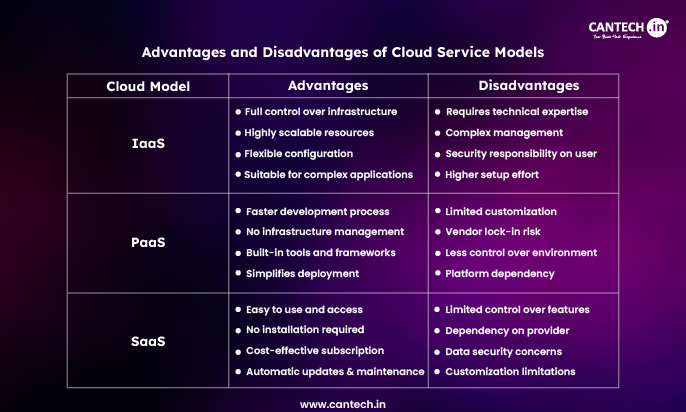
Infrastructure as a service (IaaS)
IaaS virtualizes core resources like storage, compute power and networking and it delivers them through the cloud. Be it on public, private or hybrid setups the provider handles the infrastructure while organizations access resources over the internet.
Platform as a service (PaaS)
PaaS is built on IaaS by providing services and tools to simplify application development and delivery. It includes database systems, identity management, low code platforms, analytics and AI frameworks that enable quick development and access to advanced technology.
Software as a service (SaaS)
SaaS offers software over the internet via web browsers or applications. Some of the examples are streaming platforms, online storage and collaboration tools. SaaS supports functions across finance, HR, and marketing with providers managing updates, scaling and security automatically.
Read more : Difference Between IaaS PaaS and SaaS Explained
What are the Key Benefits of Cloud Infrastructure?
Cloud infrastructure usually offers scalable, faster, accessible and more such benefits. Let’s look at some of them:
Cost efficiency
Cloud infrastructure shifts IT from capital model to an operating expense model. Organizations prefer paying only for the amount of networking, computing and storage they actually use. This approach removes the need for full scale data centres that are of no use during low demand periods. Public cloud providers manage hardware, cooling and maintenance, energy which majorly reduce operational overhead and overall TCO.
Scalability and Flexibility
Cloud infrastructure management offers proper resource allocation. During workload spikes, storage, virtual machines or network capacity can auto scale in real time. When demand subsides, resources are released which ensures cost effective utilization. This flexibility approach offers high performance even during sudden demand increases like AI model training or seasonal traffic spikes.
Collaboration and Global Accessibility
With cloud infrastructure, data and applications are accessible from anywhere through the internet. Providers operate global networks of data centres which reduces latency for distant users and ensures consistent performance and compliance with regulations. Teams can collaborate easily in real time by collaborating, testing and deploying workloads across different countries.
Reliability and Availability
Cloud infrastructure is designed with redundancy across multiple availability zones which offers resilience. The providers offer automated backups, health monitoring and failover. In case of hardware failure or regional outage, workloads automatically shift elsewhere which reduces downtime. Built-in disasters recovery tools enable rapid data restoration and protect against outages or natural disasters.
High-End Security and Compliance
Cloud infrastructure offers strong security through multi-layered measures like physical data centre protection, network isolation, encryptions, IAM and continuous monitoring. Providers also maintain certifications like ISO, SOC, GDPR and HIPAA making compliance easy. Centralized security updates and patching further strengthens protection.
Read more what is a data center in detail.
Scale Faster and Save More with Cantech Cloud!
Get the best experience from Cantech Cloud, India’s premier Cloud Platform-as-a-Service, designed to deploy your applications instantly on a fully redundant, high-performance, and auto-scalable infrastructure. Enjoy up to 80% savings on cloud costs while enjoying reliability and security. Our platform supports automatic scaling with payment based on real consumption, ensuring you pay only for what you use. Elevate your business with Cantech Cloud’s cutting-edge solutions today!
Get started now! Visit Cantech.cloud
Conclusion
Overall, cloud infrastructure empowers business with agile innovation, easy scalability, strong security, global reach and cost effective operations which forms resilient, future proof ready for digital transformation.
FAQs
What is the Difference Between Cloud and Cloud Infrastructure?
Cloud computing is providing various services over the internet such as storage, processing power, and applications. Cloud infrastructure, on the other hand, comprises the physical and software components like storage, servers, and networking, that creates the environment to host the services.
What are Examples of Cloud Infrastructure?
Examples of cloud infrastructure automation are Google Cloud Deployment Manager, AWS CloudFormation, Azure Automation and other third party options such as Red Hat Ansible Automation Platform, Chef Automate, Puppet Enterprise, and VMware vRealize Automation.
How to Build a Cloud Infrastructure?
Here are the steps to build cloud infrastructure:
- Assess Requirements: Learn the client’s requirements and expectations and understand what infrastructure they need for their operations.
- Select the Strategy, Model, and a Cloud Provider: Determine the preferred cloud strategy, model (public, private, or hybrid), and choose a provider (Amazon Web Services, Google Cloud, Microsoft Azure, Cantech Cloud, or CloudPe).
- Design the Infrastructure Architecture: Create the blueprint of your server design, including security, storage, and networking components, and make sure you build in redundancies and systems that can scale.
- Provision Cloud Resources Using Infrastructure as Code: Use Infrastructure as Code software (Terraform, AWS CloudFormation, etc.) to deploy the architecture.
- Set Up Security and Networking: Configure the network and security systems, including firewalls and virtual private networks (VPNs) and set up access controls and identity management.
- Deploy, Monitor, Scale, and Optimize: Launch the application and use monitoring tools to check performance and costs and optimize the cloud environment.
What is Cloud Infrastructure Services?
Cloud infrastructure services offer basic hardware and software components, which include servers, data storage, networking, and virtualization, which are hosted by a provider and accessed over the internet. These solutions allow individuals and companies to rent computing power on demand rather than buying and maintaining physical on-premises servers. Some of the common examples are AWS, Microsoft Azure, and Google Cloud Platform (GCP).