What is a Hybrid Cloud?
Definition of Hybrid Cloud: A hybrid cloud is a cloud computing environment that combines private cloud infrastructure with public cloud services, allowing data and applications to move between them securely based on business needs.
Introduction to Hybrid Cloud
A hybrid cloud is a cloud computing environment that combines private cloud infrastructure with public cloud services, allowing organizations to share data and applications between both environments. This approach enables businesses to maintain greater control over sensitive workloads while benefiting from the scalability and cost efficiency of public cloud resources.
As businesses continue their digital transformation journey, hybrid cloud has emerged as one of the most popular cloud deployment models. It offers the flexibility to run critical applications in a secure private cloud while using public cloud resources to handle fluctuating workloads, backup operations, and business growth.
For example, an e-commerce company may store customer and payment data in a private cloud while hosting its website and handling seasonal traffic spikes through a public cloud platform. This combination helps improve performance, strengthen security, and optimize infrastructure costs.
In this guide, you’ll learn what a hybrid cloud is, how it works, its architecture, key components, benefits, challenges, and real-world use cases.
What is a Hybrid Cloud?
Hybrid Cloud Definition
A hybrid cloud is a cloud computing environment that combines private cloud infrastructure with public cloud services, allowing data and applications to move between them securely based on business needs.
What is a Hybrid Cloud?
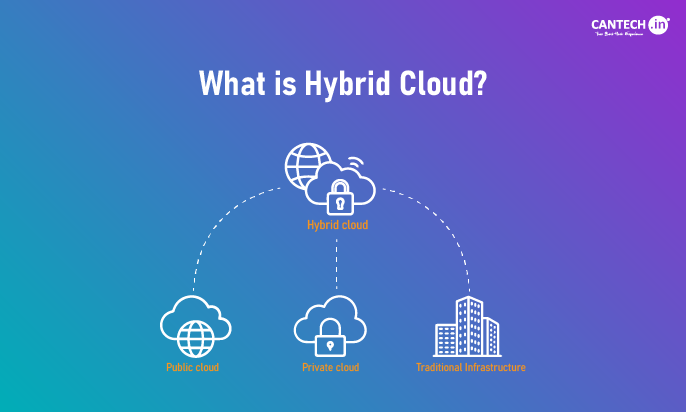
Hybrid Cloud is a very flexible computing environment that combines the private cloud, public cloud, and sometimes on-premise infrastructure. This hybrid configuration can enable a company to mix and match, taking advantage of the strengths of both models. Mission-critical and sensitive data remains within the boundaries of a private cloud. All other operations can take advantage of the scalability and cost effect of a public cloud.
For instance, an expanding e-commerce business might choose to maintain sensitive customer data within the perimeter of a private cloud so that the business can ensure security compliance, while using public cloud services merely to host its website and manage peak traffic spikes. This Hybrid model allows one to lock the data, get the performance necessary, and achieve cost savings-a perfect IT strategy for a business need.
How Does Hybrid Cloud Work?
Hybrid cloud has this unique capability of bridging the gap between private cloud and public cloud, providing agility along with security and control to enterprises. This architecture sometimes uses Virtual Private Network (VPN) connectivity, dedicated network connectivity, and advanced cloud management systems for making the integration effortless.
Let’s take the case of an AI firm processing large streams of data in real time. Instead of investing in infrastructure, the firm can use public cloud computing facilities for computation-intensive tasks while accommodating all of its proprietary algorithms securely in a private setup. The architecture offers both efficiency and security of data.
At Cantech, we provide powerful hybrid cloud solutions with a focus on performance, security, and versatility. Scalable public cloud hosting, secure private cloud solutions, or an all-in-one hybrid cloud deployment: we have it all for your business.
Key Components of a Hybrid Cloud
A hybrid cloud environment consists of several interconnected components that work together to deliver flexibility and efficiency.
1. Private Cloud
A dedicated infrastructure used to host sensitive applications and critical business data. It offers greater control, security, and compliance.
2. Public Cloud
Cloud services provided by third-party vendors that offer on-demand computing resources, storage, and applications with virtually unlimited scalability.
3. Network Connectivity
Secure connections such as VPNs, dedicated leased lines, or SD-WAN solutions enable seamless communication between private and public cloud environments.
4. Cloud Management Platform
Centralized management tools help monitor resources, automate workflows, and maintain consistent policies across both environments.
5. Security and Identity Management
Authentication systems, encryption, firewalls, and access controls ensure secure data movement and user access across the hybrid cloud ecosystem.
6. Data Integration Tools
These tools synchronize and transfer data between private and public clouds while maintaining consistency and availability.
Hybrid Cloud Architecture
A typical hybrid cloud architecture combines on-premises infrastructure or private cloud resources with public cloud services through a secure network connection.

The architecture generally includes:
- Private Cloud Environment
- Public Cloud Environment
- Secure Network Connection
- Identity and Access Management (IAM)
- Cloud Management and Monitoring Platform
- Data Storage and Backup Systems
- Security and Compliance Controls
This architecture allows organizations to place workloads in the environment best suited to their performance, security, and compliance requirements while maintaining centralized management.
Real-World Example of Hybrid Cloud
Consider a healthcare organization that stores patient records in a private cloud to comply with data privacy regulations. At the same time, it uses a public cloud platform to run analytics applications that process large amounts of medical data.
This approach allows the organization to:
- Protect sensitive patient information.
- Scale computing resources when needed.
- Reduce infrastructure costs.
- Improve operational efficiency.
- Meet regulatory compliance requirements.
Similarly, many e-commerce businesses use hybrid cloud environments to keep payment and customer data in private infrastructure while utilizing public cloud resources to handle peak shopping traffic during festivals and promotional events.
Hybrid Cloud Use Cases
1. Disaster Recovery & Backup
Such structured disaster recovery processes have become a necessity these days to allow for immediate restoration of operations in case of any loss of information, cyberattack, or system failure. Hybrid Cloud acts like a bridge providing companies the flexibility to store crucial information and images in a private cloud and having a current backup with a public cloud. In that case, Hybrid must have stored all such backup information, and have access to such a backup and restore it properly in case such an incident arises.
We value the gravity of safeguarding your information. With our Managed Backup Solutions, your data is backed up regularly, with high availability and rapid restoration, to maximize uptime and preserve continuity in your operations.
Learn more about secure backup services here!
2. Integration of SaaS, PaaS, and IaaS
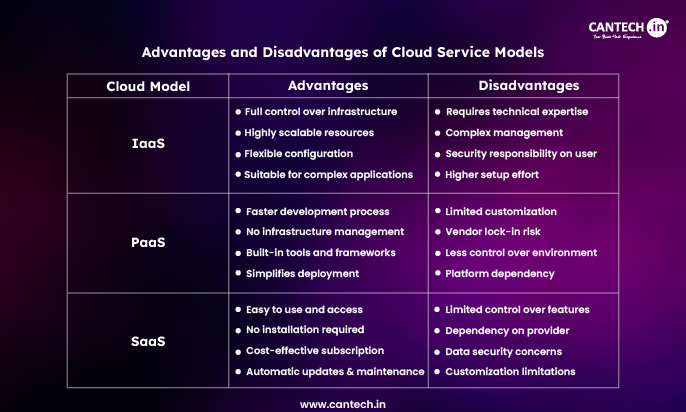
The hybrid cloud can integrate with Software as a Service (SaaS) software, Platform as A Service (PaaS) environments, and Infrastructure as a Service (IaaS) offerings with no impediment. Integration helps companies maximize agility and efficiency through optimized infrastructure expense and efficient, scalable management of assets.
Whether you’re deploying enterprise software, developing software, or leveraging cloud platforms for productivity, Our cheap cloud hosting in India will provide performance, security, and reliability for your success.
3. Serverless Computing
Under a pressurized and ever-changing technology scenario, Organizations today prefer to deliver applications to market at a rapid pace but not with the burden of constant chores of infrastructure administration weighing them down. Serverless technology eliminates the burden of infrastructure using a hybrid cloud, freeing developers’ minds and allowing them to work with codes and not servers. Serverless Cloud Solutions allow for the simple launch of companies’ applications with auto-scaling, security, and optimized use of resources at a lesser cost.
Hybrid Cloud Advantages and Disadvantages
Hybrid cloud advantages and disadvantages depend on how your business uses both private and public cloud together. It offers flexibility and cost control, but it also requires proper management to avoid complexity and security gaps.
Advantages of Hybrid Cloud
Key advantages of hybrid cloud is to empower businesses with agility, security, and efficiency. This approach blends flexibility with cost control for optimized performance. Lets discuss in Detail below.
- Scalability: Dynamically use public cloud capabilities to add new resources for spiking loads and yet have key workloads in a private cloud
- Cost Savings: To make the best use of operational expenses in a cloud, workloads distribution between a private and a public cloud in terms of real-time requirements
- Security: Sensitive information will have to be kept in a secure private cloud, with non-sensitive information possibly being in the public cloud to ensure compliance and information protection.
- Performance: Hybrid cloud environments simplify balancing workloads, and performance and user experience, in turn, become efficient.
- Flexibility: Deploy your applications in environments best suited to your needs, in an on-premise private cloud, or elastic public cloud infrastructure.
Check out our Hybrid Cloud Solutions which are coupled with advanced solutions, and contemplate attaining business heights.
Disadvantages of Hybrid Cloud
- Complexity: Implementing a hybrid cloud model requires a sophisticated model of hybrid cloud management, in addition to expertise in cloud orchestration.
- Security Challenges: In transporting data, a public-private cloud must require strong encryption and compliance.
- Integration Issues: Some older platforms may involve additional work in terms of integration in full.
- Ongoing Maintenance: Monitor, update, and consistently reinforce security in hybrid cloud implementations at all times.
Struggling with Hybrid Cloud complications? Let our experts help you navigate these challenges with tailored solutions designed for your business!
Hybrid Cloud vs Multi-Cloud: What’s the Difference?
Have the same question? Yes! It matters to businesses planning on the cloud to understand the difference between hybrid cloud and multi-cloud.
A Hybrid Cloud is a centrally managed one that combines a private and a public cloud in a single system, the movement of data storage and workload between a variety of cloud systems. The businesses’ ideal is the presence of security, scalability, and affordability.
Multi-Cloud describes an environment where various cloud providers, i.e., AWS, Google Cloud, and Azure, are linked but at best integrated.
Why Go for a Hybrid Cloud?
If you need a cloud setup that is secure, efficient, and flexible, hybrid cloud environments give you the best of both worlds. On-demand scalability with cost-effective public cloud resources is complemented by keeping sensitive data secure in a private cloud.
Looking for a robust hybrid cloud solution? Cantech provides tailor-made Hybrid Cloud Deployments, ensuring high availability, security, and seamless integration.
Types of Cloud Environments
- Public Cloud – Provides pay-as-you-go services on a global level through providers such as AWS, Azure, and Google, but it often uses third-party infrastructure rather than its own. Explore our detailed blog on What is a Public Cloud.
- Private Cloud – a cloud solely dedicated to one organization’s use. Read our full article covering What is Private Cloud.
- Hybrid Cloud – A mix of both, offering the best of both worlds.
- Hybrid Multicloud – Deployment requires multiple cloud providers and a hybrid cloud strategy.
How to Set Up a Hybrid Cloud?
The majority of firms do not start with the clear hybrid cloud plan. Instead, they embrace it in cases whereby there are systems which need to be tightened or systems which need to be flexible. As a rule, databases, in-house applications or compliance-intensive applications remain on private infrastructure. The public cloud resources are then appended to scale, testing, or customer facing workloads.
When it becomes inescapable, establish the location of each piece of work. It is hardly economical to outsource all workloads to the public cloud. Anything kept secret holds back. The appropriate balance depends on the performance requirements, sensitivity of data and the volatility of workloads.
The issue of environment compatibility is more important than provider choice. Regardless of the approach used by the private side (on-premise servers or hosted infrastructure), it has to interface with the selected public cloud without difficulties. Lack of integration means that different teams handle the same application differently, which adds to the number of errors and workload.
The first problems are related to connectivity. Applications are negatively affected by slow data transfer or intermittent connections. VPNs or oversight connections make communication identical and decrease latency since workloads transfer data between environments.
Consider security as one set up. Control access controls, user permission and monitoring all in the same place. This minimizes confusion, narrows down misconfigurations and simplifies audits.
The hybrid cloud set-up is never permanent. With traffic patterns changing or new applications coming by, workloads change. Frequent review of performance, utilization and expenditure makes the environment not over-engineered.
Hybrid Cloud Solutions by Cantech
Hybrid cloud solutions assure excellent performance and security with cost-effective pricing. We provide custom-built hybrid cloud solutions to cater to your business’s different needs – whether a startup or an established business.
- Private Cloud Hosting – A highly dedicated, secure cloud infrastructure gives you complete discretion over your data while adhering to all rules and regulations.
- Public Cloud Hosting – A highly scalable, cost-effective cloud environment for businesses wishing on-demand resources.
- Hybrid Cloud Deployments – Custom hybrid cloud deployments tailored for flexibility, allowing businesses to allocate resources between public and private clouds dynamically.
- Managed Cloud Hosting– No more cloud excess complexities. We offer hassle-free 24/7 monitoring, security, and optimization.
Your hybrid cloud strategy is in Cantech’s expert hands. With us, you will have the resources, support, and expertise to make seamless workload balancing, high availability, and a secure hybrid cloud perimeter work.
Conclusion
The fundamental hybrid cloud has changed how businesses work in the shift from balance to scale, security, and cost-effectiveness. Hybrid Cloud has assured small businesses that offer flexible and cheaper IT solutions or large corporations to run complex, mission-critical workloads, enjoying the best of both worlds.
With a trusted hybrid cloud provider, it is now possible to reduce costs, boost operational efficiencies, and provide data security while allowing the agility to meet constantly changing business needs. Hence, this model presents a blend in which public cloud power can be utilized at peak demands while sensitive workloads are handled in a private cloud environment.
Cantech invests in custom hybrid cloud solutions for small and medium sized businesses. High-performance private cloud hosting, public cloud infrastructure, and fully managed hybrid cloud deployments are what we do best. Cloud integration knowledge, security, and optimization expertise will ensure an exceptional hybrid cloud experience.
Take your business to the next level with a Hybrid Cloud. Join Cantech today on your journey to harness a customized hybrid cloud infrastructure built to fulfill your unique business needs.
FAQs
What is Hybrid Cloud and How Does it Work?
Hybrid Cloud is a combination of both private and public clouds. In essence, the Hybrid Cloud allows enterprises to store data securely while using highly scalable cloud resources. It provides an organization with flexibility, cost efficiency, and high performance.
Need a Hybrid Cloud solution for your specific needs? Check out Cantech’s Cloud Services.
What is Hybrid Cloud in Cloud Computing?
Hybrid cloud computing means a smart mix of public cloud (like AWS or Google Cloud) and private cloud (your own on-site servers or dedicated setup). Let’s businesses keep important data private while using public cloud resources for flexibility and growth.
What are the Key Hybrid Cloud Benefits?
Some of the hybrid cloud benefits that users include:
- Scalability – Public cloud-based on-demand resource expansion.
- Security – keep sensitive data on a private cloud where security processes are stricter.
- Cost Efficiency – strike a balance regarding public and private cloud use and optimize infrastructure costs.
- Flexibility – allocating tasks dynamically based on performance needs.
What is an example of a hybrid cloud?
An online retailer storing customer information in a private cloud while running its website and analytics workloads on a public cloud is a common example of a hybrid cloud deployment.
Why do companies use hybrid cloud?
Companies use hybrid cloud to balance security, performance, scalability, and cost efficiency while maintaining control over sensitive data.
What is the difference between hybrid cloud and public cloud?
A public cloud relies entirely on third-party cloud infrastructure, whereas a hybrid cloud combines private and public cloud environments for greater flexibility and control.
How Does Hybrid Cloud Differ from Multi-Cloud?
A Hybrid Cloud integrates public and private clouds into a single system, whereas Multi-Cloud is effectively made up of different cloud service providers clustered but not necessarily integrated.
Is the Hybrid Cloud Secure?
Yes! A Hybrid Cloud enables the organization to store sensitive workloads in a controlled private environment and simultaneously benefit from the attributes of a public cloud for less critical jobs. Other methods to enhance security, include implementing points such as VPNs, encryption, and access controls.
Can I Migrate My Existing Business Applications to Hybrid Cloud?
Absolutely! Many companies are moving toward a Hybrid Cloud for increased performance, security, and cost control. Cantech specializes in cloud migration services that ensure security and minimal downtime during your transition.
How Can Hybrid Cloud Help with Disaster Recovery?
Maintaining essential data on a private cloud and backing it up on the public cloud provides Hybrid Cloud with a robust disaster recovery strategy. Thus, business operations are safeguarded against disruptions from system failures, cyberattacks, or natural disasters.
Protect your data with Cantech’s Managed Backup Solutions.
Does Cantech Provide Hybrid Cloud Solutions?
Yes! Cantech does custom Hybrid Cloud deployments, public and private cloud hosting, and fully managed cloud services. We will help companies use the power of Hybrid Cloud for efficiency and security.