Proxmox vs OpenStack: Key Differences
Proxmox is a lightweight open-source virtualization solution for deploying software-defined VMs and containers, while OpenStack is an enterprise-level cloud platform optimized for large-scale, multi-tenant cloud infrastructures. Proxmox is easier to deploy and maintain, and delivers better performance per dollar, while OpenStack is more scalable. Proxmox is ideal for deploying private clouds, while OpenStack better fits medium and large public cloud providers.
Introduction
Choosing the right virtualization or cloud infrastructure platform is essential for the successful implementation of any IT project. Proxmox and OpenStack are two popular products that allow companies to control their virtual machines. At the same time, it is necessary to know the differences between the two products in order to make the right choice when purchasing. The differences and features of Proxmox and OpenStack will be discussed in this blog.
What is Proxmox?
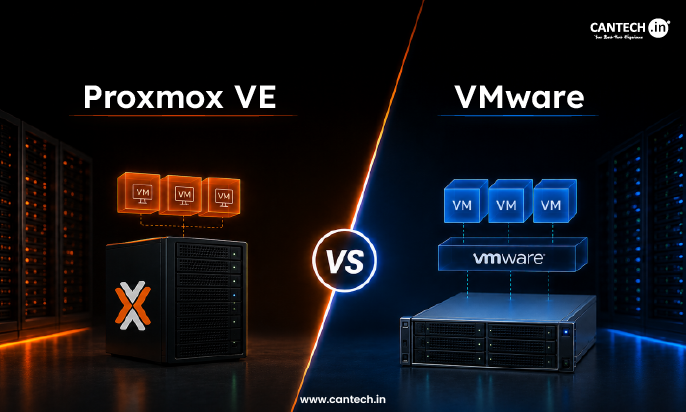
Proxmox VE (Virtual Environment) is an open-source virtualization management software that unifies two virtualization technologies: KVM-based virtual machines and LXCs containers. The tool provides an integrated web-based management interface and includes backup features, software-defined storage, and networking solutions. Proxmox VE is actively used by small-to-medium-sized businesses working with physical servers, home labs, and professional system administrators seeking to establish a self-hosted solution as an alternative to commercial virtualization software such as VMware.
Key Features of Proxmox
Some of the key features of proxmox are:
- Management of both VMs (KVM) and containers (LXC)
- Web-based GUI, no management server needed
- Built-in HA (High Availability) clustering
- Integrated Backup/restore (with Proxmox Backup Server)
- ZFS, Ceph, and other storage options
- Easy to install (typically on a single server or cluster)
What is OpenStack?
OpenStack is a large-scale open-source cloud platform that enables the creation of public and private clouds on a significant level. It is not just a product but an aggregate of projects (Nova, Neutron, Cinder, Swift, etc.), which are generally referred to as OpenStack. The cloud platform is used by telecommunication organizations, corporations, and cloud service providers that offer managed cloud services on a large scale. OpenStack is a set of Infrastructure-as-a-Service (IaaS) products that help design and maintain clouds on a large scale, hosting tens of thousands of virtual machines in data centers.
For a deeper understanding of OpenStack and its core components, read our guide to What is OpenStack?
Key Features of OpenStack
Some of the key features of OpenStack are:
- A modular architecture that allows for independent replacement of components
- Multi-tenancy with role-based access control
- The ability to scale horizontally across hundreds or even thousands of physical servers
- API-driven infrastructure provisioning and orchestration, including Terraform and Ansible
- The ability to provision both virtual machines and bare-metal servers (Ironic)
- A comprehensive set of networking features and the ability to use Software Defined Networking (SDN) via Neutron
Proxmox vs. OpenStack: The Key Differences
Here are the key differences between Proxmox and Openstack:
| Aspect | Proxmox | OpenStack |
| Scale and complexity | Proxmox is a great fit if you need something straightforward that will be used on a smaller scale. | OpenStack is engineered for large-scale deployments but has a steeper learning curve and a more involved deployment. |
| Learning curve | Proxmox requires basic system administration knowledge and is relatively easy to learn | OpenStack is complex and challenging to master. |
| Infrastructure requirements | Proxmox can run on a single physical machine | OpenStack needs an entire infrastructure to be deployed and requires more resources to operate. |
| Support | Proxmox has better community support, and commercial support options are available from Proxmox Server Solutions GmbH. | OpenStack is available from major vendors |
| Cost | Proxmox is cheaper to implement and maintain at scale | OpenStack requires a larger infrastructure and more resources to operate, which increases costs despite being open-source. |
| Use cases | Proxmox is best used for virtualization | OpenStack is used to build clouds, either as public platforms for hosting organizations’ services or private clouds for enterprises. |
OpenStack Private Cloud vs. Proxmox Private Cloud Comparison
If we narrow the field to a private cloud, the differences become even more apparent.
Proxmox Private Cloud is suitable for companies that want to host their own applications and virtual machines, deploy virtual desktops, and secure the ability to run tests and development environments. The product is relatively straightforward in its use (a consolidated solution for KVM VMs and LXC containers), can be installed on a single server, and provides a basic level of isolation needed for testing. It can also be managed and maintained by a small team of system administrators since no significant technical depth is needed – an average SysAdmin will have no trouble setting up a Proxmox cluster alone.
OpenStack Private Cloud is a more substantial solution better suited for organizations that want to provide Infrastructure-as-a-Service (IaaS) for their tenants. It requires a higher level of technical expertise to configure and deploy since it consists of multiple components (Nova, Neutron, Cinder, Keystone, etc.). However, the flexibility and control it provides (granular resource isolation, role-based access control, self-service portal) are necessary for building a production-grade private cloud. It can also support a significantly larger customer base (hundreds or even thousands of isolated instances) compared to Proxmox.
In essence, both private cloud solutions are used by different organizations. Proxmox is typically utilized by smaller companies that want to host their VMs and applications in a reliable but minimally complex environment, while OpenStack is deployed by larger corporations and service providers (colocation data centers) that need to offer public cloud services.
Which One Should You Choose?
The choice between Proxmox and OpenStack depends on the specific needs and technical capabilities of your organization.
- Proxmox is a great option if you are a small or medium-sized business, a start-up, or an individual who needs reliable virtualization solutions. In addition, Proxmox is a good choice if you need an alternative to traditional hypervisors such as VMware ESXi. If you are also evaluating OpenStack against VMware, see our detailed OpenStack vs VMware comparison.
- OpenStack is a better choice if you need to build a cloud infrastructure, especially a large private cloud or a public cloud. You can also compare OpenStack vs OpenShift to understand how their roles differ in modern cloud environments. It is also a good option if you need to manage data center resources, want to make your infrastructure multi-tenant, and want to have greater flexibility and control over your resources. Overall, Proxmox is easier to use, while OpenStack is more scalable.
Get Started with Proxmox on Cantech
If you want to avoid the hassle of setting up and configuring your own hardware, Cantech offers Proxmox as an option on dedicated servers and cloud hosting plans, along with cPanel, Plesk and Webuzo. You get the benefits of single-tenant, low-latency infrastructure hosted in a Tier 4 Indian data centre, with the flexibility of managing your own Proxmox environment from the beginning.
Would you rather have Proxmox than have to manage your own bare-metal hardware? Take a look at the dedicated cloud server plans from Cantech and choose Proxmox as your control panel.
Conclusion
Proxmox and OpenStack differ in many ways regarding infrastructure management, despite being open-source. Proxmox is great for most of our users’ cases concerning virtualization. At the same time, OpenStack offers a more substantial cloud computing platform, which is suitable for companies that want to provide a variety of services for their end-users. It is critical to analyze the requirements and capabilities of further development for choosing between these two solutions; some organizations utilize Proxmox and OpenStack to manage their infrastructure on different levels.
FAQs
Can Proxmox and OpenStack be used together?
Proxmox can be used in conjunction with OpenStack. For example, some organizations host their internal virtualization needs on Proxmox VE and deploy OpenStack for larger scale, production-grade clouds.
Does OpenStack require Proxmox or any other hypervisor?
Typically, OpenStack deployments leverage KVM as the underlying hypervisor, but it is possible to use other virtualization technologies like VMware or Microsoft Hyper-V.
Is OpenStack free?
OpenStack is an open-source platform, so the software itself is free. However, deploying and operating an OpenStack cloud usually involves significant costs.