Dedicated Server vs Hybrid Cloud: Which is Right for You?
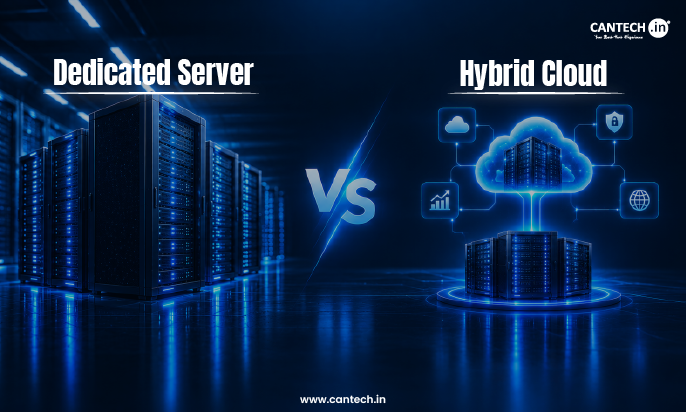
Dedicated servers offer exclusive and predictable hardware, which is perfect for steady workloads and compliance-focused environments. Hybrid cloud, on the other hand, is a blend of private cloud infrastructure and public cloud flexibility, making it a suitable choice for organizations that need to scale resources while maintaining some control. For predictable needs and absolute control, go for dedicated servers. If you want a balance of security and scalability, hybrid cloud is the way to go.
Introduction
The choice of the infrastructure that ensures the efficient use of resources of an enterprise is one of the critical factors when the company begins to grow. At the same time, incorrect decisions cause significant difficulties for the business, such as increased expenses, decreased efficiency, and loss of relevance. The solution that has the most significant impact on the characteristics of these effects is the choice between the infrastructure with dedicated servers and hybrid cloud. The differences between these two options should be considered before choosing which one suits the company the most. In this blog we discuss the difference between dedicated server and hybrid cloud.
What is a Dedicated Server?
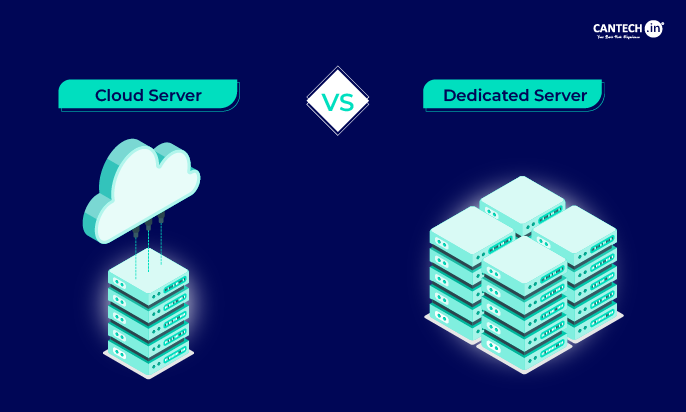
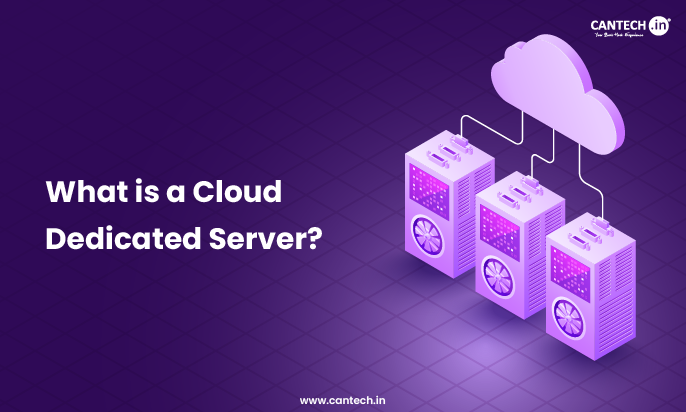
A dedicated server is an isolated physical machine which can be leased by one organization and on which the latter has exclusive control. Unlike shared or virtual hosting, a dedicated server provides full control of the server’s resources and is more secure and reliable.
The key features of a dedicated server are:
- Dedicated hardware resources which can be further customized.
- Monthly payments which remain the same during the contract.
- Physical isolation which enhances security.
- Physical limitations which require additional hardware to increase performance.
What is a Hybrid Cloud?
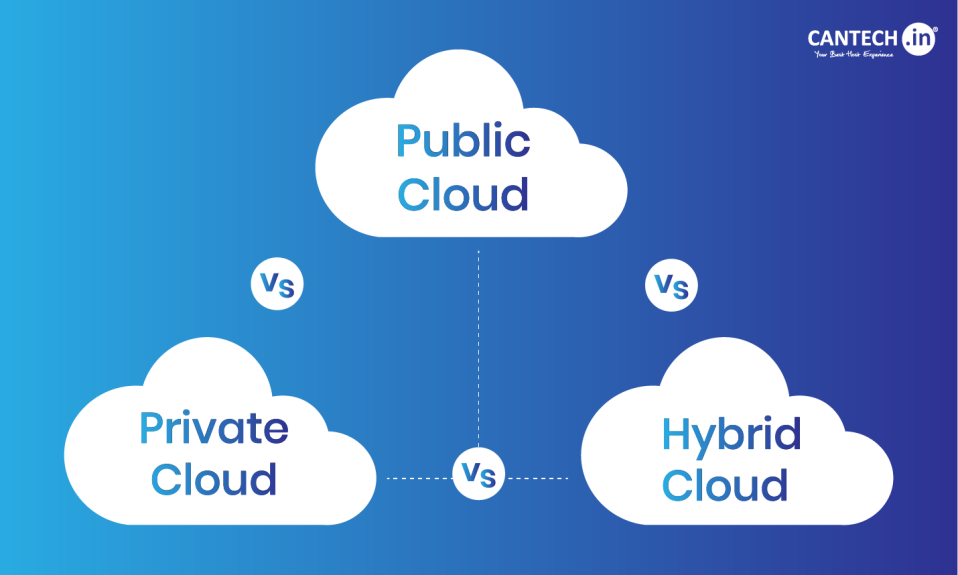
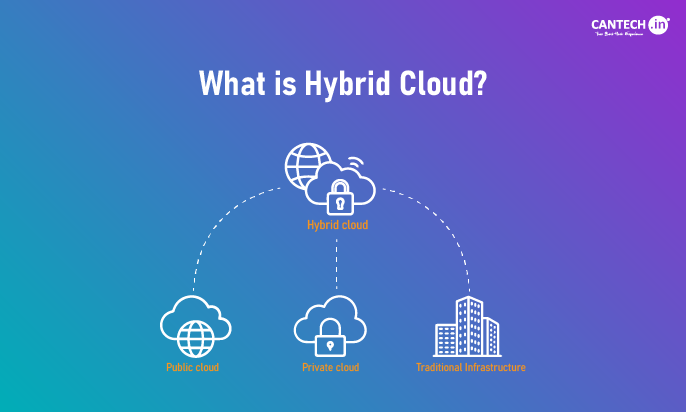
Hybrid cloud is a combination of private cloud (on-premises or company-owned infrastructure) and public cloud, which are linked together. It allows organizations to move workloads between the two environments.
The main characteristics of hybrid cloud are:
- Ability to scale elastically by using the public cloud.
- Private infrastructure stores sensitive information.
- The public cloud follows a pay-per-use pricing model.
- A hybrid requires more advanced orchestration and networking than a private or public cloud alone.
Key differences between Dedicated Server and Hybrid Cloud
Some of the common differences between dedicated server and hybrid cloud:
1. Performance
Dedicated servers excel at providing uninterrupted performance by isolating workloads from the rest of the infrastructure, which also has advantages for cost prediction and capacity planning. Dedicated servers are thus a natural choice for the hosting of critical applications such as gaming servers or high-frequency financial trading platforms.
Hybrid cloud solutions allow greater utilization of available resources by being able to scale up and down depending on instantaneous needs. The cost predictability of a dedicated server is favorable for medium to large-scale applications with steady-state resource consumption.
2. Cost
Both dedicated servers and hybrid cloud solutions require monthly or annual billing commitments depending on the level of service selected. Hybrid cloud solutions are theoretically cheaper since some components of the infrastructure are only billed per use during peak times, but the overall cost advantage is often offset by the complexity of maintaining multi-platform infrastructure.
3. Scalability
The main advantage of a hybrid cloud infrastructure is its ability to scale instantly depending on instantaneous needs. Dedicated servers require additional capital expenditures and time to configure additional hardware, while hybrid infrastructure only requires changes to the virtual machine’s specifications in most cases.
4. Security and Compliance
Healthcare and financial institutions have stricter regulatory requirements and utilize a combination of cloud hosting options and dedicated servers for sensitive data while less critical data is hosted in the public cloud. In effect, there is a preference for using dedicated servers whenever there are third-party audits or any application-specific compliance requirements.
Dedicated infrastructure is most advantageous for isolated workloads where the risks posed by external interference are minimized.
5. Management
Dedicated servers have the advantage of being much easier to manage since the infrastructure only comprises a single platform. Organizations must possess relevant expertise to manage software-defined infrastructure, including server management across multiple components.
When to Choose a Dedicated Server?
Here are reasons to opt for a dedicated server:
- Workloads are steady and predictable
- If you need the utmost performance with no shared resources
- When strict regulatory compliance requires full data control
- If team prefers simplicity over scalability
- If budget predictability is matters over elasticity
When To Choose Hybrid Cloud?
Here are reasons to opt for a hybrid cloud option:
- If the traffic or workload demands are highly variable
- If you want to pursue a gradual transition or rollback to legacy systems
- When disaster recovery and geographic redundancy are a concern
- When there is a need to balance regulatory requirements (private cloud) and agility (public cloud)
- When the skill set to manage heterogeneous environments is available
Conclusion
There is no universal solution as the most efficient option depends on an organization’s traffic patterns, regulatory requirements, budget, and technical expertise. Furthermore, it is common for companies to combine dedicated servers and hybrid cloud hosting to balance their needs and budget. The hosting selection criteria may also change as the business grows and evolves.
That is why the best course of action is evaluating the traffic patterns. If the analytical tool demonstrates that the line is steady, a dedicated server is a safer and more cost-effective option. However, if the graphic resembles a rollercoaster, the hybrid cloud is a better choice as it scales elastically to accommodate increases and decreases in traffic.
FAQs
Is hybrid cloud more expensive than a dedicated server?
It depends, as dedicated servers provide a fixed cost, while hybrid cloud spending depends on utilization. If you have steady-state workloads, a dedicated server is often more cost-effective. However, for spiky or seasonal demand, hybrid cloud can be cheaper than a dedicated server during periods of low utilization. A dedicated server can be cheaper for hybrid cloud bursts if actively monitored, otherwise, if the cloud sprawls, it may incur additional costs.
Can I move from a dedicated server to a hybrid cloud?
Yes, in fact, many organizations host their dedicated servers and burst to the cloud. A dedicated server is used as a foundation, while the cloud is used for additional resources. Such a strategy is beneficial for companies that need guaranteed server performance and want to avoid wasting money on idle cloud instances. The transition from a dedicated server to a hybrid cloud is relatively straightforward; one should establish a secure connection (VPN) between the cloud and the server and shift some of the workloads to the cloud.
What is more suitable for compliance-heavy industries, like healthcare and finance spheres?
In compliance-heavy industries, hybrid cloud is more suitable as it can be tailored to ensure that sensitive data is processed and stored in an isolated environment while taking advantage of the public cloud’s elasticity. In a similar vein, dedicated servers can be used for compliance, but they lack the flexibility of a hybrid cloud, which is vital in compliance-heavy industries.
How can I determine which workloads should be hosted on a dedicated server and which ones should be in the cloud?
The rule of thumb hybrid cloud strategy is to keep everything that has a steady state or requires compliance in the dedicated server and everything that requires elasticity or has seasonal variability in the cloud.