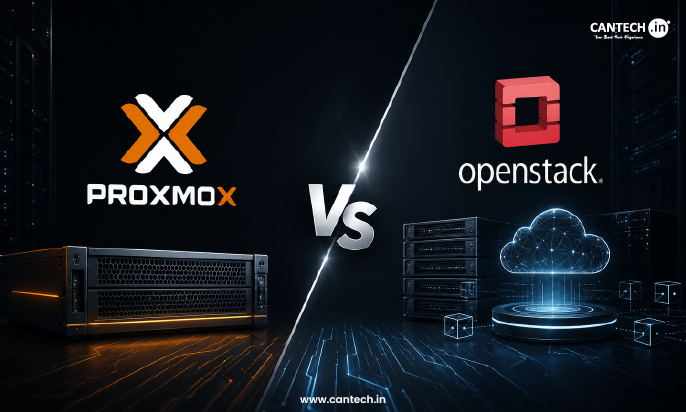
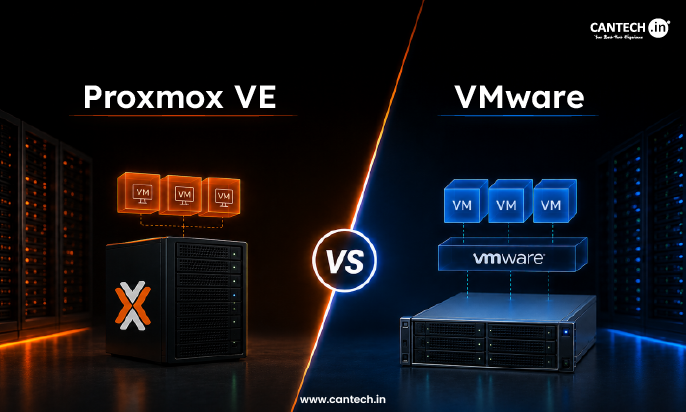
Proxmox VE vs VMware: Quick Comparison
- Proxmox VE is a free, open-source KVM/LXC platform with built-in HA and backup – ideal for cost-conscious teams.
- VMware vSphere is a mature, subscription-only enterprise suite with deeper large-scale tooling. Choose Proxmox to save money; choose VMware for proven enterprise depth.
Introduction
For almost two decades, VMware was the preferred answer to the question of which hypervisor to choose. However, the situation changed significantly for the time being when Broadcom acquired VMware last year. With the acquisition, perpetual licenses were canceled, the free version of ESXi was discontinued, and the cost of subscriptions for many users increased several times for enterprises.
The situation has prompted many companies to look for an alternative to VMware. Proxmox VE is presented as a solution that can act as a replacement for VMware ESXi. This product has grown from a homelab favorite among enthusiasts to a serious enterprise-level player that now runs on hundreds of thousands of nodes around the world, including in the largest hosting providers. In this article, you will understand the differences and similarities between Proxmox and VMware.
What is Proxmox VE?
Proxmox Virtual Environment, better known as Proxmox VE, is an open-source virtualization solution based on the Debian Linux OS. Proxmox VE features two virtualization technologies:
- KVM (Kernel-based Virtual Machine) provides full virtualization of Windows, Linux, and other guest operating systems.
- LXC (Linux Containers) offers a lightweight alternative in the form of OS-level containers.
The software is distributed under the AGPLv3 free software license, which means that the application is fully free to use without any restrictions. However, there is also a Proxmox VE Enterprise Repository subscription, which is required for organizations, providing an enterprise-level support experience.
What Is VMware (vSphere)?
VMware vSphere represents VMware’s long-standing enterprise-level virtualization platform, which was initially developed by VMware, Inc. and later acquired by Broadcom. As such, it features a comprehensive set of products and solutions, primarily consisting of:
- ESXi – a bare-metal hypervisor designed to run virtual machines.
- vCenter Server – a centralized manager for clusters, allocating resources and automating processes.
Numerous other products complement the core functions and create a large-scale platform, offering enterprise-grade orchestration and resource governance, and advanced third-party compatibility, including backup, storage, and monitoring solutions.
Learn more about VMware, its features, and how it works in our guide: What is VMware?
Key Difference between Proxmox VE vs VMware
Here are the some major differences between Proxmox and VMware:
| Category | Proxmox VE | VMware |
| Hypervisor type | KVM | ESXi |
| Management console | Built-in web UI; Proxmox datacenter manager (PDM) for multi cluster management. | vCenter Server |
| High availability | Native HA groups, live migration, fencing | vMotion, vSphere HA, Fault tolerance |
| Resource scheduling | Cluster resource scheduler for dynamic load balancing | DRS (Distributed resource scheduler), a long mature feature |
| Storage options | ZFS, Ceph, LVM, NFS including HA distributed storage at no extra license cost. | VMFS, vSAN (Separately licensed), NFS |
| Backup | Built-in vzdump plus Proxmox backup server (dedup, incremental, encryption) | It relies on third-party tools such as Veeam |
| Containers | Native LXC support alongside VMs. | No native container support; relies on separate products. |
| Licensing model | Free core product; optional low-cost subscription | Subscription only since the Broadcom acquisition; perpetual licenses retired. |
| Ecosystem maturity | Smaller but growing quickly; strong community and homelab to SMB adoption | Extensive, mature ecosystem with third-party integration. |
| Best documented at scale | Improving especially with PDM. | Strong for very large, complex, heterogenous data centers. |
1. Cost
It is the key reason why many companies decide to move to Proxmox VE. The software is open source and free, with the option to purchase support subscriptions for about €100-1,100 per CPU socket per year, depending on the level. VMware vSphere, on the other hand, is now subscription-based only after the acquisition by Broadcom. The entry-level subscription for VMware vSphere typically starts at $2,800 – 4,500+ per CPU per year. A company considering migrating from VMware to Proxmox should calculate the cost difference for a cluster of the same size.
2. Licensing model
Perpetual licensing for VMware was canceled after Broadcom acquired VMware, and the company began to switch customers to the subscription-based payment model. Proxmox VE does not have licensing restrictions in this regard.
3. Maturity and scale
VMware still has some advantages over Proxmox in large-scale heterogeneous environments with tens of thousands of nodes. This is due to the more extensive VMware vSphere capabilities in dynamic resource allocation. Proxmox now has a solution called Proxmox Datacenter Manager for managing multiple clusters, but VMware may still be a better choice if the company needs to build an end-to-end heterogeneous infrastructure.
4. Containers vs. VMs
Proxmox VE is a more suitable solution if the company wants to use both VMs and lightweight LXC containers. In contrast, VMware ESXi is designed to run VMs and does not natively support Linux containers. Therefore, for implementing containerization, it is necessary to additionally adopt a platform for running containers, such as VMware Tanzu or Kubernetes.
5. Backup
Proxmox VE has a feature called vzdump, which allows the user to back up VMs and containers. In addition, there is a Proxmox Backup Server that can be used to simplify the backup process for VMs and containers. At the same time, VMware users are forced to use third-party software for this operation.
6. Vendor lock-in
Since Proxmox VE is based on the open-source platform and is hosted on the Debian Linux operating system, there is no risk of being tied to a specific company through the technology. At the same time, VMware offers broad binary support for its virtualization platform, but this does not exclude the possibility of a VMware acquisition by Broadcom and the imposition of new restrictions.
7. Talent and hiring
The VMware ESXi hiring pool is larger than that of Proxmox, since this virtualization platform has been on the market for many years and has a large user base. However, the popularity of Proxmox is growing, and the demand for professionals in this field is increasing. This fact should be taken into account when planning the budget for hiring and the need for external contractors.
Which One Should You Choose?
Here is why you need to choose Proxmox or VMware for:
1. Consider Proxmox VE if:
- Price-performance ratio and license flexibility are a priority
- You’re comfortable with the Linux OS and open source software in general
- You need to host a small private cloud, test/dev environments, or homelab
- You want to leverage both VMs and containers in a single platform
- You wish to avoid vendor lock by using a generic open-source virtualization platform
2. Consider VMware vSphere if:
- You have a large-scale, heterogeneous infrastructure with diverse workloads
- You want to utilize VMware’s certified 3rd party appliances and have the in-house expertise to support them
- Your organization has significant investments in VMware’s software-defined data center ecosystem that would be challenging to migrate elsewhere
- Your budget is not constrained, and you prioritize long-standing enterprise-grade support and reliability
In reality, many organizations are adopting a hybrid approach, either during transitional periods before a full migration or to maintain VMware for specific workloads while using Proxmox VE for less critical tasks.
Conclusion
The virtualization market has changed radically over the past year or two. Having taken over VMware’s licensing policy, Broadcom has made cost a critical selection criterion in any infrastructure project. Proxmox VE emerges as a serious contender to VMware’s position as an enterprise hypervisor, offering a free alternative with the capacity to rival VMware in the enterprise market with Proxmox Datacenter Manager and a competitive cluster resource scheduler.
Proxmox VE is a worthy competitor to VMware, as it covers most of the critical areas that VMware and other proprietary rivals offer. However, VMware remains a better option for most enterprise-level organizations due to its superior software-defined data center tools, VMware’s robust development in the field, and the availability of technical expertise and workforce training. The choice between Proxmox VE and VMware mostly depends on an organization’s current capabilities, projected growth, and strategic objectives. Either way, a proof-of-concept evaluation is essential before committing to a full-scale technical migration in either direction.
How Cantech Networks Can Assist
While choosing between Proxmox VE and VMware is an important step, the process of provisioning infrastructure, migrations, and ensuring smooth performance is crucial. This is where Cantech can assist you. The relevant offerings that we provide for a Proxmox vs. VMware dilemma include:
- Dedicated servers & bare metal servers – High-performance Linux dedicated servers and Windows dedicated servers can be provisioned as underlying infrastructure for either Proxmox VE or VMware.
- Custom hardware support – We can help you provision and manage the required hardware for your virtualization platform of choice.
- Server management services – We offer managed Windows, cPanel, AWS, Azure, and DigitalOcean server management and monitoring services to ensure optimal performance.
- Colocation server hosting – We can provide you with secure and reliable colocation hosting (Mumbai, Noida, Pune), should you wish to host your own Proxmox or VMware cluster in our data center.
- Hassle-free server migration – Our company can assist with all the technical intricacies of migrating to a new server infrastructure without disrupting the uptime of your virtualization platform.
- Infrastructure consulting – Our experts can advise you on the most beneficial infrastructure setup in terms of security and scalability.
- 24/7 expert support – We offer round-the-clock technical support via phone, live chat, and ticketing with our team of seasoned professionals.
Whether you wish to migrate from a VMware setup to Proxmox to reduce licensing costs or have a different use case in mind, our team at Cantech Networks will help you identify the best possible infrastructure for your Proxmox or VMware-based environment.
Contact us today at your earliest convenience to set up a complimentary consultation with one of our experts.
FAQ’s
Is Proxmox VE really totally free for production use?
Yes, the core platform is free AGPLv3 open source, but there’s an optional paid Enterprise Repository subscription if you want to have vendor support and a more conservative update channel.
Can Proxmox VE completely replace VMware vSphere?
Proxmox covers the core features most organizations use daily, with the ability to migrate live, have HA clusters, snapshots, backups, and role-based access control. Very large or specialized enterprise workloads might still need VMware’s most advanced capabilities.
What is “Proxmox Virtual Cloud” and how is it different from just Proxmox VE?
“Proxmox Virtual Cloud” generally refers to running a Proxmox VE instance on either a hosted or cloud-based infrastructure (typically a dedicated or bare metal server rented from a third-party provider) rather than running it on-premises hardware that you own and maintain. The software itself is the same Proxmox VE platform; the only difference is that instead of installing it on your own physical servers, you rent them from a data center. This allows you to take advantage of Proxmox VE’s full featureset (KVM, LXC containers, HA capabilities, ZFS/Ceph storage, etc.) while offloading the responsibility of maintaining the underlying hardware to the hosting provider. Proxmox Virtual Cloud gives you the flexibility of a public cloud with the isolation and performance of dedicated hardware.
Can Proxmox replace VMware?
A lot of VMware environments in the mid or lower-sized sphere, which have to do with day-to-day operations, are fully covered by Proxmox VE, including the live migration, HA cluster, snapshots, backups, and role-based access control features, all of which are available for free on Proxmox. The largest and most integrated VMware environments may still have some advantages over Proxmox, but the majority are covered for day-to-day use.
What are Proxmox VE and VMware vSphere?
Proxmox VE is a virtualization platform that utilizes both KVM processes and LXC containers to provide users with a unified interface for deploying and managing VMs, as well as other resources. VMware vSphere is a virtualization product developed by Broadcom that uses ESXi as its primary hypervisor. The term VMware Virtual Cloud, strictly speaking, is not related to VMware vSphere, but is applied to third-party hosting services that utilize the same software. The name Proxmox Virtual Cloud similarly refers to a set of services provided by a third party on servers running the Proxmox VE software.