Which Is Better: AWS or Azure Managed Services?
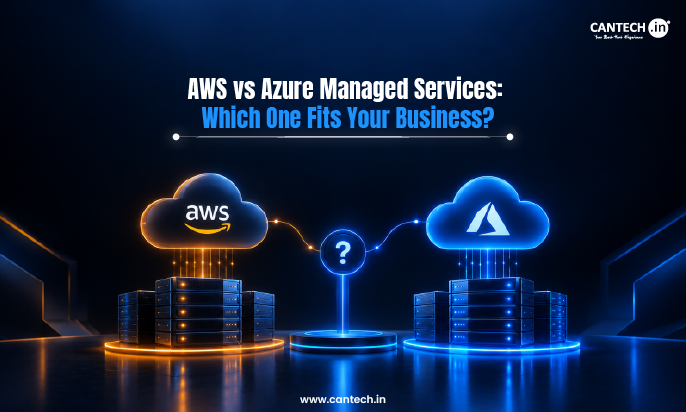
Both AWS and Azure provide managed cloud services, but which one is the best option depends on how a business manages its technology. AWS can be beneficial for companies that are already using AWS or those seeking AWS’s broader cloud ecosystem. Azure is suitable for companies that are heavily dependent on Microsoft products like Windows Server, SQL Server, and Microsoft Extra ID. It’s all about the current configuration, load, technical expertise, and support requirements.
Introduction
It’s not about choosing between AWS or Azure managed services, but about finding the right one for the business. Both platforms provide a variety of cloud services, and their capabilities may be appropriate for various technology settings.
For businesses already using AWS workloads or developing around AWS’ cloud ecosystem, AWS can be a viable option. Azure can be used by organizations that are heavily dependent on Microsoft technologies and services. Other factors that influence the decision include infrastructure, application requirements, internal capabilities, support requirements, and business continuity. Making a clear comparison can help businesses avoid picking a platform just because it’s popular and pick one that’s right for them.
What is AWS?
Amazon Web Services, or AWS, is Amazon’s cloud platform that lets businesses run applications and store data without maintaining all the underlying hardware themselves. It provides services for computing, storage, databases, networking and many other infrastructure needs. Businesses can use AWS to host websites, run applications, manage databases, build development environments and scale resources as demand changes.
With AWS managed services, an external provider can take care of much of the day-to-day work, such as server management, monitoring, security, backups, updates and performance checks. This can help teams that want AWS infrastructure without taking on every operational task internally.
Businesses evaluating AWS alongside other cloud infrastructure options can also explore Cantech vs AWS to understand how the two differ.
What Can AWS Managed Services Handle?
An AWS managed service can cover infrastructure monitoring, security checks, backups, updates, performance management and technical support. The exact responsibilities depend on the service agreement and the provider.
For a deeper explanation of how these services work, see What Is AWS Managed Service?
What is Azure?
Microsoft Azure is Microsoft’s cloud platform for running applications, storing data and managing IT infrastructure through the cloud. Businesses use Azure for virtual machines, databases, storage, networking, application development and other workloads. One of its key strengths is its connection with Microsoft’s wider technology ecosystem, which can make it a natural choice for organizations already using Microsoft products.
What Does Azure Managed Services Include?
Azure managed services can cover infrastructure monitoring, security management, backups, updates, performance checks, and technical support. An MSP handles the agreed operational tasks while the business uses Azure for its cloud workloads.
With both platforms now clear, the next step is to see where AWS and Azure actually differ.
AWS Managed Services vs Azure Managed Services: What’s the Difference?
AWS and Azure both let businesses run cloud workloads, but they approach the cloud through different ecosystems. AWS sits within Amazon’s cloud platform, while Azure connects closely with Microsoft’s wider business and enterprise tools.
| Area | AWS | Azure |
| Provider | Amazon | Microsoft |
| Core ecosystem | AWS services | Microsoft Azure services |
| Identity | AWS IAM | Microsoft Entra ID |
| Compute | EC2 and related services | Azure Virtual Machines and related services |
| Databases | Multiple managed options | Multiple managed options |
| Microsoft integration | Supported | Strong native integration |
| Management tools | AWS-native tools | Azure-native tools |
| MSP availability | AWS-focused providers | Azure-focused providers |
| Multi-cloud use | Supported | Supported |
The biggest practical difference often comes down to the existing IT environment. A business already built around AWS may find it easier to stay within that ecosystem. Azure can offer a more natural fit for organizations that depend heavily on Microsoft technologies.
The choice is not simply about which platform has more services. The workload, existing tools, team skills and support model matter more when deciding between them.
AWS vs Azure for Business: Which One Fits Better?
There is no single answer that works for every business. The better option usually depends on what the company already runs and what it needs from its cloud environment.
AWS May Make More Sense When
AWS can be a sensible fit when a business already runs applications on AWS, has an AWS-skilled team or plans to build its infrastructure around AWS services. Staying with the existing platform can also avoid the work involved in moving established workloads elsewhere.
Azure May Make More Sense When
Azure can fit well when Microsoft technology is already central to the business. Organizations using Windows Server, SQL Server, Microsoft Entra ID and other Microsoft services may find Azure easier to connect with their existing setup.
When Neither is an Obvious Winner
For businesses starting from scratch, the decision needs a closer look. The application, workload requirements, internal skills, compliance needs, and support expectations should guide the choice.
In short, AWS vs Azure for business is not a popularity contest. The right platform is the one that fits the way the business operates.
Azure Managed Service Provider vs AWS MSP: How Should You Choose?
The cloud provider is only half the decision. The server management services provided by an MSP can shape how smoothly the environment runs, so compare providers on the details that affect day-to-day operations.
Check the Provider’s Cloud Expertise
Make sure the MSP has hands-on experience with the AWS or Azure services your business uses. General cloud knowledge is not enough if the setup includes specific databases, networking or security tools.
Look at the Support Model
Check when support is available, how incidents are escalated, expected response times and what the SLA covers. Also confirm whether technical issues reach a human support team.
Ask Who Handles Security and Backups
Find out who manages access, security alerts, backups and recovery. These responsibilities should be clear before onboarding.
Check Migration and Ongoing Management
Ask how the provider handles migration, documentation, monitoring and future changes. A clear process matters more than a long list of services.
If you’re comparing providers in India, you can also explore Top 10 AWS Managed Service Providers in India for a broader look at available AWS management providers.
Can AWS and Azure Be Managed Together?
Yes. A business can run workloads on both AWS and Azure and have them managed through one MSP. For example, one application may run on AWS while another stays on Azure because of its technical or business requirements.
For businesses using AWS, CanTech’s AWS hosting can provide managed support for AWS-based workloads. An MSP can handle tasks such as monitoring, security, backups and day-to-day cloud management, giving the internal team less infrastructure work to deal with.
Using two cloud platforms does come with extra complexity. AWS and Azure have different tools, identity systems, and management processes, so the MSP needs the right experience to keep everything organized.
Multi-cloud makes sense when each platform serves a clear purpose. If there is no real reason to use both, managing two cloud environments can add work without providing much benefit.
Conclusion
Both AWS and Azure can support managed business workloads, but it depends on the environment behind the business. AWS makes sense for businesses that are already on AWS or developing around AWS, while Azure can work for businesses that are very dependent on Microsoft’s technology stack. For businesses requiring both, a multi-cloud approach is a viable option, but they must be prepared to deal with the increased complexity.
The decision should come down to the workload, existing infrastructure, technical skills and level of support required. Begin there, and then select the cloud platform and MSP that meet those needs.
FAQs
Is AWS or Azure better for managed services?
Both are not necessarily superior. AWS might be a better option for businesses that are already using AWS or developing cloud-native workloads, while Azure may be more suitable for organizations that are already using Microsoft technologies. The decision should be based on the existing infrastructure, workload, technical skills and support requirements.
What is the difference between AWS managed services and Azure managed services?
The key difference is the cloud environment that supports the services. AWS managed services are about managing workloads on AWS, whereas Azure managed services are about managing workloads in the Azure ecosystem. An MSP can manage monitoring, security, backups, updates and incident management on either platform.
Is AWS cheaper than Azure?
Not necessarily. The cost of AWS vs Azure is dependent on the services utilized, resource utilization, workload size, and support needs. While one business might find the lower price more affordable, the other may find it more expensive, so it is best to compare actual usage instead of relying on general pricing claims.
What does an AWS managed service provider do?
AWS managed service provider is a service provider that assists businesses in running their AWS environment. Depending on the agreement, an MSP may manage monitoring, security, backups, patches, performance, incident response and infrastructure changes. AWS also has validated MSP partners that offer a wider range of cloud management services.
Can one MSP manage both AWS and Azure?
Yes. A multi-cloud managed services approach allows an MSP to manage workloads on AWS and Azure. This can provide a single support and management process for both platforms, but two cloud environments will require more skills, tools and governance.