When Do Startups Need Dedicated Server Hosting?
A dedicated server hosting is usually required for a startup when the growth of traffic, the number of threats, and the amount of customers’ data stored on the web exceeds the capabilities of shared hosting. Such a solution provides stability, high-grade security, excellent reputation in the IP address, scalability, cost predictability, and compliance with requirements necessary to attract and keep enterprise customers.
Introduction
Most startups begin with shared hosting or cloud hosting plan, and for their first few years, that’s often exactly what they should do, it’s inexpensive and easy to get up and running. But at some point during the growth curve, that same infrastructure begins to fail them: pages take too long to load on a traffic spike, a competitor on the same box launches a security attack, or a customer asks an incisive compliance question that the team can’t answer with confidence. It’s at this point that “dedicated server” stops being a phrase only big enterprises use and starts being one companies consider choosing for themselves. This blog explores reasons as to why startups need dedicated server hosting.
10 Reasons startups need dedicated server hosting
Below are 10 reasons why more and more start-ups are choosing this option now, as opposed to years ago.
1. Performance isolation
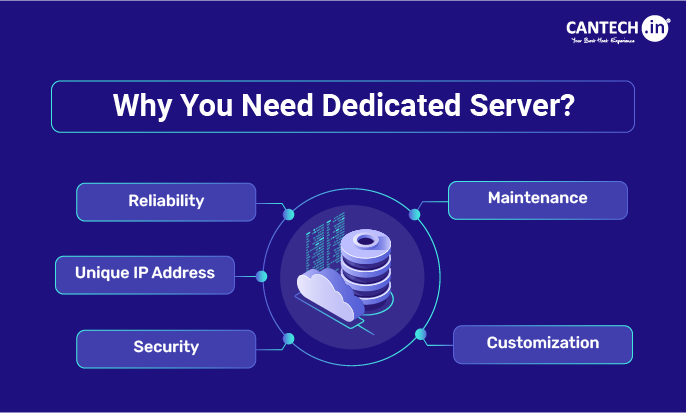
While on shared hosting or budget cloud, you share CPU, RAM and bandwidth with hundreds of other tenants, whereas with a dedicated server, the entire machine is at your disposal. This is crucial for SaaS products with a database at their core, heavy e-commerce stores and APIs where milliseconds of latency can decide between a paying and non-paying customer.
2. Heightened security needs
Many start-ups underestimate the security needs at the early stages. While building a product for the mass market, dealing with customer payments or storing their personal data, shared hosting can quickly become a liability due to the lack of control and possible breaches. With a dedicated server, the start-up has full power over the firewalls and encryption at their disposal. Another benefit of the approach is easier compliance with various regulations (SOC 2, HIPAA, PCI DSS, etc.), which most of the start-ups with enterprise ambitions will need to deal with at some point.
3. Presence on the internet
On shared hosting plans, the same IP address is typically used, which can considerably impact the performance of the start-up. For example, if another website on the same IP gets blacklisted, the search engine ranking of the start-up will temporarily suffer. Having a dedicated server means having a dedicated IP address, which isolates the start-up from the problems of others.
4. Growth and scalability
At their early stages, start-ups rarely plan to experience a traffic spike right after the launch or after a single mention in the press. Shared hosting plans or even entry-level cloud services usually have a traffic limit, beyond which the performance plummets, degrading the user experience. With a dedicated server, there is much more headroom for growth, and the start-up can scale resources up and down as needed. Some providers let you grow from a single server into a cluster with load balancing to distribute the incoming requests.
5. Budget predictability
With cloud services, it is not uncommon for the monthly bill to increase several times after a traffic spike. With a dedicated server, all expenses are known upfront, which is much easier for the start-up to plan. This is especially important for the early-stage companies needing to optimize every dollar and provide consistent financial reports to investors. The same benefit can be attributed to the performance of a dedicated server, which in some cases can outperform a similarly priced cloud server. With the right balance of resources, a properly configured server can handle much more traffic than a comparable cloud instance.
6. Full control
Some start-ups require full control over their environment to meet specific technical requirements. For example, a company might have a set of scripts and programs, written in an unconventional way, which they want to host on the server. Or they might have legacy technical debt from the acquisition of another company, which cannot be easily migrated elsewhere. Or the software they use requires a certain setup or level of access, which is unavailable on shared hosting plans. In all such cases, a dedicated server gives a much-needed degree of freedom.
7. Business continuity
Start-ups tend to ignore the importance of disaster recovery planning until they have to deal with serious consequences of ignoring it. Whether it be a corrupted database or simply a disk failure, the loss of data is stressful and expensive. A dedicated server is much easier to secure against such vulnerabilities through RAID, off-site backups and, in some cases, a mirrored server in a different data centre for fail-over purposes. Having such measures in place reassures both employees and investors that the start-up is serious about its operations about long-term growth, which is vital for both retention and fundraising success.
8. Enterprise sales
When dealing with enterprise sales, the question of security and data privacy is paramount. Having a dedicated server gives much needed breathing space when it comes to such conversations, as the start-up can specify exactly what infrastructure their data resides in and what security measures are in place. This is especially important at the later stages when the start-up begins to acquire larger enterprise customers.
9. Managed vs unmanaged
Most start-ups do not have a dedicated system administrator, which puts them in an awkward position when it comes to choosing between a managed dedicated server and an unmanaged dedicated server. The former takes care of all technical specifics for a fee, which is comparatively high, while the latter acts as a regular server in which the technical know-how is assumed to be with the client. It is always better to err on the side of caution when choosing between the two, as the wrong choice can lead to either underutilized resources or uncompensated liabilities.
10. Signals for change
Sometimes it is not easy to understand whether or when the change should happen. These signs can help you determine whether you need a dedicated server and when it is time to begin the research process.
- The application’s response time is degrading under increasing traffic loads
- The bill for a cloud service varies inconsistently from month to month
- An investor or a potential customer has asked a compliance-related question the start-up was unable to answer
- The start-up regularly grows beyond the limits imposed by a shared hosting plan
- The upcoming feature release has the potential to raise the start-up’s compliance level
If two or more of these red flags are present, it is time to begin the research process.
Who Should Consider Dedicated Server Hosting? and Who Might Not?
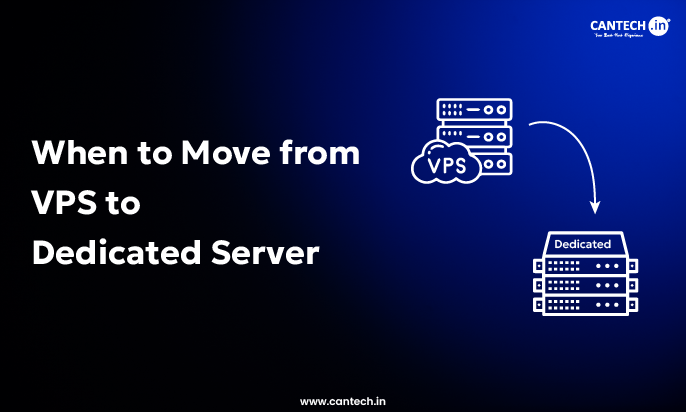
Dedicated hosting is rarely a good idea for early-stage start-ups. You’re much better off with cheaper shared or VPS hosting until you’ve got some traction. , after which you can evaluate when to move from VPS to dedicated server. Dedicated servers make sense when you see one or more of the following five signs:
- If you are handling valuable transactions or processing sensitive customer data
- If there have been outages on your shared hosting that impacted uptime or performance
- If you are targeting enterprise customers who demand compliance and/or physical location of servers
- If your engineering team requires customized server specs not available in the cloud
- If your cloud costs are spiking unpredictably or proving too hard to control
The Trade-offs to weigh
It is also important to note potential downsides of dedicated servers. They are typically more expensive than shared hosting, and an unmanaged service requires in-house technical expertise (or a more expensive, fully managed service). A start-up with no visitors is unlikely to need either of these, and the choice should be based on a cost-benefit analysis according to one’s traffic and risk tolerance rather than made prematurely.
Conclusion
Dedicated server hosting is not a luxury, but a necessity for companies which have already established their presence on the web and are looking to take the next step in growth. And while it might seem counter intuitive, preparing for this stage ahead of time proves to be more beneficial than waiting for an emergency.
That’s exactly where Cantech comes in. Our dedicated server hosting plans are ideal for growing companies which require high-performance hardware, flexible managed/unmanaged options, 24/7/365 infrastructure monitoring and scalability. Whether you are preparing for your next round of funding, landing your first enterprise customer our team will help you find the right dedicated server hosting plan for your specific needs.
FAQs
Is dedicated server hosting not too expensive for an early-stage startup?
While a dedicated server lease does have a higher price tag than shared hosting or even an entry-level cloud offering, this cost is justified if you’re already handling significant transaction volumes, dealing with sensitive data, or are experiencing occasional traffic spikes. Otherwise, this is indeed a case of paying for something you don’t need yet. The breakeven point will be reached sooner than you’re expecting, especially if your cloud bill is spiking erratically.
When should an early-stage startup consider dedicated server hosting?
Your business case for a dedicated server is strong if you experience frequent performance issues due to traffic spikes, have a cloudy bill that hardly ever follows a predictable pattern, require the degree of isolation that public clouds rarely offer (e.g., HIPAA compliance), or simply max out the resources of your shared hosting or cloud instance. If you check off two or more of these boxes, it’s time to think about dedicated server hosting.
Can I scale my operations if I go with a dedicated server?
You can scale both vertically (get more RAM, CPU power, and storage) on the same server, and horizontally (deploy a multi-server setup with load balancing) as you grow. The transition from a single server to a production-grade multi-server architecture is much smoother than you’d expect.