VPS (Virtual Private Server) Hosting is a type of web hosting that divides a physical web server into isolated virtual web servers. Dedicated CPU, RAM, Storage, and operating systems are provided to each VPS, which gives them a greater boost for performance, security, and scalability than shared hosting, while still not being as expensive as a dedicated server.
What is a VPS (Virtual Private Server)?
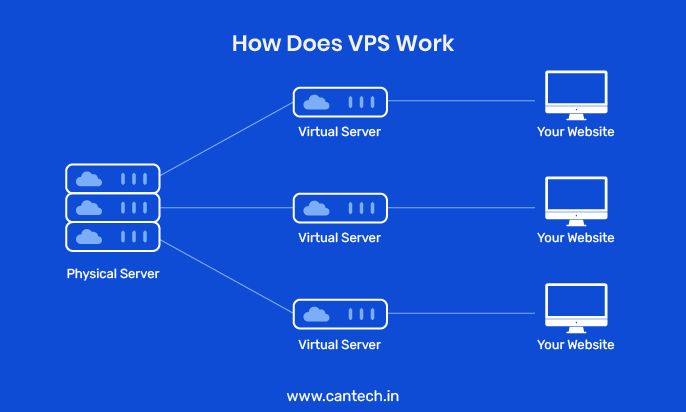
Do you have a question of what is VPS server or keen on learning VPS meaning? Let me simplify it for you: It means a segregated area in a physical server; it is likened to renting an apartment in a large house. The physical server at the back is partitioned into many virtual servers – Your very own VPS. In this, you have access to some of the resources (CPU, RAM, storage) and can modify your flat according to your needs.
VPS, unlike common shared hosting, where resources are distributed to various web hosts, provides dedicated resources. This, in terms of performance, security, and control, is a better plan for websites that are growing out of shared web hosting plans or those that are specific.
Also read: What is a Virtual Machine?
What is a VPS Hosting Used For?
VPS hosting is used across a wide range of applications, from running websites to managing complex business operations. Here are the most common use cases:
Running Websites and Web Applications
A VPS is more powerful than shared hosting because it provides dedicated CPU and RAM, making it ideal for websites with growing traffic or resource-heavy applications. Whether you run an e-commerce store, a membership site, or a SaaS platform, a VPS ensures consistent speed and stability. You can also customize your server environment to match exactly what your application needs.
Developing and Testing Environments
Developers widely use VPS servers to create isolated environments for building, testing, and staging applications before they go live. This way, new features and updates can be tested safely without affecting the production website or application. You can easily spin up multiple environments on one VPS and reset them whenever needed.
Email and File Servers
Businesses use VPS hosting to run their own private email servers, giving them full control over email delivery, storage, and security without relying on third-party services. A VPS can also serve as a centralized file storage solution for teams, with reliable backup and remote access from anywhere. This makes it a practical and cost-effective alternative to expensive enterprise storage solutions.
Gaming Servers
Gamers and gaming communities use VPS servers to host multiplayer game servers with better control, lower latency, and custom configurations. A VPS gives you root access to install game server software, adjust settings, and manage player access, something shared hosting cannot offer. It is also scalable, so as the gaming community grows, you can upgrade your VPS plan to match the demand.
Read more about what is VPS used for in a detailed guide.
How VPS Hosting Works?
Here’s a simplified breakdown:
Physical Server Infrastructure
A powerful server, for example, is an excellent device that has a high amount of processing power, memory, and free space on a storage device.
How Virtualization Divides the Server
The VPSs are carved out of this server by employing virtualization software to divide it into numerous, distinct sections.
Dedicated Resource Allocation
For processing, storage, and memory, VPSs are allocated an exclusive piece of CPU, RAM, and disk space, just like your own apartment in the building.
Root Access & Server Control
You own your VPS because you have root or admin access to your hosting, meaning that you can install programs and even configure your server’s parameters according to your website’s requirements.
What are the Types of VPS Hosting?
The right type of VPS hosting is essential for best server management and resultant website performance. Each type includes different levels of support and control. Know more through the below differentiation of three types of VPS hosting:
Linux VPS Hosting
Linux VPS Hosting is a type of virtual private server that runs on a Linux-based operating system. It uses virtualization technology to divide a physical server into multiple virtual servers, each with dedicated resources like CPU, RAM, and storage.
Unlike shared hosting, a Linux VPS gives you root access, allowing full control over server configuration and software installation.
Also, Learn What is Linux VPS Hosting in our detailed guide.
Windows VPS Hosting
Windows VPS Hosting is a virtual private server that runs on a Windows operating system, typically Windows Server editions.
It provides a familiar interface along with remote desktop access (RDP), making it easy to manage even for non-technical users.
Related blog: What is Windows VPS Hosting?
Managed VPS Hosting
If you want minimal technical involvement from your side, fully managed VPS hosting is for you. The VPS hosting provider is in control and responsible for handling the extensive server management.
Right from the server’s initial setup, installation of the OS, control panel, and necessary applications to managing ongoing tasks such as updates, security patches, and monitoring for potential threats, they handle all. It also includes automated backups to make your data recoverable in case of issues.
If you lack technical expertise or prefer to focus on the website’s content instead of managing the server, you must choose Managed VPS services.
Also read: What is Managed VPS Hosting?
Unmanaged VPS Hosting
The users with advanced technical skills use this VPS hosting type. That is, they can manage their own servers and are capable of optimizing them for performance and security.
The hosting provider gives you full control over the server. You are responsible for the installation of the operating system and applications. Also, ongoing maintenance and security management are on your head. You also need to configure the server, apply updates, and handle any issues that arise.
All in all, unmanaged VPS hosting is more cost-effective but requires a good understanding of server management or the ability to hire someone with the necessary expertise.
Learn more about What is Unmanaged VPS Hosting?
Semi-Managed VPS Hosting
Semi-managed VPS hosting is a middle VPS hosting type between managed and unmanaged ones. When the hosting provider handles critical aspects such as hardware maintenance and security updates but you are responsible for managing day-to-day server tasks such as software installations and configurations, this setup is called Semi-managed VPS hosting.
Thus, it offers a good balance of control and support. If you have server management experience but still need assistance with core server operations, you may choose this type of VPS hosting. It is mostly more affordable than fully managed hosting. However, you need to have a basic understanding of server management.
Compare Managed and Unmanaged VPS
How Does VPS Hosting Compare to Other Hosting Types?
Cloud vs VPS
While both VPS and cloud hosting offer scalability and flexibility, there are key differences:
- VPS: Being a VPS, resources are devoted to a particular server, resulting in efficient and consistent performance. You may be an owner managing specific resources without sharing with anyone.
- Cloud Hosting: Resources are elastic and customizable to meet your needs. They can easily be adjusted to decrease or increase their size. Just imagine having the right to multiple apartments in the cloud depending on the size you need within a certain period.
It is up to your website’s needs to decide whether to go for VPS or Cloud hosting. Stable performance and a known server environment are important here; thus, if you prefer stable work and an expected result, you should choose VPS. If you are seeking infinite divisibility and a usage-based or usage-dependent pricing model, then cloud hosting might be your winner.
Related blog: What is Cloud VPS Hosting?
Dedicated vs VPS
Both VPS and dedicated servers offer high levels of control and performance. Still, there are cost considerations:
- VPS: It is more effective than dedicated servers. This is because many virtual servers are present in a VPS physical server, which distributes the cost.
- Dedicated Server: This is the best option, as it provides administration of the whole physical server without dividing it into more users.
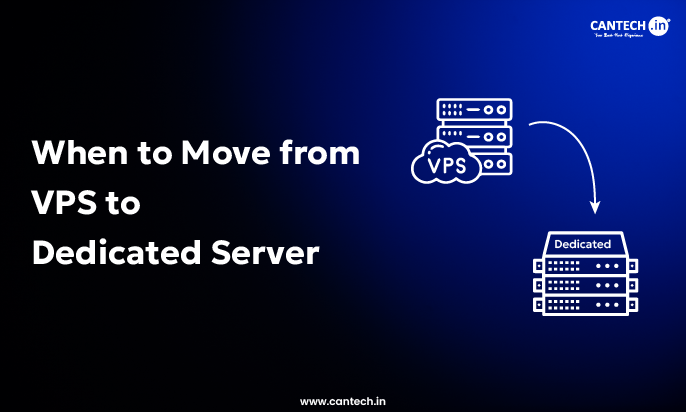
VPS is a good middle ground: It offers great extent and speed at a better cost than the dedicated server but is more easily affordable. It is ideal for sites that have outgrown shared hosting services but may not be powerful enough to be run on dedicated servers.
Compare VPS vs Dedicated Server in this blog
Self-Managed Vs Managed VPS
- Managed VPS: Savvy and its services are enhanced by the hosting provider, and they work on server maintenance, security updates, and other technicalities. Cantech offers managed VPS hosting for website owners who don’t want to bother with the technicalities of managing the server.
- Self-Managed VPS: This means that you are entirely in control of the server resources, but you have to handle everything on your own. It is like being the owner of your custom website and fixing all those regular problems and issues.
The choice between a managed and self-managed VPS lies in the technical sophistication. If you are willing to manage your server, then self-managed VPS can be an affordable option. However, for those who do not like using a hosting provider with a proactive approach to managing their VPS, there is a managed VPS which provides that comfort.
Bonus tip: There is usually a distinction made between fully managed and self-managed VPS, and most providers offer both so you can decide how much, if any, micromanagement you require.
Shared vs VPS
To start with, shared hosting is a hosting type suitable for basic websites as it is affordable. In contrast, VPS hosting is ideal for websites that require more hosting resources as it offers more flexibility than shared hosting. Here’s a quick comparison:
- Shared Hosting: It is suitable for websites with low traffic or those still being developed. Many resources are still expected to have multiple websites, which makes their usage cheaper, but they need to improve in speed and appearance.
- VPS Hosting: It is best suited for sites that are still evolving and may need more configurations, security, and stability in terms of resource usage. It is a carbon copy of shared hosting with added features such as dedicated space, which costs a little more but provides solitude.
Real World Scenario: Comparing a VPS with a shared hosting service could be imagined as living in a dormitory – it’s cheap, but you have little control over your space and assets. VPS is like having your own apartment – it is more spacious, flexible, and private than shared accommodation but somewhat more harbinger of responsibility.
Also Read: Shared Hosting vs VPS
VPS vs WordPress Hosting
VPS hosting and WordPress hosting have their own distinct advantages and purposes. The choice would depend on your specific website needs and management preferences.
- VPS hosting: It offers a high level of control and performance using a dedicated virtual server performing independently from others. It is a cost-effective solution with the physical resources shared among multiple virtual servers. VPS is the next step after shared hosting with the increased resource requirements. It offers great flexibility without the high cost of a dedicated server. Also, it suits various use cases and applications or websites that may not necessarily run on WordPress.
- WordPress hosting: It is a specifically tailored hosting type for websites that are built on the WordPress platform. It offers optimized performance, better security, and seamless integration with WordPress features. It also includes automatic updates, easy plugin installations, and dedicated support for WordPress-related issues. Its features include unlimited bandwidth and quicker loading times to enhance the WordPress experience.
All in all, you can choose VPS hosting if you need a cost-effective solution that supports a variety of websites and applications. On the other hand, WordPress hosting is used if you are running a WordPress site and require specialized features and optimizations tailored to this platform.
How to Choose the Best VPS Plan?
The guide to selecting a VPS hosting plan includes some key factors based on your needs and technical aspects. Your choice can greatly impact your website’s performance and cost-efficiency so the factors are discussed below:
- Reliability and Uptime: Your VPS provider and its services must offer reliability. If they guarantee a high server uptime of around 99.9%, then their plans are ideal for your website or app. This backs the fact that your website will remain accessible and perform well. High uptime is crucial for maintaining search engine rankings, user satisfaction, and overall business operations.
- Cost and Resource Allocation: Cost as per your specific requirements is a major consideration. VPS hosting prices differ across a provider’s various plans based on factors such as RAM, bandwidth, storage type (HDD or SSD), and storage capacity. The number of websites or applications running and the expected traffic volume determine the resources you will need.
With regard to the types of VPS hosting, unmanaged VPS plans are more affordable but require more expert server management expertise on the user’s end. Whereas, fully managed VPS services include more support and higher costs.
- Operating System: Your project requirements decide the OS type – Linux based VPS and Windows VPS. VPS provider must offer flexibility to choose your operating system such as CentOS, Ubuntu, or other Linux variants; or Windows. The right OS is important for VPS performance and compatibility with your applications.
- Security Features: VPS security is better than shared hosting. However, the providers offer various levels of protection. You need advanced security features, especially for cloud based VPS solutions, and must look for a provider who can offer comprehensive security measures.
- Customer Support: The VPS hosting plans must offer effective customer support that addresses any issues instantly. Your provider plans need to have 24/7 multi-channel support to assist with server setup, management, troubleshooting, and maintaining uninterrupted service.
- Hardware and Performance: The quality of VPS performance depends on its hardware. Thus, your provider must include modern technology such as multi-core processors, ample RAM, and SSD storage. SSDs offer reliability and speed that further enhance overall uptime and performance.
- Root Access: VPS hosting plans with root access mean full control over your server. You can customize settings, install applications, and configure the server. Managed VPS plans may limit you from this access, and unmanaged VPS plans provide more freedom for advanced users.
- Backup Solutions: Backup solutions help safeguard your data. Thus, your VPS provider’s plans must guarantee easy and reliable backup options to prevent data loss during upgrades or other changes. Regular backups help avoid the risk of significant downtime and potential losses.
- Managed vs. Unmanaged VPS: This choice depends upon your needs and capabilities. Fully managed VPS hosting offers a user-friendly experience with extensive support and management services for better performance. However, if you need more control and customization, unmanaged VPS provides greater flexibility but requires more technical expertise. You may also check for semi-managed VPS hosting with your provider, which includes the benefits of both managed as well as unmanaged.
- Scalability: When choosing a VPS plan, scalability is a key consideration. Your hosting needs will grow as your website traffic increases, so choose a provider that allows you to upgrade CPU, RAM, and storage without migrating to a new server. Cantech’s VPS plans are designed to scale effortlessly as your business grows.
- Control Panel: A good VPS plan should include an easy-to-use control panel like cPanel or Plesk that allows you to manage your server, domains, emails, and databases without needing command-line expertise. For beginners especially, a well-integrated control panel can save significant time and reduce the learning curve of server management.
Read more on what is VDS and why businesses prefer it.
Why Choose VPS Hosting?
- Enhanced Performance: Adding resources specifically meant for this cause entails giving website visitors a fast loading time.
- Scalability on Demand: Do you require more processing and or storage capacity? Almost all VPS packages contain a function that would enable you to increase the amount of resources provided to you as you grow big.
- Security & Control: You are provided with more control over the server environment so that security can be managed more effectively and each website can be configured according to the specific content hosted on the server.
- Cost-Effective Upgrade: In contrast to dedicated servers, you get a whole lot better performance and package all this for quite a lot less.
What are the Pros and Cons of VPS Hosting?
VPS hosting can be seen as a bridge between shared hosting and dedicated hosting, even though it may not be ideal for everyone. Here are some advantages of VPS and disadvantages to help you determine if it is suitable for your website.
Pros of VPS
- Enhanced Performance and Scalability: Unlike shared hosting where resources are shared, VPS provides dedicated CPU, RAM and storage space hence making it possible for you never to experience downtime even during high traffic times.
- Security: To reduce the possibility of a security breach by a neighbour on the same server as you, every Virtual Private Server stands on its own. You have this sense of freedom when it comes to your security set-up.
Learn more about How to Secure Your VPS Server. - Root Access and Customization: The root access in VPS gives individuals complete autonomy in managing their server preferences; their ability to install new software shall also enhance both their operations and purposefulness.
Cons of VPS
- Increased Management Complexity: VPS hosting tends to have an increased level of management complexity compared to shared web hosting. This is due to the fact that VPS hosting requires more technical skills to effectively manage server software configurations and installations.
- Higher Cost than Shared Hosting: VPS hosting comes with a high price tag when compared to shared web hosting because VPS plans cost more than shared web hosting plans. However, budget conscious consumers might still find this costly alternative cheaper than dedicated servers.
When Should You Switch To VPS Hosting?
Here are some signs that your website might be prepared to when switch to VPS Hosting?
- Shared Hosting Issues: If your site is loading slowly or is experiencing load issues due to depleted resources in shared hosting, a VPS can be an exceptional improvement.
- Traffic Surge Anticipation: Are you at a point in the sales cycle where you anticipate a flood of customers to your website due to a specific marketing drive or product release? The need of VPS is necessary. It can attest that your website is well-equipped to handle such an increase in traffic without a sign of straining.
- Customization Need: Are there any peculiarities in database management, specific application requirements, or a server environment that separable hosting cannot satisfy? VPS gives you the liberty to make alterations on the server of your choice.
- Security Spotlight: If your website involves handling sensitive data or you want a more fortified stance, the superior control of VPS is priceless.
Explore the complete guide on VDS vs VPS to learn more.
Why Choose Cantech VPS Hosting?
Cantech VPS is defined as all the necessary tools and solutions for making a business stand out from all others by having a powerful and secure online presence.
- Dedicated Resources: With this type of hosting, you are allocated a certain amount of CPU, RAM, and disk space that cannot be overused by other users. This prevents your site from slowing, lagging, or crashing due to high traffic.
- Enhanced Security: Every VPS operates within its ambience, does not share resources with another account, and is thus safe from security intrusions from the other end.
- Root Access: Configure your server even further to achieve your desired performance and install the necessary software.
- Scalability: You won’t have to worry about running out of space, as there are flexible options for scaling up to the next level when your website expands.
- 24/7 Support: Depending on what you are using, you may need to contact Cantech support; the support team will assist you in case you encounter any technical problems at any time.
- Cost-Effective: VPS hosting takes a conservative approach between shared hosting, which is also cheap yet not very powerful, and dedicated servers, which are definitely the most powerful but also the most expensive.
Checkout our curated list for Top VPS Hosting Providers in India
Conclusion
VPS hosting is the ideal middle ground between shared hosting and a dedicated server, giving you dedicated resources, full control, and the flexibility to scale as your business grows. Whether you are running a high-traffic website, an e-commerce store, or resource-intensive applications, VPS hosting gives you the performance and security you need without the cost of a full dedicated server. If you are ready to upgrade your hosting, Cantech’s VPS plans offer reliable performance, 24/7 support, and plans starting from just ₹659/month.
FAQs
Why Choose VPS Hosting?
Virtual Private Servers (VPS) offer a unique Central Processing Unit (CPU), Random Access Memory (RAM) for memory, and excellent storage. Possibility in shared hosting is riskier since one vulnerability may affect multiple accounts while Virtual Private server mostly features in virtual memory sectors isolated from hardware ones thus maximizing data confidentiality and reducing hacking.
What is VPS Hosting Used For?
If your needs are beyond those offered by shared hosting servers, you may consider VPS hosting since it is more cost-effective when compared to other solutions. These could be due to issues such as having more control over your server, experiencing traffic surges for businesses that are growing, smooth e-commerce operations during peak seasons, isolated testing environments for development teams, sites relying on demanding CMS platforms or web applications that require specific customization or software installation.
Is VPS Hosting suitable for Content Management Systems (CMS)?
Websites that have been constructed using famous CMS platforms such as WordPress and Drupal are suited best by VPS hosting: if they require VPS hosting most especially because they attract many visitors or have specific features.
Is VPS Hosting good for growing businesses?
Yes, indeed! In case your site is growing or demands more resources, shared hosting may be helpless. For that reason VPS Hosting is a customizable alternative that allows you to grow the resources in line with your needs. You can enhance your plan in order to deal with the demands of increased CPU, memory as well as storage needs quite easily.
Is VPS Hosting Secure?
Yes, VPS security is better than shared hosting. It offers isolation of virtual resources from other VPS users so the setup prevents security breaches like in shared hosting. Also, an issue on one VPS won’t affect others on the same physical server.
However, the security offerings from the provider and the specific plan are essential to consider to ensure a secure VPS. You must look for VPS secure plans that offer advanced features like regular updates, firewalls, and intrusion detection systems. Also, consider robust protections and regular backups.
Is VPS Hosting Fast and Reliable?
VPS hosting offers dedicated resources ( CPU, RAM, and storage) and so can facilitate high speed and reliability. This means your website or application experiences minimal downtimes and better performance. Also, VPS providers often guarantee high uptime (like 99.97%) so that your site remains accessible and operates smoothly.
Is VPS Good for Hosting?
The answer to ‘How VPS compares with shared hosting & dedicated hosting?’ can give an idea of what situations VPS is good for hosting. Well, VPS hosting is one of the best web hosting types for websites and applications that need more resources and control than shared hosting. Also, it offers a cost-effective solution to a dedicated server if you do not require its full resources.
Thus, it is a balanced solution with dedicated resources, flexibility in configuration, and the ability to handle higher traffic volumes. It is highly preferred for blogs, e-commerce sites, forums, testing environments, secondary storage, etc.
How Do I Choose a Good VPS?
A good VPS depends on your specific needs, budget, and technical aspects. You need to look for a provider that offers high uptime guarantees (e.g., 99.97%) with 24/7 multi-channel support. Further, the VPS hosting features in your chosen plan should meet your budget, adequate CPU, RAM, and storage requirements, and include modern hardware like SSDs.
Also, check for advanced VPS security measures and backup solutions that your hosting provider has to offer. These are some of the considerations, you should also discuss what types of VPS hosting they offer – managed, unmanaged, or semi-managed.
What Are the Advantages of VPS?
VPS is the middle solution between shared and dedicated hosting. It uses independent virtual resources dedicated to your website or app for your own CPU, RAM, and storage needs. Thus, you get better performance and stability due to isolation from other VPS users and also its scalable & flexible resources. You can upgrade or decrease the resources as per your fluctuating needs.
Also, you get full root access that allows you to configure the server to meet your specific needs and install and manage custom software too. The isolation from other users also enhances security compared to shared hosting. All in all, it can handle high to moderate-traffic websites and critical applications.
What Are the Disadvantages of VPS?
When compared to shared hosting, VPS hosting can be more complex as it requires more technical knowledge. Also, VPS resources are shared among multiple virtual servers on one physical server so other users on the same physical machine might affect your performance with regard to resource sharing and security. Further, it is more expensive than shared hosting, though cheaper than dedicated servers.
Can I Create My Own VPS?
VPS setup needs a virtualized environment on a physical server. This requires advanced technical skills and virtualization technology. Practically, it is better to purchase a VPS from a hosting provider that offers pre-configured solutions and support at a lower cost.
How Do I Access My VPS?
You can access your VPS via SSH (for Linux) or Remote Desktop Protocol (RDP) (for Windows). Thus, you can manage the server, configure settings, and install applications remotely using them. Also, you need to have the necessary credentials and permissions from your hosting provider for their access.
Want to know if RDP Vs VPS: Which is Right for You? checkout the blog.
VPS Hosting vs Shared Hosting: Which one should I choose?
The choice between the two depends on your server resource requirements and control needs:
- Shared Hosting: This hosting type is suitable for small websites with low traffic. It shares resources among multiple users so if your website or app demands increase it can lead to slower performance. Also, you have minimum control over the server environment.
- VPS Hosting: It is suitable for moderate to high-traffic websites or apps as it offers dedicated resources. It can facilitate better performance with greater control.
VPS Hosting vs Dedicated Servers: Which one is the better hosting type for my website?
These 2 types of web hosting differ in terms of resource sharing and costs:
- VPS Hosting: This option is more cost-effective than dedicated servers. It offers dedicated virtual resources but shares the physical server with other VPS users. It is suitable for high to moderate-traffic websites.
- Dedicated Servers: This type gives complete control over a physical server and all its resources. All the physical resources are allotted for your high-traffic sites. Also, it can meet extensive storage and security requirements. Thus, it comes at a higher cost.
Do I Need VPS Hosting?
If shared hosting resources are not enough or you require more control and flexibility, VPS hosting is a great option. It offers dedicated resources for better performance. It can handle higher traffic volumes too.
Thus, VPS hosting is suitable if you need more than shared hosting but less than the full capabilities of a dedicated server.