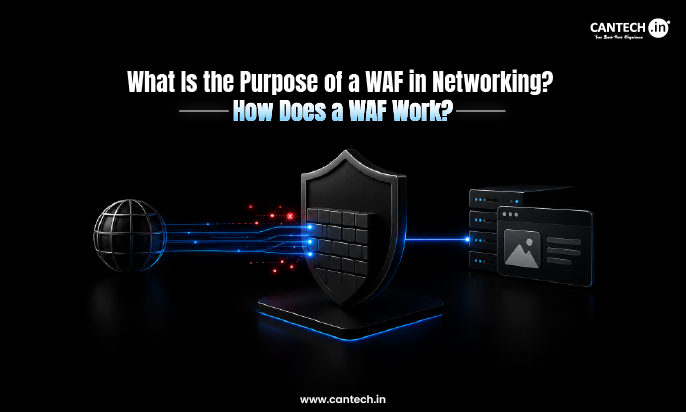

A web application firewall monitors, filters, blocks HTTP/HTPPS traffic to and from web applications, it protects against attacks like SQL injection, cross-site scripting and other common exploits.
Introduction
Every time a user interacts with a website – be it logging in, making a search, or uploading a file – their request has to pass through the application’s internal workings. Attackers use this fact to launch attacks and interfere with the intended operation. Traditional firewalls are not designed to protect web applications’ specific needs since they mainly operate at lower levels of the network stack. A Web Application Firewall (WAF) is a security tool that provides protection at the application layer by filtering and monitoring traffic going through the web application. In this blog, we explore what a web application firewall is, its features and more.
What is a Web Application Firewall?
A WAF is a security tool that monitors and filters web traffic based on predefined rules to protect HTTP and HTTPS traffic. While they perform similar functions with regular firewalls, WAFs operate on a higher level, the application layer. They analyze the content of web requests and responses and block any requests that contain suspicious payload data. This feature allows WAFs to protect against various attacks that target application layer vulnerabilities, such as SQL injection and cross-site scripting. A WAF typically is placed in front of the web application as a reverse proxy to monitor and filter all requests directed at the application.
Key Features of a WAF
Some of the key features of a WAF are:
Traffic inspection/filtering:
scanning of HTTP/S data streams in real-time to identify and neutralize attacks.
A set of rules customizable for your application:
WAF uses predefined rulesets based on the most common attacks found in the OWASP Top 10 standard to filter traffic going to your app.
Mitigation of bots:
Ability to differentiate between human-initiated and robotic traffic and block the latter.
SSL/TLS decryption:
Decryption and encryption of data transferred through secure and non-secure HTTP connections.
Logging and reporting:
Ability to store and analyze all traffic data for audits and regulatory compliance.
Virtual patching:
Provides protection from publicly known vulnerabilities until the code can be fixed.
Types of WAFs
Here are some of the common types of WAFs:
1. Network-based WAF
- Usually, network-based WAFs are hardware-based solutions. They are deployed locally to ensure high performance by reducing latency.
- The main advantage of network-based WAFs is their high performance, while the primary disadvantage is their high cost.
2. Host-based WAF
- This type of WAF is designed to be embedded in the application software. It provides deep customization and is less expensive than network-based WAFs. However, it requires more server resources and is complicated to maintain.
3. Cloud-based WAF
- Cloud-based WAFs are provided as a service by third parties. They are the easiest to install, do not require much investment, and are highly maintained. On the other side, they provide less control and are dependent on the vendor.
Blocklist WAF vs. Allowlist WAF
WAFs use one of the two main types of security models:
Blocklist (Negative Security Model)
A blocklist WAF filters inbound traffic by comparing it against a list of known threats. This approach is generally more straightforward to implement because it only relies on known signatures that the security team must research and document in advance. A negative security model makes it challenging to filter new traffic patterns not yet identified as malicious, so potentially dangerous requests may get through anyway.
Allowlist (Positive Security Model)
An allowlist WAF does the opposite; it attempts to identify what traffic is legitimate and filters out everything else. This approach is more complicated but can be exponentially more secure, especially against zero-day attacks. In contrast to blocklist WAFs, an allowlist solution denies everything by default, only allowing explicitly permitted traffic patterns. This security model requires more resources to operate since it must constantly evaluate every request. This approach also demands more time and effort from the security team to define legitimate patterns and modify them as needed. Modern WAFs frequently employ both positive and negative security models to maximize protection and usability.
Benefits of Using a WAF
Key benefits of WAF are:
Protection from common attacks:
Protects the application from SQL injection, cross-site scripting (XSS), cross-site request forgery (CSRF), and other OWASP Top 10 attacks.
Compliance:
Helps achieve compliance with regulations such as the Payment Card Industry Data Security Standard (PCI DSS) that require deploying a WAF to secure payment data.
Less downtime:
Prevents DDoS and bot attacks that could bring the application down or consume resources.
Faster resolution of incidents:
provides the necessary information for incident resolution. All the attacks that take place are logged and reported.
Time to fix vulnerabilities:
Contributes to reducing the time between discovering a vulnerability and remediation by allowing the application to remain secure while the code is being fixed.
Conclusion
A Web Application Firewall becomes an indispensable security tool for any company that utilizes web-based applications. Being a protective layer between the application and the web, it helps in securing valuable information and ensuring the application’s availability to authorized users. However, the choice of web application firewall and its security model should be related to the organization’s risk appetite and current capabilities. Thus, despite being a powerful security tool, a WAF is not a guaranteed defense mechanism and should complement other security measures employed by the organization to protect its assets successfully.
FAQs
Is a WAF the same as a conventional firewall?
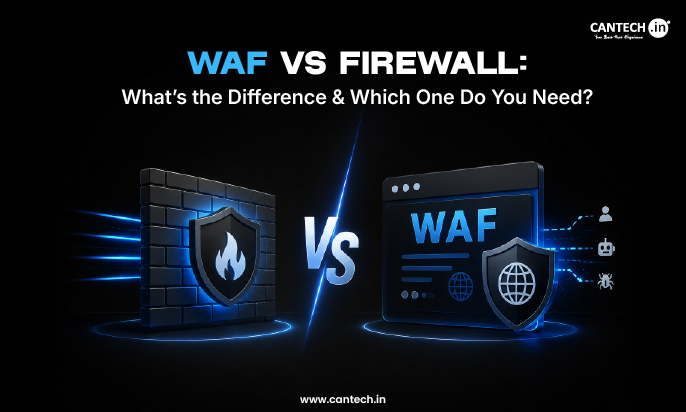
The primary difference between a conventional firewall and a WAF is that the latter analyzes the data packets’ content in the HTTP/S communication layer, whereas traditional firewalls operate on a lower level, relying on IP and port information.
Can a WAF protect against all forms of cyber-attacks?
No. While a WAF is an excellent security tool that handles most application-layer attacks adequately, it cannot provide protection against all potential threats, including insider attacks and problems related to infrastructure vulnerabilities.
Do I need a WAF for my small business?
If your small business relies on customer data, a WAF can be helpful in protecting this information. In addition, it can help you meet standard security requirements, particularly when processing financial data. In addition, there are cloud-based WAF solutions designed for small businesses.
What is the difference between a blocklist and allowlist WAF?
The choice between these two options depends on the particular needs of your organization. In general, a blocklist WAF is easier to maintain, although it may offer a lower level of security. A allowlist WAF, on the other hand, requires more resources to ensure that only approved destinations can be accessed.
How is a WAF typically implemented?
There are three primary WAF implementation options: hardware-based, software-based, and cloud-based solutions. The easiest way to adopt a WAF is to choose a cloud-based solution because they are usually the fastest to deploy.