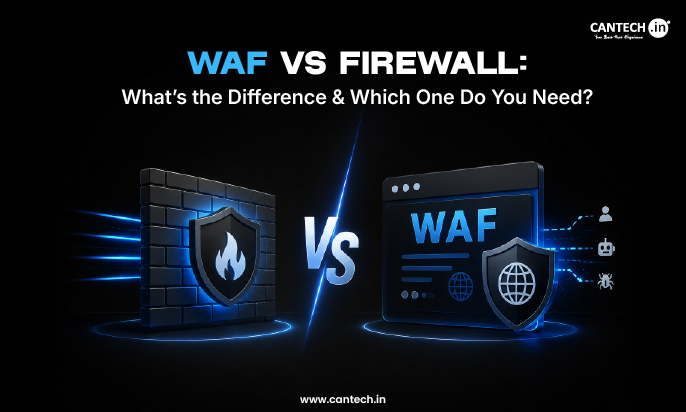
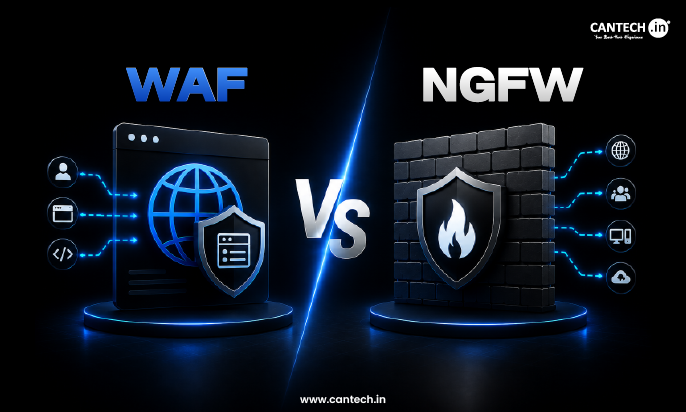
A WAF safeguards web applications especially, filtering layer 7 HTTP traffic for exploits like SQLi/XSS. An NGFW protects broader network traffic which combines traditional firewall rules with intrusion prevention, deep inspection and application awareness.
Introduction
Security teams are faced with a wide range of tools to choose from, and WAF and NGFW are two of the most popular. Both are designed to prevent malicious traffic from entering the network, but they work on different levels and prevent different types of attacks. It is important to understand how WAF and NGFW work and differ from each other to build a strong security strategy. That is why in this blog, we will compare the two types of firewalls and examine their strengths and weaknesses.
Web Application Firewall (WAF)
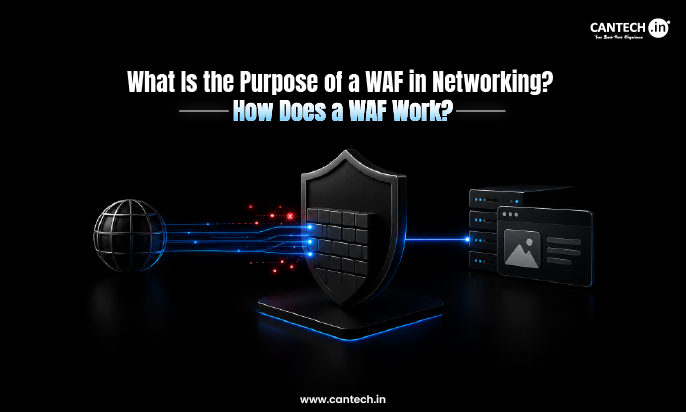
Web Application Firewall (WAF) A WAF is a security system that monitors and filters HTTP/HTTPS traffic to a web application, providing protection at the application layer (OSI Layer 7) from common attacks such as SQL injection and XSS. A WAF is a purpose-built security solution that helps protect web applications and APIs by analyzing the content of web traffic and blocking malicious traffic based on predefined security rules.
Features of Web Application Firewall (WAF)
Some of the features of Web application firewall:
- Deep inspection of HTTP/HTTPS request/response content
- Rule sets based on the OWASP Top 10
- Bot detection and mitigation
- API protection
- Virtual patching of known application vulnerabilities
For a deeper understanding of WAFs, including how they work, their key features, and the threats they help prevent, see our guide to What is a Web Application Firewall?
Next-Generation Firewall (NGFW)
The next-generation firewall (NGFW) is an evolution of the standard network firewall that takes packet filtering to the next level. It implements additional features to improve security, such as advanced packet inspection and intrusion prevention. The NGFW operates at the core of a network security infrastructure, and it usually works on layers 3 through 7, which allows it to inspect packets at a relatively deep level. However, it is not applied directly to applications but rather the network perimeter as a whole.
Features of Next-Generation Firewall (NGFW)
Some of the features of next generation firewall:
- Traditional stateful packet-filtering technology
- Intrusion prevention and detection capabilities (IPS/IDS), including application-layer protection
- Control of many different application-layer protocols, not just HTTP
- User-based or identity-based policies
- Built-in support for VPNs and other segmented networks
- Threat intelligence feeds and/or sandboxing for malware analysis
WAF vs NGFW – Which one should you choose?
The truth is that these solutions are not alternatives but rather supplements to one another. Whereas a web application firewall (WAF) is designed to offer protection at the application layer, the next-generation firewall (NGFW) is intended to secure the network. As such, an organization that relies on web applications for engaging with its customers while also needing to protect its internal network and resources is better off securing both with WAF and NGFW respectively. After all, the former would leave the applications vulnerable to attacks, and the latter would fail to sufficiently mitigate threats targeting the application layer.
Conclusion
The differences between Web Application Firewalls and Next-Generation Firewalls are significant, and recognizing these distinctions is critical in the development of comprehensive defense-in-depth strategies. WAFs are single-purpose devices, designed to focus exclusively on the detection and prevention of attacks against web applications. In contrast, NGFWs are multi-purpose devices that provide broader network-level protection while also incorporating limited application-layer protection. As such, the two solutions are typically deployed in concert, with each layer providing protection that the other cannot offer.
FAQs
Can an NGFW replace a WAF?
NGFW cannot replace a WAF because while some NGFWs provide web application filtering, they lack the specific application protection that a WAF provides against attacks like SQL injection and XSS.
Do I need both a WAF and an NGFW?
In most cases, yes. If you have web applications that require a WAF and networks that need to be protected with an NGFW, it is best to have both.
Which is more expensive to deploy?
NGFW is typically more expensive to deploy than a WAF, but many cloud-based options have made both more affordable, at least compared to buying hardware.
Which one should a small business prioritize first?
It depends on the business. If a business has a website that customers access, it should buy a WAF first. If it has a more extensive network infrastructure, it should be considered an NGFW.