A WAF protects web applications, while a firewall protects the network. A WAF checks web requests for threats such as SQL injection and XSS, while a network firewall controls traffic based on IP addresses, ports, and protocols. They do different jobs, so businesses often use both for stronger security.
Introduction
On the surface, a WAF and a firewall seem to be the same. They both sit between your systems and unwanted traffic, and act as a barrier to requests that may cause problems. They are, however, different in their level of operation and in the type of threat they defend against.
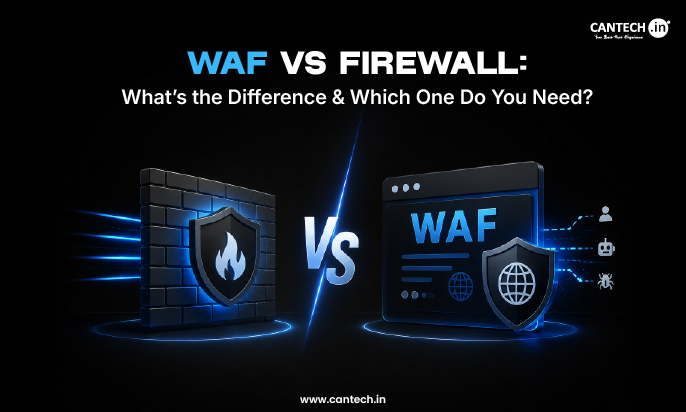
A network firewall regulates traffic that enters and exits a network, based on rules that are defined by various criteria including IP addresses, ports and protocols. A Web Application Firewall (WAF) is more in-depth, examining HTTP and HTTPS traffic before it enters a website or application.
So, which one is a website really going to need? This guide explains what a WAF is, what the differences are between a WAF and a firewall, the level of protection they provide, when to use them and why it makes sense to use both.
WAF vs Firewall: At a Glance
A WAF and a network firewall both help keep unwanted traffic away, but they look at that traffic differently. Here’s the difference at a glance:
| Feature | WAF | Network Firewall |
| Main purpose | Protects web applications | Protects networks and systems |
| Traffic it handles | HTTP/HTTPS requests | Network traffic and connections |
| Primary focus | Application layer | Network and transport layers |
| What it inspects | URLs, headers, parameters, requests and request content | IP addresses, ports, protocols and connections |
| Helps block | SQL injection, XSS and malicious web requests | Unauthorized connections and unwanted network traffic |
| Best suited for | Websites, APIs and web applications | Servers, networks and IT infrastructure |
| Replaces the other? | No | No |
In simple terms: A firewall controls who can connect to your network, while a WAF looks more closely at what visitors are sending to your web application. They solve different security problems and can work together.
What Is a WAF?
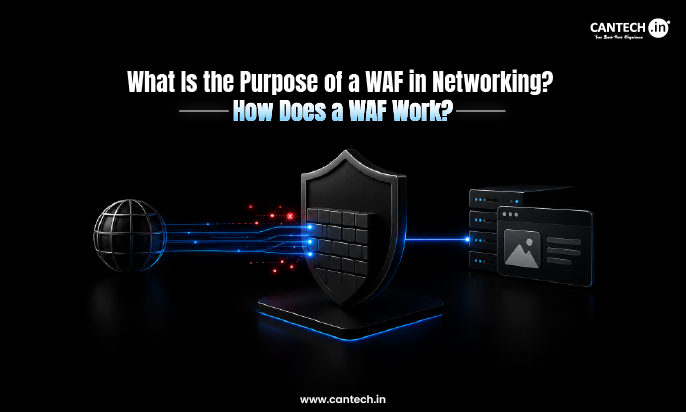
A Web Application Firewall (WAF) is a security solution that safeguards websites, web applications and APIs against malicious web traffic. It is placed in front of the application and inspects incoming HTTP and HTTPS requests before they reach the application or server.
A WAF can check various components of a request, such as the IP address, URL path, HTTP headers, query strings, cookies, and request body. It can permit, deny, count or question requests matching suspicious patterns according to its security rules.
This is especially helpful for application-layer attacks like SQL injection and cross-site scripting (XSS). It may also be used to filter out unwanted bots and other types of abuse on the web, depending on the rules set in place.
A WAF is a system that monitors not only the connection, but also the content of what is being sent to the web application.
What Is a Network Firewall?
A network firewall is a device that regulates traffic between networks or between hosts based on a set of security rules. It’s designed to determine which connections are permitted and which are denied, and to help block unauthorized access to protected systems.
Rules can be based on the source and destination IP address, ports, protocols, traffic direction, and connection state, depending on the firewall. Basic packet filtering, for example, can allow or block traffic based on these network-level characteristics.
A network firewall is thus more concerned with regulating access to the network than with knowing all the details of a web request. For instance, it can enable traffic to be sent to a web server via HTTPS, while a WAF filters the actual HTTP request for evidence of an attack like SQL injection.
In other words, a network firewall determines what traffic can enter a system, and a WAF determines what the web traffic is attempting to do.
WAF vs Firewall: Key Differences
Both a WAF and a network firewall block unwanted traffic, but they target different aspects of the connection. Here are the main differences.
Protection Focus
A WAF guards websites, web applications, and APIs against malicious web requests. Networks and systems are protected by a network firewall that determines which connections and traffic are allowed.
Traffic Inspection
A WAF examines the HTTP and HTTPS requests, such as the URL, headers, parameters, and request data. The primary function of a network firewall is to examine network information like IP addresses, ports, protocols, and connection status.
OSI Layer
A WAF primarily operates at Layer 7 (the application layer) because it must be able to interpret web requests. Typical network firewalls operate on Layers 3 and 4, but advanced firewalls can examine traffic at other layers as well.
Attacks They Help Prevent
A WAF can be used to prevent SQL injection, XSS, and other malicious web requests. A network firewall prevents unauthorized connections, unwanted ports, protocols, and network traffic.
Where They Are Deployed
The typical placement of a WAF is in front of a website, web application or API. Network firewalls are typically located between networks, at network boundaries, or around protected systems.
The difference is simple: a firewall is used to determine who can connect, but a WAF is used to determine what they are sending to the web application.
WAF vs Network Firewall: Are They the Same?
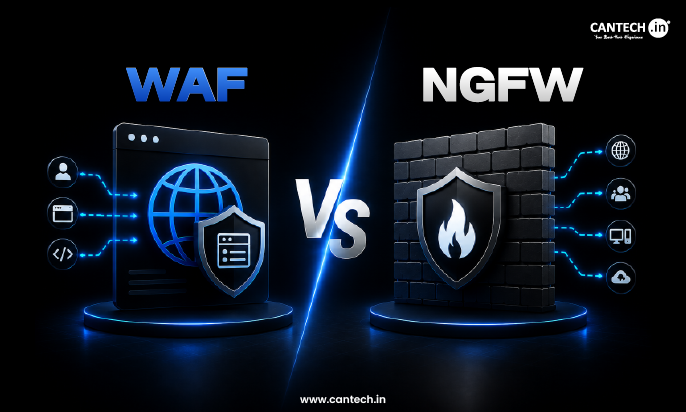
No. A WAF and a network firewall have different jobs. A WAF is built to protect web applications and APIs, while a network firewall controls broader traffic moving between networks, servers, and systems.
The difference becomes clear when looking at what they inspect. A WAF can examine HTTP and HTTPS requests for suspicious content, while a network firewall can control traffic using details such as IP addresses, ports, protocols, and connection state.
They can also work together. A network firewall can control access to the server or network, while a WAF adds another layer of protection for the web application itself.
WAF vs Firewall: Which One Do You Need?
The right choice depends on what needs protection. A WAF is useful when you run a public website, web application, or API and need to filter potentially harmful web requests. It can help protect against threats such as SQL injection and cross-site scripting.
A network firewall is important when you need to control access to servers, networks, or specific ports and protocols. It is commonly used to restrict unwanted connections and protect internal infrastructure.
For many businesses, the answer is both. A firewall controls network access, while a WAF focuses on the web traffic reaching the application. Using them together creates a more layered approach to security.
Can a WAF Replace a Firewall?
No. A WAF is not a Network Firewall. A WAF is used to monitor web application traffic, and a network firewall is used to monitor network traffic. Restriction of unnecessary ports, services, or network access is not eliminated by having a WAF.
Similarly, a network firewall might not be able to thoroughly analyze a web request to detect application-level attacks, like SQL injection or XSS.
They address various security issues, and it’s crucial to use the appropriate tool for each layer.
WAF vs Firewall: Which Is Better?
No one is just better. They guard various things. A network firewall is more suited to the management of network access, whereas a WAF is more suited to protecting websites, web applications and APIs from malicious web requests.
A combination of a WAF and appropriate network firewall controls can offer more protection than either one or the other when an application is exposed to the internet.
Conclusion
The key difference between a WAF and a firewall is that a network firewall is for network traffic, and a WAF is for web application traffic.
They are not rival security products. A firewall can regulate the connections that can be made to a system, and a WAF can inspect web requests that are made to the application. For internet-facing applications such as websites and APIs, using both when applicable can provide a more robust and multi-layered security environment.
FAQs
What is the main difference between WAF and firewall?
A WAF monitors HTTP and HTTPS requests for suspicious activity in web applications and APIs. A network firewall regulates more general network traffic based on information like IP addresses, ports, and protocols. A WAF is application-centric; a firewall is network-centric.
Is a WAF better than a firewall?
Both are good, for they have different uses. A WAF is more effective at defending against application-layer attacks like SQL injection and XSS attacks. A network firewall is more effective at managing network access and connections. Both are used in many environments for different security requirements.
Can a WAF replace a network firewall?
No, a WAF is not a network firewall. A WAF filters web application traffic, whereas a network firewall regulates access to networks, servers, ports and services. A website can be protected by a WAF without requiring firewall rules to limit unwanted or unauthorized network access.
Do I need both a WAF and a firewall?
For many applications that are exposed to the internet, having both can offer greater protection. A network firewall can be used to manage what traffic can access your systems, and a WAF can check web requests that are sent to the application. If both are required, it will depend on the infrastructure, application, security requirements and existing protection.
Does a firewall protect against SQL injection?
A traditional network firewall is not likely to reliably identify SQL injection attacks because it is primarily used to monitor network traffic and not the content of web requests. A WAF is a web application firewall that is specifically designed to scan and block HTTP and HTTPS requests and can utilize security rules to detect and block SQL injection attacks.