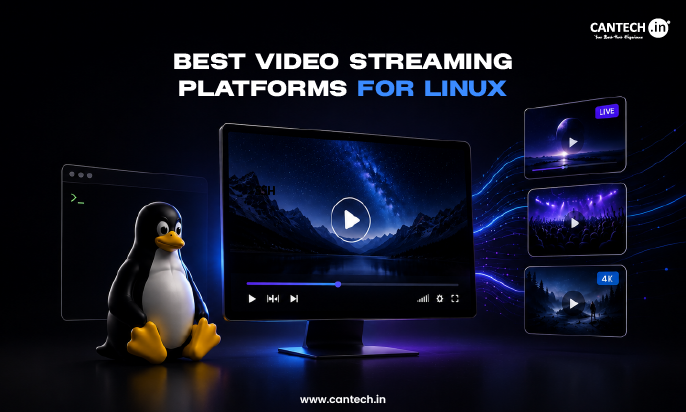
What Are the Best Video Streaming Platforms for Linux?
Some of the best video streaming services on Linux are Netflix, YouTube, Amazon Prime Video, and Twitch (through browsers), while Jellyfin, Plex, PeerTube, and Kodi offer ad-free and decentralized options.
Introduction
Linux has had an average reputation with video streaming ever since the platform’s inception. Its reputation for being unfriendly towards streaming is largely unjustified, however, especially in modern times. The majority of mainstream streaming services are perfectly compatible with a Linux browser, and the ecosystem provides an impressive array of open-source alternatives for video consumption, hosting, and sharing, all designed to avoid the entanglement with the big tech companies. Whether you want to enjoy your favorite entertainment, discover a new service, or set up a personal media server, Linux has something for you.
In this blog, you will find the list of the best video streaming platforms available in Linux. They are separated into two categories: mainstream services that offer their software in Linux-compatible formats and open-source/self-hosted platforms that are either exclusively Linux-native or offer extensive support for the OS.
Top Video Streaming Platforms
Here are some of the top video streaming platforms:
1. Netflix
Netflix is playable in Chrome, Chromium and Microsoft Edge browsers natively and supports HD and, in most cases, higher quality playback with the appropriate Widevine DRM level. Your mileage may vary on Firefox in some distros due to DRM restrictions, so better stick to Chromium-based browsers if you want the best quality.
Best for: General entertainment with the deepest catalog.
2. YouTube
YouTube is the simplest platform to use on Linux as it is playable in any browser without any tweaks. Additionally, you can use command-line tools such as yt-dlp to download or playback videos directly in the terminal. The absence of any DRM restrictions makes it even more enjoyable for Linux users.
Best for: Watching YouTube videos with no hassle on Linux.
3. Amazon Prime Video
Amazon Prime Video is similar to Netflix in terms of using Chromium-based browsers for playback on Linux, and the same Widevine DRM is used for protecting streams. Some video resolutions may be lower than what you are used to seeing on other platforms, and using an outdated browser may prevent you from watching anything at all, so it is important to use up-to-date software.
Best for: Prime Video owners who want to enjoy Prime content in their browser.
4. Twitch
Twitch is great for both watching and broadcasting on Linux. It lacks the robust DRM protection that other services use, so there is no need to hassle with any extra steps to get it working. If you want to stream yourself playing games or other activities, you can use the OBS Studio tool to do that.
Best for: Watching and broadcasting live streams.
5. Disney+, Max, and other DRM-heavy services
The majority of popular subscription-based services which use heavy DRM protection (Disney+, Max, Paramount+) are available in Linux browsers via Widevine DRM. However, the video resolution may be limited to 720p or lower depending on the browser. You may want to consider using a Windows virtual machine or dual boot for people who want to use these services at the maximum resolution, but it may be a stretch for some Linux distributions. In most cases, HD video playback is supported on all platforms.
Best for: For people who want to watch their favorite TV series with minimal hassle.
6. PeerTube
PeerTube is a privacy-focused alternative to YouTube which allows people to watch videos on their own instance or on other people’s instances using the ActivityPub standard. It offers greater flexibility and freedom, and it can be self-hosted without any hassles.
Best for: People who want to use a YouTube alternative without any ads or censorship.
7. Jellyfin
Jellyfin is a free and open-source media aggregator which is easy to set up, works well and looks nice. It boasts a beautiful web interface and a great app catalog. There are no ads and no need to subscribe to any third-party services as Jellyfin does not require any sort of account to use. Jellyfin is your go-to option in the self-hosted “Netflix” category.
Best for: A self-hosted YouTube/Netflix alternative with no ads and additional costs.
8. Plex
Plex is another media aggregator, similar to Jellyfin, with a great metadata catalog and great apps for all sorts of devices. The majority of its features are free and you can use them without any additional fees, but some advanced features such as remote access may require a Plex Pass subscription. It is easy to install and works great on most devices.
Best for: A “Netflix” alternative which is more user-friendly and customizable than most other options.
9. Kodi
Kodi is an open-source media center which offers a great amount of customization and extensibility. It supports a great variety of codecs and devices and has a number of add-ons which can turn it into a powerful media aggregator, but you might get a varying degree of success when trying to use them. This media center is great for more tech-savvy individuals who want to customize their own media center experience.
Choosing the Right Platform
Here’s which platform to choose based on your use case:
- Want access to popular TV shows and movies without the hassle? Mainstream streaming platforms like Netflix and Prime Video are great choices. You can also use YouTube directly through any Chromium-based browser.
- Looking to watch or stream live content? Twitch is a popular choice, while Open Broadcaster Software (OBS) is ideal for those who want to take their streaming setup a step further.
- Want to host your own media content without ads or requiring an account? PeerTube is a great open-source option for public and community-driven video content, while Jellyfin is better suited for a private, personal media library.
- Want to set up a personal media server with minimal hassle? Plex is a user-friendly option that makes managing and streaming your media library easy.
- Want endless customization and flexibility and don’t mind a little more setup? Kodi is a powerful, highly customizable media center that gives you greater control over your media experience.
Want to Host Your Own Video Streaming Server on Linux?
If you’re leaning toward self-hosted platforms like Jellyfin, Plex, or PeerTube from the list above, the biggest factor in performance won’t be the software, it’ll be the server running it. Real-time transcoding, serving multiple simultaneous viewers, and keeping buffering at zero all come down to having enough CPU, RAM, and bandwidth behind your setup.
Cantech’s Video Streaming Server is built for exactly this. It supports both Linux and Windows, with NVMe storage for fast content delivery, resources that scale from a handful of viewers to millions, built-in DDoS protection and encryption, and 24/7 technical support if anything goes wrong.
Whether you’re setting up a personal Jellyfin library, running a PeerTube instance for your community, or building a full commercial streaming platform, a dedicated Linux video streaming server gives you the performance and control that shared hosting or a home setup simply can’t match.
Conclusion
Linux is no longer a second-class citizen when it comes to streaming! It seems that any service that has commercial success is available on modern chromium browsers; and if not, there are a wealth of options in the open-source community, including PeerTube, Jellyfin, Plex, Kodi, and more! It all boils down to what floats your boat; if you want the most content and ease of use, the commercial sites are for you, and if you want decentralization, freedom, and security, the open-source route is for you, and nothing is stopping you from using both!
FAQs
Can I watch netflix in 4k on linux?
Unfortunately no, most browsers on linux (based on chromium) are limited to a lower resolution than on windows or mac, so you can only expect standard HD from netflix, prime video, disney plus, etc.
Which browser is best for streaming on linux?
Chromium based browsers (google chrome, chromium, microsoft edge or brave) offer the best support for drm required by some platforms like netflix.
Is firefox suitable for streaming?
Yes, but not as good as chromium based browsers, and requires some tweaks to get the widevine plugin for DRM content, and it also has some issues with some distributions.
What is the difference between peers and youtube?
Well, youtube is a centralized service, run by google as a commercial entity, and peer is a decentralized service, run by the community. Both have their advantages, but if you want to have your own youtube alternative, peers is the way to go.
Can I host my own netflix at home?
Yes, you can use either jellyfin or plex to organize your media collection. They both have their advantages, but jellyfin is free and open source, while plex has a better interface and some features require a paid subscription.
Do I need any special hardware to stream on linux?
Not for browser based streaming, however if you plan on having your own media server, capable of transcoding, then you will need better hardware (CPU or GPU with hardware encoding support) to stream to multiple devices at once.
Is it legal to use ad-blockers or other tools to circumvent their policies?
Using an ad-blocker on a browser is totally fine, but trying to use other third-party tools to access their content without permission is illegal in some countries, and against their terms of service, so it’s better to avoid them.
What kind of server do I need to host my own video streaming platform on Linux?
You’ll need a server with enough CPU and RAM to handle real-time transcoding (especially if viewers use different devices or connection speeds), fast NVMe storage for smooth content delivery, and sufficient bandwidth to support multiple simultaneous viewers without buffering. This is different from simply using streaming apps on Linux, like Netflix or YouTube in your browser, hosting your own platform means you’re responsible for the infrastructure behind it. If you’re expecting to scale beyond a handful of users, look for a Linux video streaming server with DDoS protection and encryption built in. Cantech’s Video Streaming Server is built for exactly this, with resources that scale as your audience grows.