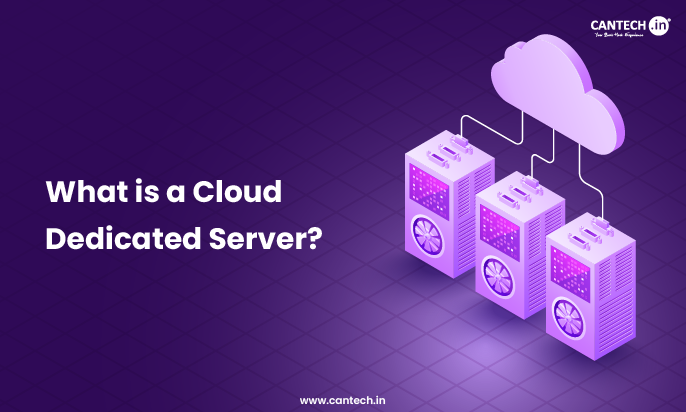
A single-user or single-organization physical server that is deployed on a cloud platform is known as a cloud dedicated server. As opposed to shared cloud or VPS, there is no sharing of server resources with anyone in terms of CPU, RAM, storage, and bandwidth, but it still provides cloud flexibility, remote access, and high-availability.
What Is a Cloud Dedicated Server?
Definition
A dedicated server on a cloud is a combination of:
- Performance on dedicated server (whole specific hardware)
- Benefits of cloud infrastructure (on-demand provisioning, redundancy, scalability)
It is a bare-metal server that is operated and provided on a cloud platform rather than an on-premise data center.
How a Cloud Dedicated Server Works?
- The cloud provider offers a single physical server to a customer.
- It does not require any virtualization layer (not mandatory in certain configurations).
- The server is logged into remotely through cloud management software.
- Resources are immobile, predictable and closed.
- Scaling can be addressed by upgrading hardware or more dedicated nodes.
Key Features of a Cloud Dedicated Server
1. Exclusive Resources
- No resource sharing
- One hundred percent CPU, RAM, storage, network allocation.
- Stability in high load situations.
2. High Performance
- Designed to work well with compute-intensive workloads.
- No noisy neighbor problems that are typical of shared environments.
3. Cloud-Level Availability
- Back-up power, networking, and storage.
- Implemented on professional data centers.
- Facilitates back-up and redundancy.
4. Full Control
- Root or administrator access.
- Both custom OS and software stack, as well as security settings.
- Increased adherence and controls.
5. Scalability (Infrastructure-Level)
- Add or delete dedicated servers on demand.
- Embeds with cloud storage and networking.
Cloud Dedicated Server vs Other Hosting Platforms
| Feature | Cloud Dedicated Server | Dedicated Server (Traditional) | VPS Hosting | Cloud Hosting (Shared Resources) |
|---|---|---|---|---|
| Resource Allocation | Fully dedicated physical server | Fully dedicated physical server | Virtualized, shared physical hardware | Shared across multiple instances |
| Tenant Type | Single-tenant | Single-tenant | Multi-tenant | Multi-tenant |
| Performance Stability | Very high | Very high | Medium (depends on neighbors) | Variable |
| Scalability | Moderate (add/remove servers) | Limited, manual | Moderate | High, near-instant |
| Provisioning Speed | Fast (cloud-based) | Slow (manual setup) | Fast | Instant |
| Hardware Control | Full control | Full control | Limited | Minimal |
| Virtualization Layer | Optional / none (bare metal) | None | Yes | Yes |
| Reliability & Uptime | High (cloud redundancy) | Medium–High | High | High |
| Security & Isolation | Very high | Very high | Medium | Lower |
| Management Interface | Cloud dashboard/API | Traditional server panel | Hosting control panel | Cloud console |
| Cost | High | High | Low–Medium | Pay-as-you-go |
| Best For | Performance-critical workloads needing cloud flexibility | Fixed, long-term workloads | Growing websites and apps | Dynamic workloads and traffic spikes |
| Beginner Friendliness | Medium | Low | High | High |
Common Use Cases for Cloud Dedicated Servers
- Websites and applications with high traffic.
- Enterprise databases
- SaaS platforms
- Large transaction e-commerce stores.
- Gaming servers
- Big data processing
- Workloads (finance, healthcare), which are heavy on compliance.
Benefits of Cloud Dedicated Servers
Predictable performance
Improved privacy and protection.
Flexibility of clouds without virtualization overhead.
Premier stability compared to on-premise servers.
Simpler integration of disaster recovery.
Limitations to Consider
- More expensive than shared or VPS hosting.
- Bare minimum knowledge of server management is required.
- Compared to the use of auto-scaling of virtual instances, scaling is slower.
Who Should Use a Cloud Dedicated Server?
Best suited for:
- Companies that exceed VPS or shared hosting.
- Applications that need guaranteed performance.
- Organisations that require heavily isolated data.
- Novices with new venture hosting under advisory.
Not ideal for:
- Small personal websites
- Low-traffic blogs
- Users who require autoscaling immediately and at low cost.
Final Takeaway
A dedicated server in the cloud provides the dedicated hardware performance along with the flexibility and resiliency of the cloud infrastructure. To beginners, it is the transition between virtual hosting and full enterprise infrastructure- providing power, control, and stability without having to deal with physical hardware.