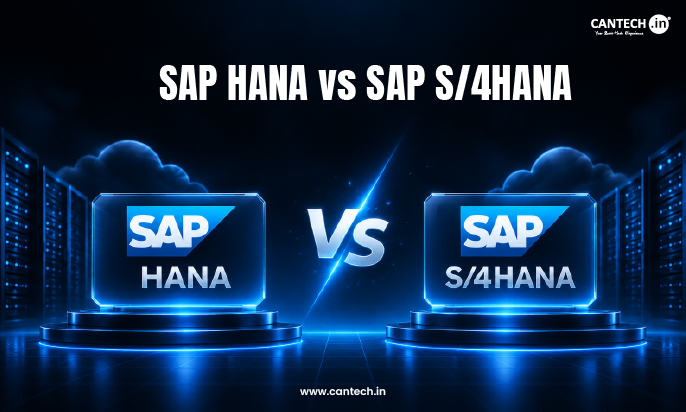
What is the Difference Between SAP HANA and SAP S/4HANA?
SAP HANA is an in-memory database that can store and process data very quickly. SAP S/4HANA is SAP’s ERP suite for financials, supply chain and operations which is designed to only run on HANA. HANA is the engine of SAP S/4HANA.
Introduction
It is a very common mistake to say SAP HANA and SAP S/4HANA are the same. In fact these are two separate products within the layers of the SAP technology stack. This can cause many issues when trying to plan your budgets, migration strategy and talking with vendors. This article will explain what they are, how they relate and what it means for your organisation as it moves towards the end of mainstream maintenance for SAP ECC.
What is SAP HANA?
SAP HANA is an in-memory columnar relational database management system developed by SAP around 2010. The aim was to resolve the issue of separating transactional systems and analytical data, which required copying data and resulted in always having out of date reports.
For a deeper understanding of its architecture, features and working principles, explore our guide to What is SAP HANA.
What are the Key features of SAP HANA?
Here are the key features of SAP HANA:
- In memory processing: Data is stored in RAM to significantly improve performance.
- Columnar storage: Columnar storage provides highly efficient aggregation and analysis capabilities along with excellent compression.
- Combined transactions and analytics: HANA can handle both operational and analytical requirements on the same data.
- Multimodal capabilities: HANA can handle spatial, graph, document and text data as well as having built in predictive and machine learning libraries.
- Runs more than SAP apps: HANA can be used as a generic database solution by companies. Used for bespoke development, data warehousing (SAP BW/4HANA & SAP Datasphere) and analytics.
What is SAP S/4HANA?
SAP’s next-gen ERP suite is known as S/4HANA (Suite 4 HANA). It was released in 2015 and provides the new functionality replacing SAP ERP Central Component (ECC) and Business Suite. It includes modules for Finance, Supply Chain, Manufacturing, Procurement, Sales and Asset Management.
S/4HANA was specifically designed to make the most of HANA and will only run on SAP HANA DB. This differs from ECC which can run on Oracle, IBM DB2, Microsoft SQL Server etc.
What are the key features of SAP S/4HANA?
Here are the key features of SAP S/4 HANA:
- Simplified Data Model: Many aggregate and index tables have been removed from the system as HANA can perform calculations on the fly. This reduces data storage and duplication.
- Universal Journal (ACDOCA): Financial and Management Accounting are merged into a single source of truth. Reducing the need to reconcile data between FI and CO.
- SAP Fiori: With a role based, web-based interface, many processes have been simplified by replacing traditional SAP GUI. Processes can now be done on desktops, tablets and mobile devices.
- Business Partner: Customer and Vendor Master Data are combined into a single Business Partner.
- Real time Processing: Processes such as MRP Live and Inventory Management can be performed with increased speed due to more detailed and real time data.
- Embedded Analytics: Reports and Analysis can be performed on transactional data. There is no need to wait for data to be replicated into another system.
- Intelligent: More intelligent features such as Machine Learning, Automation and AI are available.
- Flexibility: Both on premise, private and public cloud versions can be used depending on your requirements.
- Extensible: The system is easy to extend with in app extensions and side by side development on the SAP Business Technology Platform. Keeping the core clean and making upgrades easier.
Difference between SAP HANA vs S/4 HANA
Here are the key differences between SAP HANA and S/4 HANA:
| Aspect | SAP HANA | SAP S/4 HANA |
| What is it | In-memory database platform. | ERP application suite |
| Layer | Data/ persistence layer | Application layer |
| Introduced | 2010 | 2015 |
| Runs on | Cloud, servers and appliances | SAP HANA only |
| Used for | Processing, storing and analysing data. | Running a business process. |
| User interface | Admin and development tools. | SAP Fiori, business user apps. |
How SAP HANA and S/4 HANA work together?
All S/4HANA systems make use of the HANA database. However, not all HANA databases are used to run S/4HANA. They can be used for other SAP products like SAP BW/4HANA and Business Suite on HANA, as well as custom built applications.
One common misconception is that migrating your current ECC system onto a HANA database (Suite on HANA) is the same as migrating to S/4HANA. This is not true. Suite on HANA simply means you will have a faster database but will still have the original ECC application, data model and processes. Whereas S/4HANA means your application will change.
Deployment Options for S/4 HANA
There are a number of options available:
- On-premise: Provides complete flexibility and customisation. Your team will manage your infrastructure.
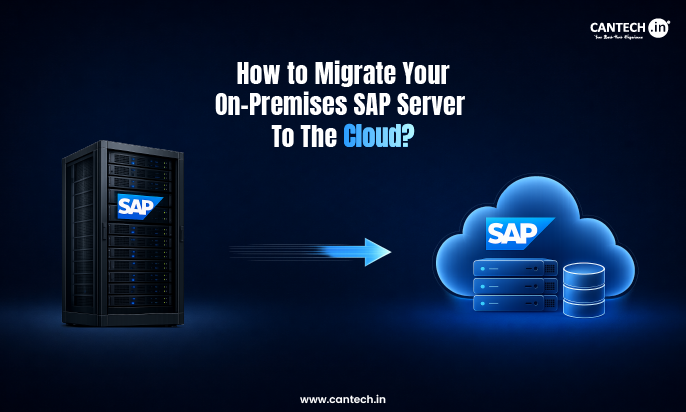
- Private Cloud Edition: Provides flexibility by using a private hosted instance. Often this is provided through RISE with SAP. Businesses evaluating this deployment model can also explore SAP cloud migration to understand infrastructure planning, migration strategies and implementation considerations.
- Public Cloud Edition: Provide a more standard solution using multi tenant SaaS. This provides regular updates but less flexibility.
Why Does This Matters?
SAP has announced that standard maintenance for ECC 6.0 will stop in 2027 although with extra charges they can be upgraded to extended maintenance until 2030. Please refer to the SAP maintenance statements for information on current conditions. Therefore, most ECC users will have to consider when to upgrade to S/4HANA.
There are three main methods for migrating:
- Greenfield: New implementation. This is the cleanest option as you can completely re-design your processes. However this involves the most work as everything will need to be migrated.
- Brownfield: System conversion. This is the fastest method as you convert your current system however you will still have any legacy within it.
- Bluefield: Selective transition. This is a combination of greenfield and brownfield allowing you to maintain some of your current configuration however this can allow you to selectively migrate data/entities.
Whatever method you choose you will still have to clean up custom code, test any add-ons and plan for the change in data models and user experience.
Which One Do You Need?
In reality this isn’t an either/or decision, but here is a good way to look at it:
- If you need a fast database for analytical or bespoke applications – SAP HANA.
- If you need a modern version of ERP system to run your business that replaces ECC – S/4HANA (with HANA built-in).
- If you are running ECC with a non HANA database then moving to S/4HANA will require you to move onto HANA as well, therefore you’ll need to move to a new database and application together.
Conclusion
Understanding the difference between SAP HANA and SAP S/4HANA is the first step to having any conversations around SAP modernisation. Once you understand there are 2 parts to the stack (database and business application) it becomes clear what decisions need to be made regarding licensing, migration and architecture.
If you’re on your own S/4HANA journey then start by understanding your current landscape, custom code and business requirements. This will help decide what type of implementation (greenfield, brownfield or bluefield) makes the most sense.
FAQ
Can I run the SAP S/4HANA application on another database?
No. SAP S/4HANA is specifically designed for HANA and will only run on the SAP HANA database. Previously ECC was able to run on several third-party databases.
Do I have to use S/4HANA to use HANA?
No. HANA can be deployed as a stand-alone database analytics platform, and can be used to develop bespoke applications. It can also be used as a data warehouse solution using tools such as SAP BW/4HANA.
What is the difference between Suite on HANA and S/4HANA?
When you deploy Suite on HANA you are simply migrating your existing ECC system to run on the HANA database. You retain your legacy application, data modelling and processes. With S/4HANA you are changing your application, with new data modelling, Universal Journal and Fiori interface.
When does SAP ECC end?
SAP has said that mainstream support for ECC 6.0 will end in 2027. Extended support will be available until 2030, however this will come at an extra cost. Please check the SAP maintenance webpage for the most up-to-date information.