What is HIPAA-Compliant Cloud Hosting?
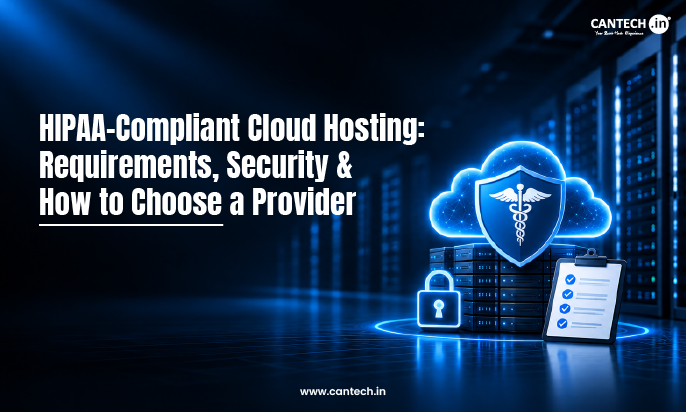
HIPAA compliance in cloud hosting is attained by applying the right level of security to protect patient information (PHI). This includes data encryption, access controls, audit logs, and backup services. It is not unusual for there to be an executed business associate agreement (BAA) between the two parties if the PHI is to be hosted in the cloud. The security measures ensure that HIPAA-compliant data can be stored and managed in the cloud.
Introduction
Every single healthcare provider deals with very sensitive data on a daily basis, including records, patients’ history, prescriptions, test reports and other. Due to the increased popularity of online healthcare services, choosing the right hosting platform is a key element in protecting such data. A poorly protected server can lead to the leakage of patient information, which in turn leads to severe legal problems. And in that situation, HIPAA-compliant hosting can help. Choosing a hosting platform is much harder than it looks at first sight, because there are several aspects that should be considered along with the protection provided by the platform. Among these aspects there are BAA issues, maintenance of all hardware and software used by the platform, as well as ensuring safety of data transfer through the hosting platform. This document will consider some of these aspects before choosing the hosting service.
What is HIPAA-Compliant Cloud Hosting?
The term “HIPAA-compliant” describes a cloud environment that has been designed with security features that allow organizations to store, process, and transmit patient data in compliance with the requirements of the Health Insurance Portability and Accountability Act (HIPAA). In addition to protecting patients’ sensitive health information (e.g., patient name, medical history, medications), HIPAA also applies to the use of electronic protected health information (ePHI), which may include digital copies of patients’ records.
Healthcare organizations use cloud-based hosting to provide a platform for their Electronic Health Record (EHR) systems, Patient Portals, Telehealth Platforms and Medical Applications. All of these require an appropriate infrastructure to support the secure management of patient data and access controls for patient data.
As such, selecting a hosting service will not automatically provide a healthcare organization with HIPAA compliance. Organizations using hosting services must adhere to all applicable HIPAA regulations, develop adequate security practices, and be responsible for managing their own applications and data.
What Are the HIPAA Cloud Hosting Requirements?
The Security Rule of HIPAA specifies that covered entities and business associates must safeguard ePHI by implementing three types of safeguards: administrative, physical, and technical. These safeguards represent various aspects of the overall protection for healthcare data.
Administrative Safeguards
The administration of healthcare organizations’ security policies and the responsibilities of employees are what constitute “Administrative Safeguards.” To demonstrate administrative safeguards, healthcare organizations will be required to perform periodic risk assessments; develop policies that define which employees may have access to patient data; educate employees about those policies; and establish procedures for responding to security issues. Additionally, healthcare organizations will need to create emergency response plans and data restoration plans.
Physical Safeguards
The use of physical safeguards protects the location of the facilities and equipment that contain healthcare data. It is important for data centers to limit access by unauthorized users, protect their server rooms, and apply suitable environmental controls to avoid potential physical harm, theft, or unauthorized access to the equipment.
Technical Safeguards
Technical controls (technology-based controls) protect electronic protected health information (ePHI). Some examples of technical controls are: User authentication, Access restrictions, Encryption, Secure data transmission, Audit logs that track what happens in the system, and Continuous monitoring to help detect any suspicious access or possible security problems.
The following table summarizes the three safeguard categories:
| Safeguard | What it protects | Example controls |
| Administrative | Security policies and workforce activities | Risk assessments, employee training, incident response |
| Physical | Data centers, servers, and equipment | Restricted facility access, CCTV, equipment protection |
| Technical | Electronic health information | Encryption, MFA, access controls, audit logs |
All three types of protections will be used together to create a safe environment. An adequately protected data center does not make up for weak controls over access to the data center. Likewise, the strongest password in the world will not provide protection to a computer system if it is not properly protected by other means. Therefore, health care organizations need to review potential threats and develop appropriate protections throughout the organization’s entire environment.
Why is a Business Associate Agreement (BAA) Important for HIPAA Hosting?
A Business Associate Agreement (BAA) is a written agreement entered into by a healthcare provider and an external contractor who provides services to the healthcare provider that involve processing of patients’ personal health information. When a cloud-based web-hosting company stores, processes, transmits or otherwise accesses electronic protected health information (ePHI), that company will be considered to be a Business Associate.
The BAA explains how the provider should safeguard patient information, report on security incidents, and manage patient data. The BAA also describes the obligations of each of the two organizations.
Before making a decision about which HIPAA hosting provider to use, healthcare organizations must ensure that they will enter into a Business Associate Agreement (BAA) with the selected provider. The fact that the data is encrypted is not enough to make the need for a BAA unnecessary. This is true even if the hosting provider cannot view or decrypt the stored data.
Essential Security Features of HIPAA-Compliant Cloud Hosting
The use of multiple levels of security for healthcare data is required. Before selecting a cloud hosting company, ensure that they provide the necessary security features within their infrastructure:
- Data Protection: Provides security for patients’ data that is saved on a server and sent via a network.
- Multi-factor Authentication (MFA): Requires additional verification before allowing access to sensitive systems.
- RBAC (Role-Based Access Control): Provides employees with only those parts of the organization’s data that are necessary to complete their job responsibilities.
- Network Security & Firewalls: To prevent unauthorized access to your networks and block suspicious traffic.
- Audit Log and Monitoring: This will record all of the users’ activities, such as logging in to the system and when they make changes to the system.
- Security updates: Fixes known vulnerabilities through regular software patching.
The use of encrypted backup systems, as well as a disaster recovery plan, will assist in restoring your data and/or applications if you experience an unintended loss of such items, or if there is a failure within your computer system.
The features above should be used in conjunction with regular security evaluations, written policies, and clear definitions of roles and responsibilities for both the host company and the medical institution.
Which Cloud Infrastructure is Suitable for HIPAA Hosting?
Healthcare organizations can choose different cloud environments depending on their applications, data requirements, and security needs.
| Infrastructure | Best suited for |
| Public Cloud | Scalable healthcare applications using shared infrastructure |
| Private Cloud | Organizations needing greater isolation and control |
| VPS Hosting | Healthcare applications requiring configurable virtual server resources |
| Dedicated Servers | Workloads needing dedicated physical server resources |
HIPAA does not require healthcare businesses to use a specific hosting model. The right choice depends on the organization’s risk assessment, security controls, BAA arrangements, and infrastructure requirements.
How to Choose the Right HIPAA Hosting Provider?
Before selecting a hosting provider, healthcare organizations should check:
- BAA availability: Will the provider sign a suitable Business Associate Agreement?
- Security measures: Does it support encryption, access controls, and network protection?
- Data location: Where will patient information and backups be stored?
- Backup and recovery: Are regular backups and disaster recovery options available?
- Incident reporting: Does the provider have a clear process for reporting security incidents?
- Technical support: Can its team help resolve infrastructure and server-related issues?
Choose a provider that clearly explains its services, security capabilities, and responsibilities.
HIPAA-Focused Cloud Hosting Infrastructure from Cantech
Cantech offers VPS, dedicated servers, bare metal server, and private cloud infrastructure to meet different hosting requirements. When configured with appropriate security controls and contractual safeguards, these environments can support healthcare applications and sensitive-data workloads. Healthcare organizations can discuss their infrastructure needs with Cantech to identify a suitable hosting environment for their applications.
Get a Custom HIPAA Hosting Quote from Cantech.
Conclusion
Selecting cloud hosting with an emphasis on HIPAA demands great thought when considering the infrastructure, contracts, and controls required. A good hosting environment could assist healthcare firms in securing patients’ data as well as their applications. Cantech offers infrastructure choices that will enable businesses to plan for their hosting needs.
Seeking the appropriate infrastructure for your healthcare application? Contact Cantech today!
FAQs
What is HIPAA-compliant hosting?
HIPAA-compliant hosting refers to an infrastructure environment that supports the security and privacy requirements for handling protected health information through appropriate safeguards and contractual agreements.
Does a cloud hosting provider need to sign a BAA?
Yes. A cloud provider that creates, receives, maintains, or transmits ePHI on behalf of a covered entity generally needs to sign a Business Associate Agreement.
Is cloud hosting allowed under HIPAA?
Yes. HIPAA allows public, private, and hybrid cloud hosting when the organization and its cloud provider meet applicable requirements and implement appropriate safeguards.
Is SSL enough to make a website HIPAA compliant?
No. SSL/TLS protects information during transmission, but HIPAA compliance also involves access controls, risk assessments, security policies, audit controls, and other safeguards.
Is VPS hosting suitable for HIPAA workloads?
VPS hosting can support healthcare workloads if its infrastructure, security configuration, contractual arrangements, and access controls meet the organization’s HIPAA requirements.
Does HIPAA require encrypted cloud storage?
Encryption is an addressable implementation specification under the HIPAA Security Rule. Organizations must assess the risks and implement encryption or document appropriate alternative measures when reasonable and appropriate.