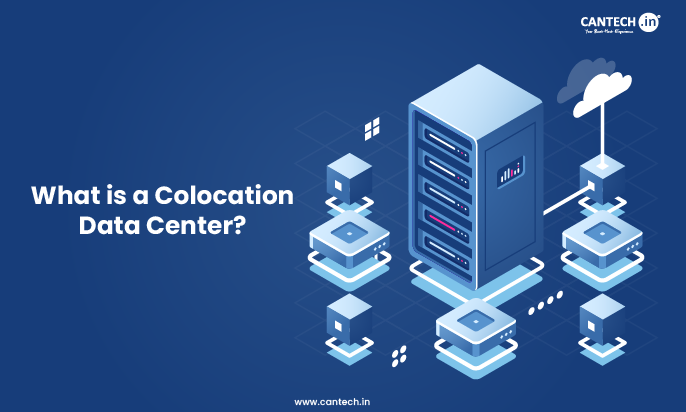
A Colocation Data Center, mostly referred to as a “colo” is a large third-party facility that rents out rack space, power, cooling, and network connectivity to businesses for housing their own servers and IT hardware. It is used by businesses that need professional data center infrastructure without the cost of building and managing their own facility.
What is a Colocation?
The term colocation refers to aspects of this data center. It means servers and other equipment from several different companies are co-located in one data center. The hardware is usually owned by companies themselves and simply maintained by data center staff.
A company can have their equipment located in several locations. It is crucial for businesses to have footprints across different locations to make sure their computer systems are hosted near their physical offices.
For a detailed comparison, read our guide on Colocation vs Data Center.
How Colocation Data Center Works?
When a business chooses colocation, it physically ships its own servers and networking equipment to the colocation facility. The facility then houses this hardware in a dedicated rack or cage space, providing the power, cooling, internet connectivity, and physical security required to keep the servers running 24/7. The business retains full ownership and remote management of their hardware while the colocation provider takes responsibility for the facility infrastructure, making it a cost-effective alternative to building and maintaining a private data center.
What are the Advantages of a Colocation Data Center?
The advantages of colocation data center go beyond just cost savings; here are the key colocation data center benefits that make it the preferred infrastructure choice for businesses of all sizes:
Physical Security
Data centers are designed to secure your systems from multiple threats that could hamper performance and security of your data and systems. They implement effective high-end data center security measures such as fire suppression systems and video surveillance.
Read more about what is data center security.
Performance
Computer systems function best in climate controlled, dust free settings. The cooling and air filtering systems that professional data centers offer are advanced which contributes to best performance.
Reliability
Colocation facilities offer reliable power, cooling systems and communication that enables reliable connections. Companies can invest in tools and workflows that are essential to improve comparable systems internally.
Risk Management
Natural disasters and data breaches could occur, if important equipment is stored in an off-site data center. There are other protection measures and backups in place to keep everything running smoothly.
Flexible Upgrade
Businesses can increase their bandwidth without the need of additional investments. Besides this, they can adjust how much bandwidth is required based on the type of applications deployed.
Related: What is bandwidth in web hosting.
What are the Types of Colocation Data Centers?
Colocation data centers are available in three main types; each suited to different business sizes and infrastructure needs:
Hybrid Colocation
Hybrid colocation consists of establishing a combination of multiple in-house data center space where businesses can rent from another data center.
Retail Colocation
Retail colocation enables you to lease a space inside the data center, usually a rack, a small space inside the rack or a custom room.
Wholesale Colocation
Wholesale Colocation allows businesses to rent data center space at a lower rate. Due to this power and the space used by the data center to run equipment, is lower than retail colocation.
What to Consider When Selecting a Colocation Data Center?
Top considerations to keep in mind when selecting a colocation data center:
- Cost: Most often it is very expensive to establish and maintain an in-house data center. Whereas, colocation can provide businesses the resources required to support computing equipment at an affordable rate.
- Scalability: When businesses are looking to scale up, colocation lets you rent space for additional servers and other components. It allows space for in-house expansion and is economically viable.
- Compliance: Colocation makes it easier to achieve regional data management requirements. If the business requires legislative regulations to maintain an off premise storage facility, colocation is an ideal option to meet regulatory compliance.
- Performance: Look for colocation data centers that can store the business components and can offer a service level agreement that guarantees sufficient power and internet service.
- Redundancy: Using a colocation service to store backup systems can help set up a reliable redundant infrastructure. It is ideal when a business’s in-house components go offline.
Read more about what is a data center in detail.
Conclusion
A colocation data center gives businesses the best of both worlds: the control of owning their own hardware and the reliability of a professionally managed facility. Whether you are looking to reduce infrastructure costs, improve uptime, or meet compliance requirements, colocation is a proven solution for businesses of all sizes. Cantech offers colocation server hosting with secure rack space, redundant power, and 24/7 technical support to keep your business running without interruption.
FAQs
What are the Disadvantages of Colocation?
- Does not have security such as network monitoring and visibility tools. Businesses may have to depend on whatever managed services the data center offers.
- Challenging to create redundant computing systems that run on workloads in parallel between two or more colocation solutions.
- Colocation lowers your resiliency if a primary computing process, such as payment processing for an e-commerce site goes down.
What is the Difference Between Cloud and Colocation Data Centers?
In the cloud, servers are owned by the cloud provider and data is virtually managed. In colocation, servers are owned by the business that is renting the space.
How does Colocation Work?
Colocation works when businesses store their IT hardware, servers, and data storage equipment in a space rented by a third-party data center provider.
What is Colocation Capacity?
Data center colocation is when a business leases space within a shared data center, with options like leasing cabinet, rack space or even an entire room. Usually, the agreement includes physical security and a certain amount of power availability and guaranteed internet connectivity.