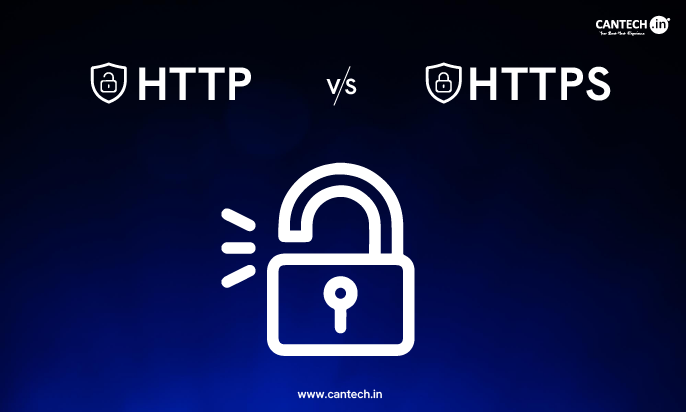
The internet works on certain rules that enable your browser to communicate with a server. These rules are referred to as protocols. The majority of websites show the content to the visitors with the help of either HTTP or HTTPS. The main difference between HTTP and HTTPS protocol is the manner in which they handle your private data. One sends it openly while the other locks it inside a digital vault.
The Hypertext Transfer Protocol is abbreviated as HTTP. It allows data to pass through the web. It was how browsers and servers used to communicate for many years. But, no information is secured in HTTP. Any person who sits between your computer and the server can see what you are saying.
Let’s discuss the respective meanings.
What is HTTP?
HTTP is an application-layer protocol that uses a simple request-response model. When you enter a URL, your browser will request the webpage on the server, and the server will respond by sending files. The mechanism is quick since it is not encrypted.
The worst issue is that HTTP transmits data in plain text. Hackers can see your passwords or credit card numbers. It uses port 80 by default. The address bar will display the following:
http://.
What is HTTPS?
Hypertext Transfer Protocol Secure is abbreviated as HTTPS. It is the new and more secure variant of HTTP. HTTPS provides an extra level of security using SSL or TLS certificates that safeguard the communication between the user and the site.
The “S” in HTTPS means “Secure”. It uses port 443 and establishes an encrypted connection that keeps the attackers out. These sites have a padlock icon in modern browsers. It starts with https://
What is the Difference between HTTP and HTTPS Protocol?
The selection of the right protocol depends on your security requirements. Encryption is the primary aspect of the topic of ‘what is the difference between HTTP and HTTPS’.
HTTP is like sending a postcard that can be read by anyone. HTTPS is like a letter in a closed envelope.
The data remains private with an HTTPS security layer. It relies on a process called SSL handshake that authenticates the identity of the website server and creates unique keys that encrypt the data.
Thus, only the intended recipient can read the information.
Security and Encryption
Security is the biggest difference between HTTP and HTTPS protocol today. There is no encryption in HTTP, and so shopping or login pages become risky. SSL or TLS codes/encrypts the data in HTTPS.
Man-in-the-middle attacks are not possible because hackers can not read the code even if they intercept the data packets. The padlock on the URL bar is an indicator of safety. Most users feel much safer when they see that.
SEO and Browser Trust
Search engines such as Google prefer HTTPS as a ranking factor. A secure site would rank higher in the search list. Browsers such as Chrome will show the warning Not Secure on HTTP sites; this may frighten your visitors. HTTPS also creates a professional image and provides better referral data in your analytics tools.
Thus, you can accurately track where you are getting traffic from.
Difference Between HTTP and HTTPS in Tabular Form
If you are still confused, a brief comparison will point out the technical aspects of the difference between HTTP and HTTPS in tabular form. Know why most experts recommend the secure version:
| Feature | HTTP | HTTPS |
| Full Form | Hypertext Transfer Protocol | Hypertext Transfer Protocol Secure |
| Security | Not Secure | Highly Secure |
| Encryption | No encryption (Plain text) | SSL/TLS Encryption (Cipher text) |
| Port Number | Uses Port 80 | Uses Port 443 |
| URL Prefix | Starts with http:// | Starts with https:// |
| Search Ranking | No SEO boost | Provides SEO ranking boost |
| Browser Icon | Shows “Not Secure” warning | Shows a Padlock icon |
| Validation | No certificate needed | Needs an SSL certificate |
How Cantech Hosting Helps You Stay Secure
Cantech focuses on the importance of website security for Indian business owners. It is easy to upgrade to HTTPS with our hosting solutions. We make the difference between HTTP and HTTPS protocol easy to manage. With us, you do not have to be a tech expert to have your site secured.
Our hosting plans include features that protect your data and improve your site performance. We focus on providing a seamless experience for all our customers. Here are some of the top features you get with Cantech:
- Free SSL certificates – All the plans include a free SSL certificate, meaning that you do not have to pay additional switch from HTTP to HTTPS.
- 99.97 percent uptime promise – Our Tier III and IV data centers, redundant power systems, and advanced infrastructure ensure your site is online always.
- SSD NVMe storage – We use the latest NVMe storage technology. This makes your website load faster than traditional hard drives.
- 24/7 expert support – Real experts are on 24/7 through chat, calls, and email.
- Active malware-detection – Imunify360 safeguards your files against viruses, which further secures your files on top of HTTPS.
Conclusion
The difference between HTTP and HTTPS protocol is not a technical discussion anymore, but a practical requirement. HTTP is outdated and poses threats to user data. HTTPS provides the encryption and trust that the modern visitor demands. It also improves Google ranking and secures customer data. Cantech provides all the tools to facilitate this transition. Secure your website today to have a safer and more successful online business.
FAQs
What are the differences between HTTP and HTTPS?
The main difference is how browsers treat your site. They consider HTTP sites to be unsafe. An example is Chrome, which shows a warning that the site is ‘not secure’, which may scare away visitors. HTTPS secures your login details and can boost the ranking of your site. Use HTTPS even when you are not selling anything.
Does HTTPS make my website load slower than HTTP?
In the past, encryption sometimes caused a very slight delay in loading times, and that has been resolved by newer technology. HTTPS currently supports newer protocols like HTTP/2 and other high-speed protocols, faster than the old version. A majority of the visitors will not be aware of any slowdown, and most secure sites actually load faster due to these optimizations.
Is it expensive to get an SSL certificate for HTTPS?
Not at all. The majority of hosts, including Cantech, offer free SSL certificates. A free basic Domain-Validated (DV) certificate is available. Large business premiums may cost more; however, the free version does well in most blogs and small websites. You just need to install it through your hosting control panel.
Can I switch from HTTP to HTTPS without losing my Google ranking?
Yes, you can switch without losing your ranking if you follow the right steps. Install 301 redirects from all the old HTTP pages to the new HTTPS ones. This informs Google that your site has moved permanently to a secure location. Update sitemap and Google Search Console settings. This process keeps your SEO value safe and improves your security.
What happens if my SSL certificate expires?
A huge security warning will be displayed on your site to all visitors. The alert mentions that the connection is not private and the data can be stolen. Most people would leave your site immediately. Renew your certificate on time or use an auto-renewal feature. Cantech has the capability to handle renewals to ensure that your site stays secure without any breaks.