
VDS stands for Virtual Dedicated Server, a hosting solution that sits between a VPS and a full dedicated server. It gives you dedicated CPU, RAM, and storage resources on a shared physical machine, so you get dedicated-level performance and isolation without paying the full cost of a dedicated server. It is ideal for businesses that need consistent performance, full root access, and strong security.
What is a VDS?
VDS Full Form and Meaning
The full form of VDS is Virtual Dedicated Server. It stands between a VPS and Dedicated Server. Think of renting your own private floor in that very kind of building. You get all your in-house resources – a private elevator, independent water tank, and car parks booked for yourself – and are not supposed to share these with others. No other tenants share access to your floor, and though you are permitted to have greater control in yet another sense, you are still technically in the shared building.
In technical terms, a Virtual Dedicated Server can be defined as a web hosting solution where one physical server is divided into a few virtual servers using virtualization technology. Every one of these virtual servers works independently as if it were a dedicated server, but all of them are parts of one big physical server. It is like creating several “mini-servers” on one big machine.
Moreover, a virtual dedicated server includes:
- Virtualization Technology: The physical server is divided into numerous isolated environments with the help of VMware, KVM, or Hyper-V.
- Dedicated Resources: Each VDS server is assigned its CPU, RAM, storage, and bandwidth. Unlike shared hosting, your resources aren’t affected by other users.
- Root Access: You have administrative access with your VDS, which means you may configure the device, install whatever software you need, run whatever scripts you want, and even down to choosing what operating system you run.
- Scalability: In many cases, growing websites or applications that have grown beyond the limits of resources on a virtual dedicated server are upgraded more easily against other hosting solutions.
Why Should You Consider a VDS?
You may be asking yourself, Do I actually need a VDS hosting provider, or will shared hosting work just fine? Well, it is all about needs!
Here are a few situations in which using a VDS server makes sense:
- Performance Requirements: When your website has significant traffic or utilizes resource-intensive applications, a VDS can absorb this load much better than shared hosting.
- Improved Security: Since your VDS is logically isolated, other users on the same physical server, cannot access your data. If you are a business dealing with sensitive information, this can be a good option for you.
- Customization: Most shared hosting doesn’t allow you to install anything you’d like. With a virtual dedicated server (VDS) you’re in charge, so it is like having your own yard that you can play in.
- Cost Efficiency: A VDS has struck the balance where one can buy dedicated-like performance for affordable rates.
What are the Pros and Cons of VDS Hosting?
Like any hosting solution, a VDS has its pros and cons. Let’s delve through them!
Pros of Virtual Dedicated Server
Some of the top benefits of VDS are as below:
- Performance: Your website or application will run more smoothly with dedicated resources.
- Flexibility: Set up and configure your server as you need.
- Scalability: Scale up your resources as your business grows.
- Security: Isolated environments reduce the possibility of data breaches.
Cons of Virtual Dedicated Server
Inspite of numerous advantages, there are certain disadvantages of VDS that are mentioned below:
- Cost: While cheaper than a dedicated server, a VDS is more expensive than shared hosting.
- Management: If not tech-savvy, managing a VDS can be overwhelming.
- Resource Limitations: While dedicated, resources are still finite and shared within the physical server.
What is the Difference Between VDS and VPS?
VDS and VPS are both virtualized hosting solutions but they differ in how resources are allocated. A VDS gives you a fully dedicated CPU, RAM, and storage guaranteed just for you. A VPS shares physical resources dynamically among multiple users, which can sometimes affect performance during peak usage.
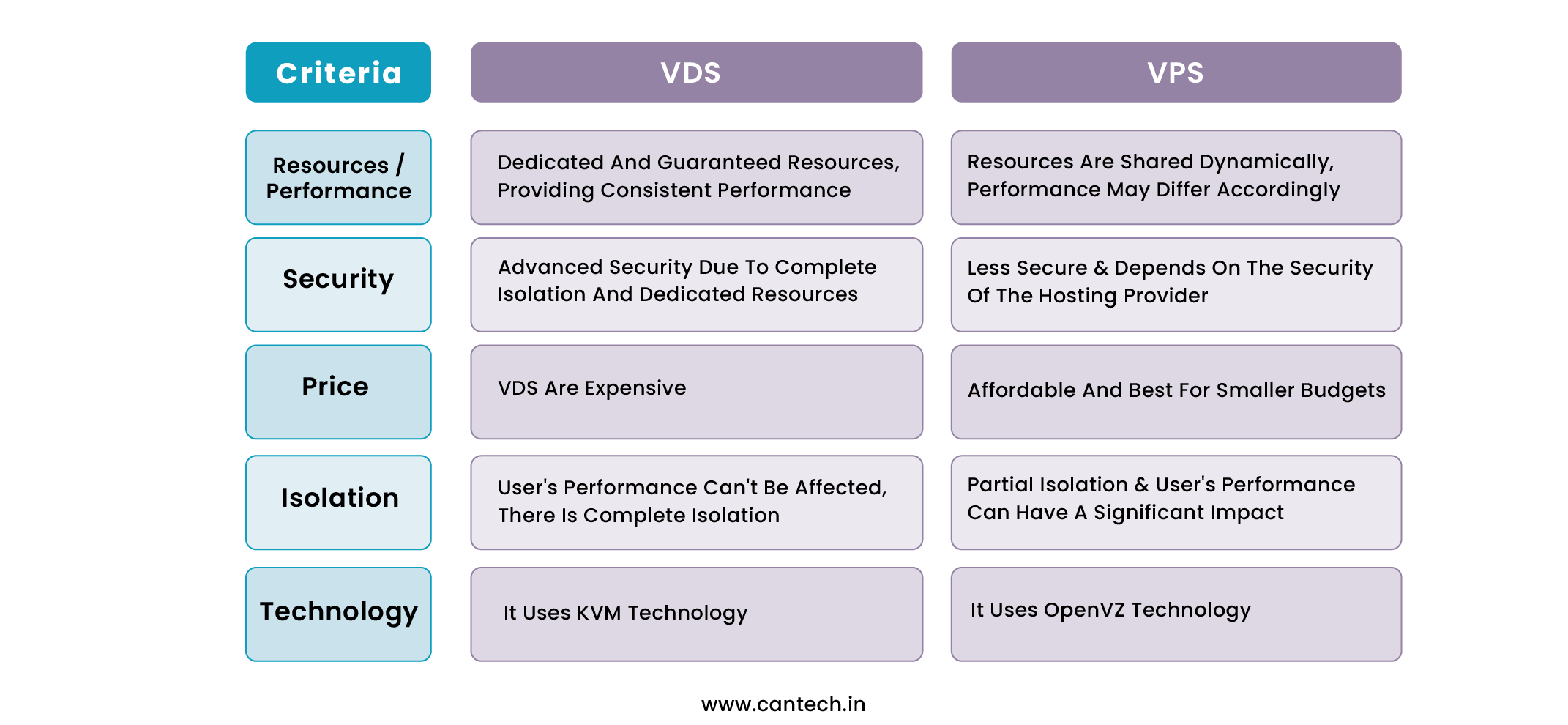
While VDS offers stronger performance, VPS has its own advantages worth considering:
- Cost-Effective: VPS are usually more affordable than VDS as they allow dynamic resource allocation.
- Easy-to-Use: VPS are best suited for beginners or small businesses, as it doesn’t require much technical expertise.
- Resource Sharing: The dynamic resource sharing in VPS is advantageous for those who do not require consistent high-performance but are looking for scalability.
Read our detailed comparison of VDS vs VPS to understand the key differences and choose the right hosting solution.
How to Choose the Right VDS Provider?
After you have taken the plunge and decided to hire a VDS, the next step is to find the hosting provider with the VDS services you desire. Cantech provides low price and best VDS hosting in India for high performance. When choosing the right one for you, consider:
- Performance: The provider should be running high quality hardware and solid state drives (SSDs).
- Uptime Guarantee: Your goal should be at least 99.9% uptime from your host.
- Customer Support: This can be a life-saver, especially for those newbies to managing servers, but more importantly having 24/7 support.
- Scalability: The provider should allow for easy upgrades of your resources.
- Pricing: You should look at the pricing but not to the detriment of quality and just to save a few dollars.
These include popular providers like Cantech that satisfy all your hosting needs.
Is VDS Right for You?
Moreover, choosing VDS over VPS depends on your needs, budget, and technical skills. If you’re hosting a small personal blog, shared hosting would be enough. On the other hand, if you’re scaling a business or looking to manage various applications, you can opt for VDS.
With VDS, it’s not just about hosting, you’re establishing a solid foundation for future growth.
Conclusion
The world of hosting can seem overwhelming, but in truth, with a little knowledge of VDS, you are left with all of the business information you need to make the best choices and all the important hosting service options, which can be the whole package depending on your needs, are out there for you. So no matter if you are an entrepreneur, a developer with very specific needs, or just exploring your options, a Virtual Dedicated Server could be the ultimate option for you!
FAQs
What is the Full Form of VDS?
The full form of VDS is Virtual Dedicated Server. It is a hosting solution providing dedicated resource in a virtualized environment which is more performing, more controllable, and more isolated than a shared hosting.
What are the Benefits of VDS?
The advantages of Virtual Dedicated Servers makes a VDS a popular option for those who like the performance, control and reliability of a dedicated server at a fraction of the cost of a dedicated server.
What is the Difference Between VPS vs VDS?
Virtual Dedicated Server offers dedicated resources to achieve consistent performance and higher isolation, whereas Virtual Private Server utilizes shared resources dynamically.
Which is More Expensive: VDS or VPS?
Usually, VDS is a little more expensive than VPS as it provides more dedicated resources.
Which is More Preferable: VDS or VPS?
A virtual dedicated server is highly preferable for businesses or individuals with heavy traffic, resource-intensive applications or those requiring high security.
Is it Possible to Upgrade from VPS to VDS?
Yes, we at Cantech provide an upgrade from VPS to VDS based on the resources required.
Does One Require to Have Technical Expertise to Manage a VDS?
Having technical knowledge is an add-on, while in most cases the hosting providers provide managed VDS solutions to handle everything effortlessly.
