If you’ve been shopping for server infrastructure, you’ve probably seen the term “bare metal” everywhere-and wondered what actually makes it different from a VPS or a cloud server.
The short version: it’s just you and the hardware. No other tenants. No virtualization overhead. Direct access to everything the server has.
This guide explains exactly what that means, why it matters, and whether it’s the right fit for your business.
What is a Bare Metal Server?
A bare metal server is a single-tenant physical server. That means one server, one customer. You don’t share it with anyone else, and there’s no virtualization software sitting between you and the hardware.
The name comes from the idea of running directly on the “bare metal”- the raw physical machine. Compare that to a virtual server, where a hypervisor splits one physical machine into multiple virtual ones, each shared among different users.
With bare metal, what you see is what you get. The full CPU. The full RAM. All the storage. Nothing split, nothing shared.
Bare metal means a physical server with no virtualization layer between the hardware and the operating system. You get the entire machine to yourself- no shared resources, no hypervisor, no other tenants. It’s the rawest, most direct form of server access you can get.
What’s Inside a Bare Metal Server?
CPU
The brain of the server. Executes instructions and handles all processing tasks. On bare metal, every core is yours alone.
RAM
Keeps applications running smoothly in real time. No other tenant is eating into your memory allocation.
Storage
SSDs for speed, HDDs for capacity-or both. All dedicated to your workload, with no I/O competition from other users.
Network
High-bandwidth network connection for fast data transfer. No shared bandwidth throttling from neighboring tenants.
How Does a Bare Metal Server Work?
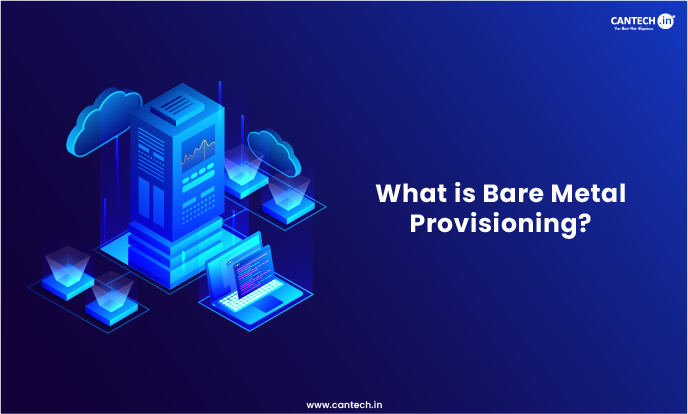
When you provision a bare metal server, you get a physical machine assigned entirely to you. Here’s what happens:
- You choose your OS. Install any operating system you want- Linux, Windows, or anything else. It goes directly onto the hardware, with no virtualization layer required.
- You configure the resources. Assign CPU cores, set RAM allocation, configure storage- all based on your actual needs, not a preset virtual machine template.
- You run your applications. Your software talks directly to the hardware. No hypervisor overhead, no resource contention, no noisy neighbors.
- You manage or delegate. You can manage the server yourself, or choose a managed bare metal option where the provider handles maintenance for you.
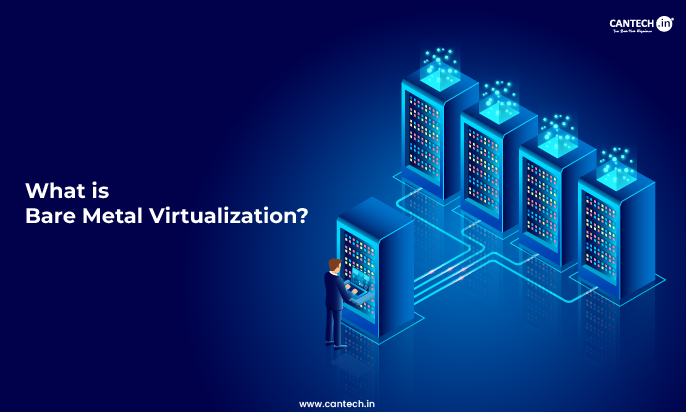
Some bare metal setups also include a Type-1 hypervisor-software installed directly on the hardware that lets you create your own virtual machines on top. This gives you the best of both worlds: dedicated hardware plus in-house virtualization control.
Who Should Use a Bare Metal Server?
Bare metal is not for everyone. It’s best suited for businesses where performance, security, or compliance are non-negotiable. Here’s who actually needs one:
High-Performance Computing
- Scientific simulations and modeling
- Weather prediction systems
- Engineering and computational research
- Financial risk calculations
Big Data & Analytics
- Real-time data processing with Hadoop or Spark
- Large-scale business intelligence platforms
- Retail and financial data analysis
Machine Learning & AI
- Training large ML models
- GPU-heavy AI workloads
- Natural language processing and computer vision
High-Traffic Websites
- E-commerce platforms under heavy load
- News portals and media sites
- SaaS platforms with thousands of concurrent users
Large Databases
- ERP and CRM databases
- Financial transaction systems
- Applications needing high IOPS and low latency
Regulated Industries
- Healthcare (HIPAA compliance)
- Finance (PCI DSS compliance)
- Government and defense workloads
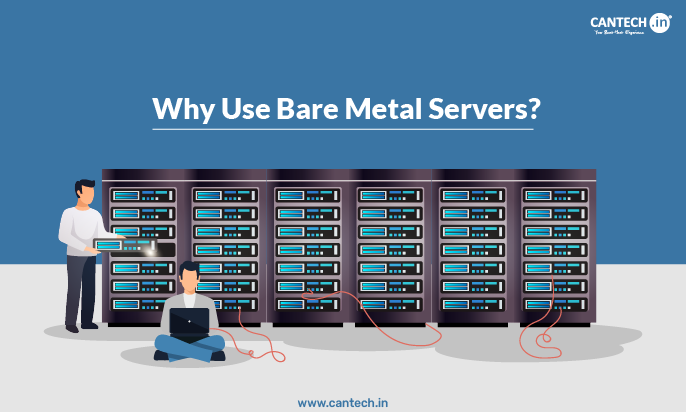
Key Benefits of Bare Metal Servers
1. Maximum Performance
There’s no hypervisor sharing your CPU cycles or RAM with other tenants. Every resource is yours. This directly translates to faster query responses, lower latency, and more consistent application performance- especially under heavy load.
2. Strong Security and Isolation
Multi-tenancy is the biggest security risk in shared or virtualized environments. One compromised VM can, in some cases, affect others on the same physical host. With bare metal, that risk disappears. Your data never shares hardware with anyone else’s.
3. Full Customization and Control
You pick the OS. You configure the network. You install exactly what you need and nothing else. For businesses with specific compliance requirements or unique software dependencies, this level of control matters a lot.
4. Predictable Costs at Scale
The upfront cost is higher than a VPS or shared host. But for businesses running consistently heavy workloads, bare metal often works out cheaper than paying cloud usage fees around the clock. The cost is fixed and predictable.
Pros & Cons of Bare Metal Server
Pros
- Full hardware dedicated to one user
- No virtualization overhead- maximum performance
- Strong security- no noisy neighbor risk
- Full OS and software customization
- Predictable, fixed cost for heavy workloads
- Ideal for compliance-heavy industries
Cons
- Higher upfront cost than VPS or cloud
- Scaling up takes time-not instant like cloud
- You manage hardware maintenance (unless managed)
- Overkill for low-traffic or simple websites
- Requires more technical knowledge to configure
How Bare Metal Compares to Other Options
| Feature | Bare Metal | VPS | Cloud Server | Shared Hosting |
|---|---|---|---|---|
| Dedicated Hardware | Yes | No | No | No |
| Performance | Highest | Medium | Medium–High | Lowest |
| Security / Isolation | Strongest | Moderate | Moderate | Weakest |
| Customization | Full | Moderate | Moderate | Very Limited |
| Instant Scalability | No | Partial | Yes | No |
| Cost Model | Fixed monthly | Fixed monthly | Pay-per-use | Fixed monthly |
| Best For | Heavy, consistent workloads | Mid-range apps | Variable workloads | Basic websites |
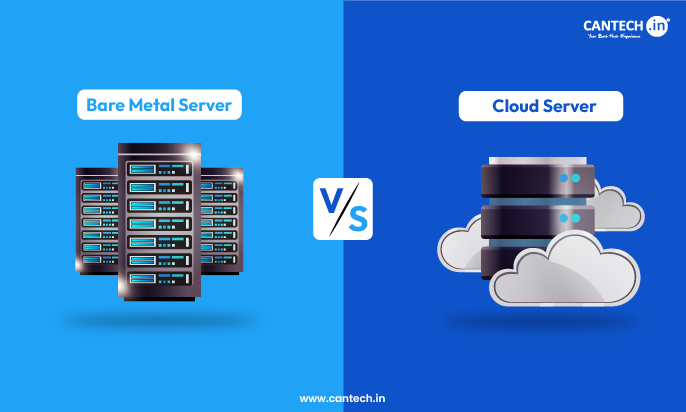
Bare Metal vs Cloud-The Key Trade-Off
Cloud servers scale instantly-that’s their biggest advantage. If your traffic spikes unexpectedly, cloud handles it without you doing anything. Bare metal can’t do that as quickly. But if your workload is consistent and heavy, paying cloud usage rates 24/7 gets expensive fast. Bare metal wins on cost and performance for predictable, resource-intensive operations.
Bare Metal vs VPS-When Does VPS Make Sense?
A VPS is fine for most standard web applications, development environments, or small business websites. But when you need guaranteed performance- not “usually good” performance- bare metal is the right call. A VPS shares the physical host with other tenants. Under peak load from other users on the same machine, your VPS performance can suffer. Bare metal eliminates that entirely.
Should You Rent or Buy a Bare Metal Server?
Most businesses are better off renting. Here’s the honest comparison:
Buying (Own the hardware)
Full control. No recurring rental fees. But you’re responsible for hardware failures, cooling, power, physical security, and upgrades. Requires capital upfront and an in-house team to manage it. Makes sense for very large organizations with predictable long-term needs and an IT team already in place.
Renting (Managed or unmanaged)
Lower upfront cost. Provider handles the physical infrastructure. You still get dedicated hardware- just without the ownership headache. Easier to scale as your business grows. The right choice for most businesses, especially those without a dedicated infrastructure team.
Conclusion
Bare metal is for businesses that can’t afford compromises.
If your application needs consistent, maximum performance-and you can’t have other users affecting your resources-bare metal is the right choice. It’s not the cheapest option. But for databases, ML workloads, high-traffic platforms, and regulated industries, it’s often the only option that actually works.
For smaller businesses or variable workloads, a VPS or cloud server is usually more practical. Start there and move to bare metal when your requirements demand it.
Frequently Asked Questions
What is a bare metal server in simple terms?
It’s a physical server that belongs entirely to one user. No virtualization, no resource sharing. You get the full hardware-every CPU core, all the RAM, and all the storage- dedicated to your workload alone.
What is the difference between bare metal and a VPS?
A VPS is a virtual slice of a shared physical server. Multiple tenants share the same hardware. A bare metal server is an entire physical machine dedicated to you alone-no sharing, no virtualization overhead, and no performance impact from other users.
Is bare metal better than cloud?
It depends on your workload. Cloud is better for variable or unpredictable traffic because it scales instantly. Bare metal is better for consistent, heavy workloads where you need maximum performance and predictable costs. Many large businesses use both.
Is a bare metal server the same as a dedicated server?
They are very similar-both provide physical hardware dedicated to one user. The main difference is that “bare metal” typically refers to newer, more modern hardware configurations, often with the latest processors and NVMe storage. Some providers use the terms interchangeably.
Who needs a bare metal server?
Businesses running demanding workloads-large databases, machine learning, high-traffic websites, financial platforms, or applications with strict compliance requirements. If consistent performance and strong isolation are non-negotiable, bare metal is the right fit.
Are bare metal servers single-tenant?
Yes. By definition, a bare metal server is single-tenant-one physical server, one user. All resources are exclusively yours. This is what separates it from shared hosting, VPS, and most cloud environments.
What is a bare metal hypervisor?
A Type-1 hypervisor installed directly on bare metal hardware-not on top of an OS. This lets you create your own virtual machines on dedicated hardware. It combines the isolation of bare metal with the flexibility of running multiple virtual environments on the same physical server.
How much does a bare metal server cost?
Costs vary based on hardware specs and provider. Entry-level bare metal servers typically start around a few hundred dollars per month for rental. Owning hardware requires a larger upfront investment. For most businesses, renting from a provider like Cantech is the most cost-effective route.