Introduction
IT infrastructure management is crucial in any business. It involves two aspects: maintaining networks and ensuring that security threats do not compromise data and systems. Both tasks have their own challenges and require advanced tools and expertise.
A Network Operations Centre (NOC) works to maintain performance and prevent downtime. A Security Operations Centre (SOC) detects and responds to security issues from external and internal threats..
Roles are different, but they come into each other in many areas. The right choice depends on the IT environment of the business and its risk factors. Which one do you need?
This blog will help you answer that by discussing the difference between NOC and SOC. By the end, you will have a clear idea of which one fits your organisation better. Let’s get started.
NOC and SOC Meaning
NOC and SOC centres have unique roles but are necessary for a company’s smooth functioning. Let’s understand their meanings – a NOC, or Network Operations Centre, focuses on monitoring and managing a company’s network infrastructure to ensure uptime and performance. On the other hand, a SOC, or Security Operations Centre, is dedicated to protecting the organization from cyber threats by detecting and responding to security incidents. Both work around the clock, but their goals differ, making them complementary pillars of a robust IT ecosystem.
What is NOC?
NOC Meaning
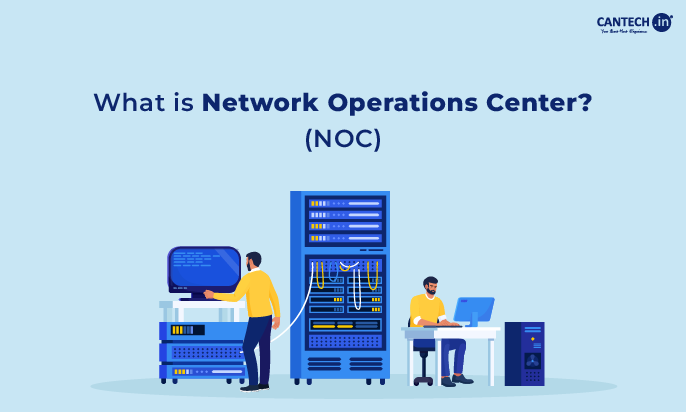
The NOC Meaning refers to a Network Operations Center(NOC). Where everything related to network performance is monitored and managed. It is the control hub for networks, and the NOC team continuously checks the health of the entire network infrastructure.
For this, they use advanced tools and real-time displays to identify any performance issues or downtime.
Moreover, they fix any problems quickly to ensure smooth network operations. Thus, you might understand how important NOCs are for smooth business operations. For that reason, organizations often have to keep them equipped with robust noc security and safety measures to protect the network infrastructure.
What is SOC?
On the other hand, a Security Operations Centre (SOC) has a different role but is equally critical.
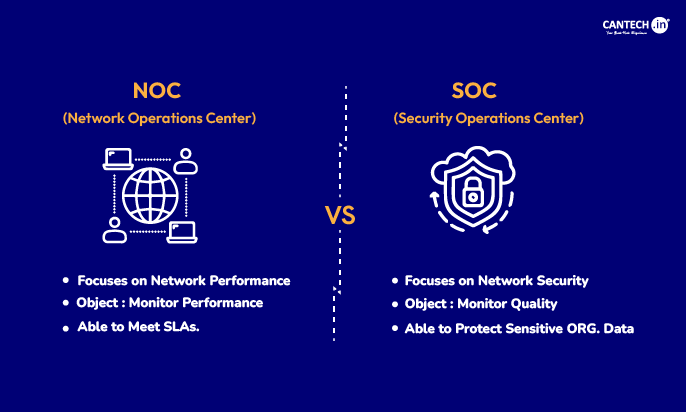
NOCs focus on network performance, whereas SOCs safeguard data and IT systems.
Mainly, it detects any security threats and responds as quickly as possible. Also, SOC teams monitor the security status of an organization’s entire digital environment, such as servers, cloud infrastructure, etc. In case anything is suspicious, they take immediate action to prevent a breach or damage.
All in all, SOCs ensure the cybersecurity of organizations and protect sensitive information and systems.
Difference Between NOC and SOC
The below NOC vs. SOC table helps you understand the core differences in their roles and responsibilities. Let’s get into it.
| Topic | NOC (Network Operations Center) | SOC (Security Operations Center) |
| Primary Focus | NOCs ensure uninterrupted network operations. This minimises downtime and optimises performance. | SOCs protect the network and IT infrastructure from cyber threats and ensure data security. |
| Threats Handled | It handles natural disruptions like power outages, internet connectivity issues, hardware failures, etc. | It takes care of human-driven security threats such as cyberattacks, malware, and data breaches. |
| Role in Security | Their role is to ensure operational continuity. It maintains network health and does not specialise in complex security issues. | They are specifically built to monitor, detect, and respond to cyber threats and protect sensitive data. |
| Skill Set | NOC analysts need expert knowledge of network infrastructure. They must know how to fix performance issues. Also, they focus on optimising network setups. | SOC analysts must have strong security skills and knowledge to identify, investigate, and resolve threats & vulnerabilities. |
| Focus on Infrastructure | They handle network issues that affect performance and service availability. | SOCs focus on security weaknesses that could affect the system’s integrity. |
| Response Approach | Reactive manner – responds to network disruptions as they occur and ensures service restoration. | Proactive approach – detects threats early and prevents potential security breaches. |
| Tools and Software | Uses NOC monitoring tools such as fault detection and network optimisation software for performance monitoring and network management. | They have security monitoring tools to track and analyse security incidents. These include intrusion detection systems (IDS) and incident response tools. |
| Impact on Business | It includes operational efficiency and ensuring networks meet Service Level Agreements (SLAs). This supports business continuity. | The SOC’s impact is strategic. Its objective is to secure critical business data and protect against long-term reputational damage. |
| Analyst Expertise | NOC analysts are experts in networking, system engineering, and troubleshooting. They focus on network health and infrastructure performance. | SOC analysts specialise in cybersecurity. They identify potential threats and respond to security incidents. |
NOC vs. SOC – Use Cases
These two systems handle various technical problems. They have particular objectives to maintain smooth operation in a business.
NOC Use Cases
Network Performance Monitoring.
The NOC team sees the amount of data flowing through the network, and they can check whether the internet is slow or fast.
Hardware Health Checks
Engineers check the physical condition of servers and routers. They detect overheating and change damaged components quickly.
Patches and Software Updates
The NOC ensures that systems are updated with the latest version of applications. This measure will avoid crashes, and the software will be secure.
Backup Management
This team handles data storage, takes routine copies of valuable files, and reinstates data whenever a disk fails.
SOC Use Cases
Threat Detection
A security operations center monitors hackers, watches suspicious login attempts, and identifies malicious software within the network.
Incident Response
The SOC experts prevent a cyber attack in progress and lock down the compromised user accounts.
Vulnerability Assessments
The team searches the digital perimeter, looking at vulnerabilities. They provide tools to identify possible entry points and suggest how to address the vulnerabilities.
Compliance Auditing
Security officers ensure that the company complies with privacy regulations. They keep records of the individuals who accessed sensitive information. This helps during official inspections.
Can NOC and SOC Work Together?
The NOC and SOC units have a common objective of uptime. They need to communicate to solve complex issues. In case of a network failure, the NOC will investigate the hardware and may find out that a DDoS attack was the cause of the failure. They report this right away to the SOC team, who blocks the attack traffic. Such collaboration ensures the noc and soc teams are clear during a crisis.
Companies often use noc and soc services from the same provider. This provides a single line of defense, and engineers can share common monitoring tools and notes on system health on a daily basis. This kind of collaboration saves time in the process of correcting major glitches.
NOC and SOC – Key Challenges
There are certain challenges in managing SOC and NOC teams. Managers have to strike a balance between speed and comprehensive security inspections.
High Operational Costs
The cost of operating the two centers is high. Companies have to buy costly software licenses on a per-user basis, expensive hardware, and cooling.
Finding Skilled Talent
The NOC needs a high level of hardware expertise, whereas a cybersecurity NOC needs a high level of coding expertise. In the modern world, it is hard to find specialists in both fields.
Alert Fatigue
Staff are alerted to thousands of notifications every hour, many of which are false alarms. True danger may be concealed in this clatter.
Communication Gaps
One team might change a setting without telling the other. This lack of talk leads to confusion during an emergency.
Which is Better: NOC / SOC
After comparing SOC vs NOC, let’s understand which one is right for your organization. Well, the choice depends on your business-specific factors and resource availability. The overview below can help you determine which one fits your environment best.
As per the Organization’s size and needs
- SOC teams are larger. They handle all aspects of security, such as monitoring, detection, immediate response to incidents, and management of any security breaches.
- NOCs are usually smaller. They maintain and monitor the performance of networks.
Cost
- SOC setup and maintenance can be more expensive. It has a larger scope and need for advanced security tools and expertise. Also, the handling of complex security issues increases the cost.
- NOCs are generally more affordable. Its operations focus mainly on network health. That is, it does not include full-fledged security monitoring.
The Type of Threats
- SOC teams can handle more complex security threats, including Advanced Persistent Threats (APTs). They have the tools and expertise to take care of planned and prolonged attacks.
- NOCs can deal with more common issues, like malware attacks, Distributed Denial of Service (DDoS) attacks, and general network outages.
Response Time
- SOC teams have a faster response time as their sole purpose is to monitor and respond to security threats. They are better prepared to act quickly when an incident is detected.
- NOCs may take longer to respond because they are managing both network performance and security.
Get in touch with Cantech for Expert NOC Services
Cantech has the right experts and the best tools to make NOC and SOC truly efficient. With our careful planning and implementation of the right strategy, we can provide NOC or SOC services that meet your custom needs. A well-structured operations centre will improve efficiency and provide strong protection against risks.
Conclusion
NOC vs. SOC – The right choice depends on your specific needs. If an organization faces complex security threats and requires constant surveillance, an SOC is highly recommended. On the other hand, NOC is enough for a simpler network setup to keep your network stable and running without interruptions. Thus, understanding the roles of noc and soc in networking is key to determining the purpose of SOC and NOC for your organization and the level of threats you want it to defend.
Moreover, you also need the right setup with advanced tools and technologies. This makes a big difference in how effective a NOC or SOC can be. Next, you need a strong team with skilled professionals, as it makes NOC or SOC truly effective. They must know how to handle network or security challenges so that everything functions as it should.
With Cantech experts, we can deliver 24/7 NOC monitoring services to ensure the networks, servers, routers, firewalls, etc. always remain operational through a structured NOC monitoring process that proactively identifies and resolves hardware failures, software issues, network disruptions and performance challenges before they impact your business.
FAQs on NOC vs. SOC
Should NOC and SOC be Combined?
Combining SOC and NOC is not always ideal. Both their roles and skill set requirements are different.
NOC professionals focus on network performance, whereas SOC experts concentrate on securing data and systems. However, collaboration between the two is highly recommended. For example, NOC experts should work closely with SOC professionals to ensure the network is secure. Also, SOC teams can benefit from the NOCs to help prioritise critical assets and improve security monitoring.
Do NOC and SOC Teams Work Together?
Yes, NOC and SOC teams often collaborate closely. They have a shared goal of ensuring smooth operations and robust security. Both teams exchange information and work together to boost the overall performance and protect the IT infrastructure.
What Are the Primary Differences Between NOC and SOC?
The main difference between NOC and SOC is that NOCs mainly focus on maintaining network performance, troubleshooting issues, and ensuring uptime.
However, SOCs identify and address security threats to protect the organisation’s data and prevent cyberattacks.
What Qualifications Do Professionals in NOC and SOC Require?
NOC professionals need certifications related to networking, such as CCNA or CompTIA Network+.
On the other hand, SOC professionals usually hold certifications in cybersecurity, such as CISSP, CEH, or CompTIA Security+. These equip them with the skills needed to detect and prevent cyber threats.