A Network Operations Center (NOC), known as the noc full form in networking, is a main facility where crucial tasks of monitoring and controlling computer, telecommunications and satellite networks are conducted to ensure uninterrupted network availability. This noc support in India and globally supports business continuity across various sectors.
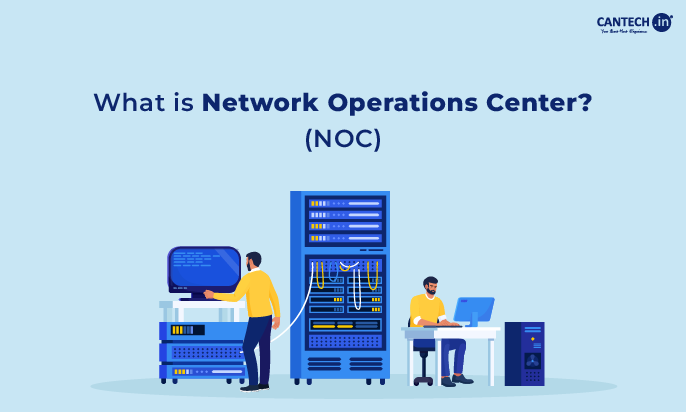
What is a Network Operations Center?
A Network Operations Centre is a main hub where professionals of Information Technology monitor, manage and maintain organization’s network infrastructure. It is responsible to ensure security, optimal network performance, and uptime by detecting and resolving issues quickly. Besides this, it serves as the first line of defense against network irregularities by operating 24/7 to detect and address the issues. By providing real time insights on network performance, NOC’s facilitate proactive management, help business organizations maintain operational continuity and meet SLA’s.
Understanding the NOC Definition
The term NOC, or noc definition, refers to a centralized hub where IT experts keep an eye on a company’s network. It’s all about making sure everything runs smoothly by catching and fixing network issues fast. This setup helps businesses stay online and operational without lag.
How Do NOCs Work
Below is the actual process of how NOCs work.
- NOCs follow the hierarchical incident management model.
- Technicians are categorized into Level 1, Level 2 and Level 3 based on expertise.
- Once the issue is detected, a ticket is created with the type of alert, severity and category.
- The issue is then handled by an assigned technician level.
- In case the issue is unresolved or cannot be handled by the assigned level, it will be escalated to the next level.
- Escalation continues until the incident is completely resolved.
Key Functions of a Network Operations Center (NOC)
The NOC acts as a focal point to ensure efficient network performance and security. Here are some of the key function of NOC:
Monitor Networking
NOC personnel maintain constant surveillance over the noc network, including servers and applications, to identify anomalies or potential problems before they disrupt operations. Proactive surveillance systems detect anomalies at an early stage which permits rapid interventions to sustain peak performance while avoiding service disruptions. Advanced monitoring tools deliver real-time data which enables instant reactions to developing issues.
Incident Response
The NOC initiates immediate response actions within its noc services to identify and fix problems whenever network incidents like outages, security breaches, or performance degradations happen. Effective rapid response mechanisms reduce service interruptions by addressing disruptions promptly to restore normal operations and maintain service quality. The operation of this function serves as an essential mechanism to uphold both the dependability and accessibility of network services.
Performance Management
The NOC examines multiple network performance indicators to enhance operational effectiveness and resource management. The process involves evaluating bandwidth usage together with latency and throughput to verify adherence to service level agreements (SLAs). The NOC detects performance bottlenecks and makes necessary adjustments to ensure the network runs at maximum efficiency to meet organizational demands.
Security Management
A fundamental responsibility within NOC operations involves the implementation and supervision of security measures. The task requires operating firewalls and intrusion detection systems while performing vulnerability assessments to shield networks from cyber threats. The NOC performs relentless surveillance to detect security violations and unauthorized access attempts, which enables it to protect sensitive data while preserving network infrastructure integrity.
Configuration Management
The NOC engages in continuous maintenance and revision of network configurations to achieve consistency while adhering to compliance standards and maintaining peak performance. The process encompasses the documentation of network settings alongside managing configuration alterations while ensuring all devices function with compatible and secure setups. Effective configuration management prevents conflicts and errors.
Reporting and Documentation
The production of standard network performance reports alongside incident documentation and critical metric analyses stands as a fundamental requirement for decision-making processes. The NOC center meticulously records every activity to deliver stakeholders detailed network health insights which support strategic planning efforts. Comprehensive documentation assists compliance audits while enabling long-term effectiveness tracking of implemented solutions.
Benefits of an NOC
Below are some of the benefits of NOC.
- Low Downtime – 24/7 monitoring allows early issue detection, continuous system availability websites and customer focused services.
- Improved Security Management – Centralized control of firewalls, servers, routers, switches, access policies and credentials that matches security standards.
- Immediate Incident Response – Instant alerts and rapid response reduces the impact of network issues.
- Reduced Labor and Time – Outsourced monitoring and investigation free internal IT teams to focus on high value, strategic tasks.
- Real-Time Reporting and Visibility – On demand reports and live network insights to improve decision making.
Challenges of Running a Successful NOC
Some of the challenges of NOC are.
High Operational Costs: High expenses for hardware, software, communication tools and infrastructure makes NOCs expensive to build and maintain.
Shortage of Talent: Experienced professionals are so hard to find and retain. Especially as networks keep scaling and become much more complex.
Evolving Tech: Continuously evolving technologies, tools and threat landscape can be challenging for NOCs and may most often require upskilling and advancements.
What are the Requirements of a NOC?
NOC requires the integration of multiple essential components such as:
1. Infrastructure
- Physical Space: An exclusive secure zone featuring climate control systems and ergonomic workstations alongside expansive displays or video walls for real-time network surveillance.
- Power Supply: Uninterruptible power supplies (UPS) and backup generators enable continuous operations during power outages without interruption.
- High-Speed Connectivity: Network connections designed to be both reliable and redundant enable continuous monitoring and management capabilities without interruption.
2. Technology and Tools
- Network Monitoring Systems: Sophisticated tools deliver instantaneous network performance data while identifying irregularities and notifying personnel about possible problems. Network reliability comes from using NOC monitoring tools for quick fixes.
- Security Information and Event Management (SIEM) Systems: Complex platforms designed to collect and examine security logs to detect threats and initiate rapid response measures.
- Automation Tools: Software solutions that perform routine tasks like patch management and backups without human intervention to boost efficiency.
- Communication Systems: A combination of specialized incident tracking systems and collaboration platforms enables rapid information dissemination and coordinated responses.
3. Personnel
- Network Engineers and Technicians: Professionals who can conduct network performance monitoring while simultaneously addressing problems through troubleshooting methods and solution implementation.
- Security Analysts: Specialists dedicated to detecting and neutralizing security threats to safeguard organizational data and infrastructure.
- Incident Response Team: Experts who can manage critical situations to enable swift recovery while reducing operational disruption.
- Support Staff: The noc team, responsible for executing administrative duties, manages documentation and facilitates coordination across multiple groups.
4. Continuous Improvement
- Training and Development: Staff that continuously participate in education programs that ensure they remain current with the latest technologies, threats, and network operations center best practices for effective NOC management.
- Performance Metrics: The systematic evaluation of key performance indicators (KPIs) occurs regularly to determine NOC effectiveness while pinpointing potential improvement areas.
- Feedback Loops: Mechanisms that collect insights from both incidents and daily operations which then help refine processes while boosting overall performance.
5. Processes and Procedures
- NOC Standard Operating Procedures (SOPs): Extensive directives defining regular tasks alongside incident management steps, escalation procedures, and communication methods.
- Effective Incident Management: Established processes for identifying, categorizing, prioritizing, and resolving network incidents efficiently.
- Change Management: Controlled procedures to manage network changes which ensure minimal disruption while maintaining system integrity.
- Security Policies: Industry standards and regulations serve as the backbone for data protection and security measures while simultaneously sustaining stakeholder confidence.
The integration of Network Operations Center NOC best practices stands as a fundamental requirement to achieve both optimal network performance and organizational success. Effective approaches involve establishing multi-level support frameworks alongside persistent network system surveillance while tracking essential operational metrics and formulating strong hiring and retention plans. By implementing these practices organizations can achieve greater network reliability while shortening incident response times and sustaining their competitive position in the digital market.
Network Operations Center – Best Practices
Here are some of the best practices of network operations center
Allow Strong Communication
Strong and transparent communication across SOC, NOC and external teams improves coordination and lowers the delays in responses. Ensures sensitive information is shared promptly during incidents and continuous operations.
Focus on Training and Knowledge Development
Focusing on regular training prepares NOC teams with additional expertise in escalation procedures, network monitoring, troubleshooting and SOC collaboration, at the same time helps them adapt to new technologies and infrastructure changes effectively.
Set Clear Goals
Establishing clear goals, roles and escalation tiers lets professionals respond much faster to incidents at the same time ensures leadership oversight, proper task prioritization and effortless hands off of extremely challenging issues.
Follow Clear Guidelines and Protocols
Establish and follow protocols for prioritization, incident management, escalation, and common resolutions provide consistency, improve accountability, eliminate confusion and allow faster and much predictable issue management.
Utilize the Right Tools and Documentation
Current monitoring tools with knowledge base helps NOC teams to identify issues at the earliest, reduce downtime, reuse proven solutions and maintain efficiency across shifts and operational changes.
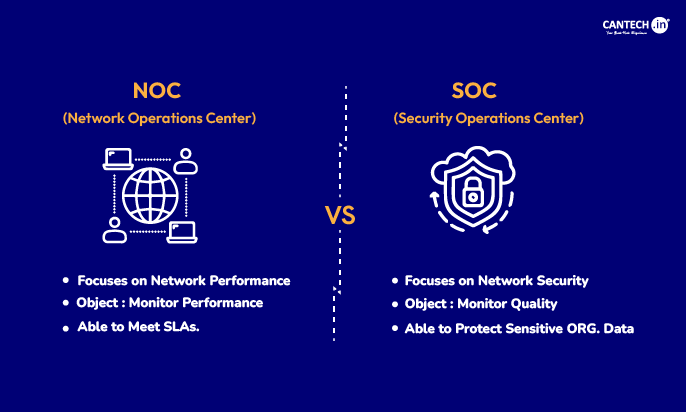
NOC Vs SOC
Let’s understand NOC vs SOC and their distinct roles in IT operations.
| Aspect | NOC (Network Operations Center) | SOC (Security Operations Center) |
| Main Focus | Performance, uptime, network availability. | Threat detection, security and risk mitigation. |
| Goal | Keeps systems and networks running smoothly. | Secures systems, data and users from cyber threats. |
| Scope for Monitoring | Routers, servers, switches, bandwidth, applications and latency. | Malware, user behaviour, logs, vulnerabilities and intrusions. |
| Performance metrics | Uptime and Mean time to repair. | Threat detection time, incident containment, risk reduction |
| Issue Escalation path | Escalates to top network engineers. | Escalates to security leadership. |
Elevate Your Business with Cantech’s Expert Server Management Services
Cantech specializes in extensive server management services, so that your business operations run smoothly and securely. Our offerings include:
- Professional Support: Get advantage from 24/7 monitoring and maintenance by our qualified technicians, ensuring your servers are always optimized.
- Enhanced Security: Protect your digital assets with our proactive security measures, safeguarding your business against potential threats.
- Cost-Effective Solutions: Save time and resources with our scalable services tailored to meet your specific needs.
FAQ’s
What is NOC Monitoring?
NOC monitoring means keeping a close watch on a network’s working condition through noc monitoring services from a central operations center. The main aim of the noc monitoring process is to keep the network available and working well by finding problems quickly, fixing them, and performing tasks like updating software or managing network traffic.
What is NOC in Networking?
NOC means Network Operations Center. It’s the place where IT folks keep an eye on networks, making sure everything runs without a complication for businesses.
What is an Example of a Network Operations Center?
Examples include mobile phone operator’s service management, large communication networks operated by big companies or nations traffic control centers, emergency service networks and utility provider systems.
What is the Main Purpose of the NOC?
A Network Operations Center (NOC) functions as a centralized facility where organizations monitor and manage their network infrastructure to maintain optimal performance and availability. Network components undergo continuous oversight while incident response occurs rapidly to minimize downtime and proactive measures are taken to prevent potential issues.