To move ahead in the modern data powered digital era, organizations should be able to make data-driven, effective decisions. But data is most often spread across enterprises, makes it hard to use, slows down businesses, exposes it to risks. All in all, agile data management has become a crucial business competency. For this reason, many organizations increase their traditional data management abilities with a logical approach.
What is Data Virtualization?
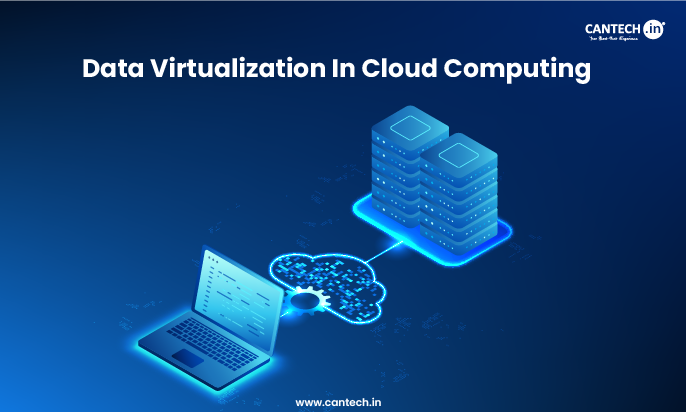
Data virtualization is a process of integrating enterprise data from multiple sources and managing it with centralized security and governance to offer real-time single consolidated view of data to business users and solutions. Data virtualization is a subset of data integration and is most commonly used with business intelligence, cloud computing, and data management.
Features of Data Virtualization in Cloud Computing
Here are some of the data virtualization in cloud computing.
- Single view: Brings together data from heterogeneous sources into a single open layer.
- Real-time access: Lets one instant access to data without replicating it.
- Scalability: It lets scalability in the cloud on-demand compute resources.
- Data Abstraction: It allows the end user free from technical complications concerning storing data.
- Cost-effectiveness: Reducing storage for data at its source and pay-as-you-go model for computations.
How Data Virtualization Works?
Data Virtualization platform connects to multiple data sources and presents a single, queriable interface for analytics and reporting. Here are the steps.
Connect to Data Sources
The virtualization platform uses prebuilt connectors to access structured and unstructured data from multiple sources like SQL databases, APIs, cloud services and SaaS platforms.
Create a Visual Schema
The platform generates a metadata layer that maps data models from all connected systems. Then it presents data as if it is coming from one single source. Tools like datamatch enterprise help in cleaning, deduplicating and match the data records before or alongside virtual schema.
Run Optimized Real-Time Queries
When users or tools submit a query, the system breaks it into sub-queries. Each of the sub-query is sent to the relevant data source and results are combined in real-time for quick insights and analysis.
Add Governance and Security Measures
The data analysis platform applies governance and strong security measures like role-based access, data masking, encryption and auditing without storing data in the main repository.
Benefits of Data Virtualization
Here are some of the benefits of data virtualization.
Cost Efficiency
Traditional data integration needs duplicating data across multiple systems, increasing storage and hardware costs. Data virtualization avoids physical replication by providing real-time access and single unified view which reduces redundancy and infrastructure expenses.
Simplified Data Management
By creating a single virtual data layer, data virtualization minimizes dependence on complex ETL processes. It enables much faster integration of new sources, real-time access and lowers maintenance efforts to save operational costs and time.
Minimal Maintenance and Administrative Costs
Data virtualization lowers the number of physical databases and reliance on costly integration tools. This streamlines the management, governance, compliance which lowers staff workload and audit costs.
Improves Time-to-Market
With real-time data access and fast integration, teams can analyze information instantly and make timely decisions. This increases product development and helps in faster response to market and customer needs.
Best Practices for Data Virtualization
Here is why data virtualization is important.
Start with Clear Objective and Use Case
Determine how data virtualization helps solve specific business problems and improves decision making. Prioritise these use cases in planning and concentrate on areas where data virtualization can offer great advantage, such as real-time reporting.
Understand Data Sources
Analyze data quality and structure before virtualizing. Make sure that your data sources are in proper format, quality and structure. Mapping data relationships is another crucial step as it will help understand how data from several sources relate to one another.
Establish Strong Governance Policies
Data governance is at the core of a sustainable data virtualization process. Set access restrictions to ensure that data is only accessed by authorized people and have audit and logging features to monitor data access and track data changes.
Conclusion
The future of data virtualization looks incredible and promising with evolving technologies like cloud computing, IoT, and the need for faster, agile data access all of which are driving increased use. Expect more cloud-native integrations, improved edge computing capabilities, and increasing automation. Organizations will prioritize data governance and security in line with growing ML application demands.
FAQs
What are the types of data virtualization in cloud computing?
There are 7 types of virtualization which includes network virtualization, desktop virtualization, server virtualization, storage virtualization, application virtualization, cloud virtualization, and data virtualization.
What are some of the Data Virtualization Tools?
Some of the top data virtualization tools are IBM cloud pak for Data, Data virtuality logical data warehouse, Atscale virtual data warehouse, Denodo, Informatica-PowerCenter.
Use Cases of Data Virtualization
Some of the common data virtualization use cases are:
- Healthcare – Integrating patient data across systems.
- Finance – Real-time risk monitoring and fraud detection.
- Manufacturing – Supply chain optimization.
- Retail – Powers smarter inventory and customer engagement