Selecting the appropriate graphics card for professional work is a huge decision for a studio or an engineer. Tasks such as 3D rendering and artificial intelligence training require a lot of power.
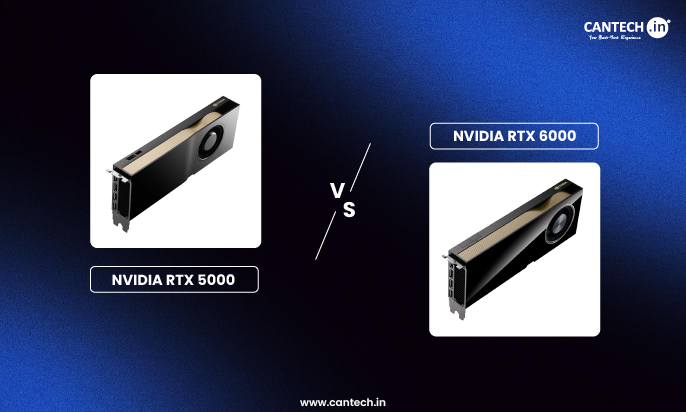
Many people compare the best choices of NVIDIA’s lineup to identify which one fits them in terms of their budget and project requirements. The blog will compare the NVIDIA RTX 5000 vs RTX 6000 to help you understand the real value of these cards.
What is NVIDIA RTX 5000 and RTX 6000?
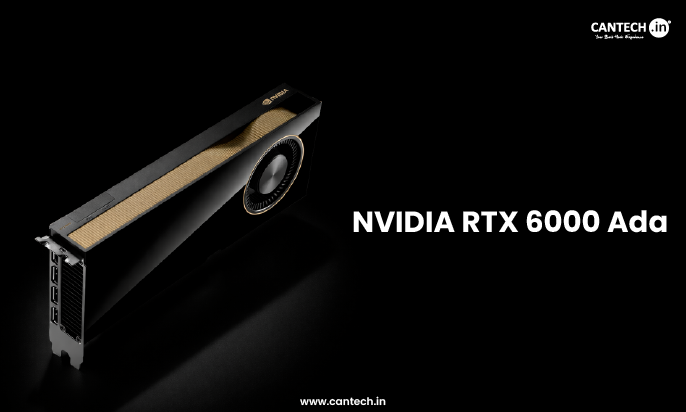
The primary difference between professional graphics cards and gaming cards lies in the former’s focus on stability and high memory. These cards are designed by NVIDIA to be used in workstations that run complex software such as Maya or AutoCAD. These particular models are the most recent Ada Lovelace architecture that provides massive speed for AI and ray tracing.
The cards are used to assist professionals in completing their work more quickly with the help of specialised cores. The RTX 5000 serves as a powerful mid-to-high range option for many creators. The flagship model RTX 6000 offers the best possible performance on a desktop.
Professionals often compare NVIDIA RTX 5000 vs RTX 6000 to decide if the extra cost of the flagship is worth it.
Key Features of Professional GPUs
The hardware of these cards uses ECC memory to prevent data errors during long calculations. They also use blower-style fans in order to keep the system cool within small workstation cases.
- CUDA Cores: These handle the general math and graphics processing tasks.
- RT Cores: The cores calculate how light bounces in a 3D scene.
- Tensor Cores: These are dedicated to AI and deep learning.
- VRAM: This is the video memory, which stores large 3D models and textures.
Comparing NVIDIA RTX 5000 vs NVIDIA RTX 6000
When comparing NVIDIA RTX 5000 vs NVIDIA RTX 6000, there is an evident difference in technical numbers. The RTX 6000 consumes a significantly larger chip with more active cores for every task. It also offers a wider memory bus, which moves data to the processor much faster.
Both cards use the same architecture, so they support the same modern features. Both are PCIe 4.0 slots, and they all need a 16-pin power connector for energy. Also, they have AV1 Encoders and are virtualization-ready.
The key distinction is the number of tasks that they can handle at the same time. People tend to discover that the RTX 5000 vs RTX 6000 decision is based on the size of their 3D files.
| Feature | NVIDIA RTX 5000 (Ada) | NVIDIA RTX 6000 (Ada) |
| CUDA Cores | 12,800 | 18,176 |
| VRAM Capacity | 32 GB GDDR6 | 48 GB GDDR6 |
| Memory Bandwidth | 576 GB/s | 960 GB/s |
| Power Consumption | 250 Watts | 300 Watts |
| RT Cores | 100 (3rd Gen) | 142 (3rd Gen) |
| Tensor Cores | 400 (4th Gen) | 568 (4th Gen) |
Why is RTX 6000 better than RTX 5000?
You might have a question when doing a high-end project – why is RTX 6000 better than RTX 5000? The 48 GB of memory in RTX 6000 enables one to load massive datasets that would crash smaller cards. It also has 5,376 more CUDA cores, which makes a huge difference in rendering times.
The higher memory bandwidth of 960 GB/s helps the GPU access data almost twice as fast as the 5000 model. This speed is essential for real-time simulation and high-resolution video editing. The RTX 6000 basically provides the full power of the silicon chip without any limits.
NVIDIA RTX 5000 vs RTX 6000: Performance in Real Workloads
The Nvidia RTX 5000 vs RTX 6000 comparison often focuses on how fast a person can finish their daily tasks.
In AI training, the extra Tensor cores in the 6000 model provide a significant boost in training speed.
For 3D artists, the 6000 model can render frames much faster because it has more RT cores for light calculations.
The RTX 5000 remains a significant model, and it handles most standard professional tasks with ease. It is an excellent option for users who do not work with incredibly heavy 4K textures or massive AI models. Nonetheless, RTX 6000 is the clear winner for anyone who needs to push their hardware to the absolute limit.
Older Generations: Nvidia Quadro RTX 5000 Vs. Quadro RTX 6000
In the case of used hardware, you will see the Nvidia Quadro RTX 5000 Vs. Quadro RTX 6000 from the Turing period. These older cards have far less memory and power compared to the new Ada models. The Quadro RTX 5000 comes with 16 GB of memory, and the Quadro RTX 6000 comes with 24 GB of memory.
Technology has changed quite rapidly, and the new 5000 Ada literally outperforms the old 6000 Quadro in most tests. You should only buy the older Quadro versions if your budget is very tight. As discussed in recent Nvidia RTX 5000 vs RTX 6000 Ada cards, they are more worth investing in for long-term professional work.
Cantech’s NVIDIA RTX 5000 and RTX 6000
Cantech provides high-end workstation solutions for businesses and individual professionals across India. We offer custom-built PCs that feature the latest NVIDIA professional GPUs for maximum productivity. Our team makes sure that your hardware is optimised and configured perfectly to ensure the best performance.
Our workstations come with enterprise-grade support to keep your business running without any technical delays. We test every system with professional software to guarantee 100% compatibility out of the box.
We only use genuine NVIDIA professional cards with full warranty. Our systems have high-end infrastructure with Tier 3 and 4 data centers. Get 99.97% uptime guarantee. You have the option of selecting the necessary resources. Our technical team assists you in selecting the appropriate card to use in your specific software. Rely on our 24/7 support in case of any issues or concerns.
Conclusion
The NVIDIA RTX 5000 vs RTX 6000 reveal that both cards have a specific place. The RTX 5000 is a great price and high-performance combination for most 3D and AI applications, rendering, graphics, and compute workload. It provides adequate memory to work with professional tasks at a relatively low cost compared to the highest-end model.
In case you are doing world-class movies or huge machine learning applications, the RTX 6000 is the real choice. The 48GB of VRAM and massive core count provide a degree of power that cannot be matched by other desktop cards. You should make a decision based on the complexity of your files and the deadlines that you need to meet.
FAQs
Can I use the RTX 6000 for gaming?
Yes, you can use it to play games since the card has the same drivers as professional work. It will perform similarly to a premium gaming card such as the RTX 4090 or 5090. It is, however, very expensive since you are paying for the 48GB of ECC memory.
Does the RTX 5000 support NVLink for joining two cards?
The new Ada Lovelace generation of cards no longer supports physical NVLink bridges. You can still put two cards in one system to increase your total rendering power. The software will utilize the two GPUs to do calculations, but they will not share their memory pool. This is a major difference from the older Quadro generations.
Is the RTX 6000 worth the extra price over the RTX 5000?
The RTX 6000 is worth it if your work regularly hits the 32 GB memory limit of the 5000. It is also a great choice if your rendering tasks take many hours to finish. For smaller projects, the RTX 5000 is a more sensible financial choice.
Is it possible to have these cards in a regular desktop case?
These cards have a dual slot design, and the length of these cards is approximately 10.5 inches. They can easily be made to fit into most standard ATX mid-tower cases with no significant problems. You need to see whether there is sufficient airflow in your case to fit a blower-type cooler. These coolers are used to force hot air out of the back of the case.